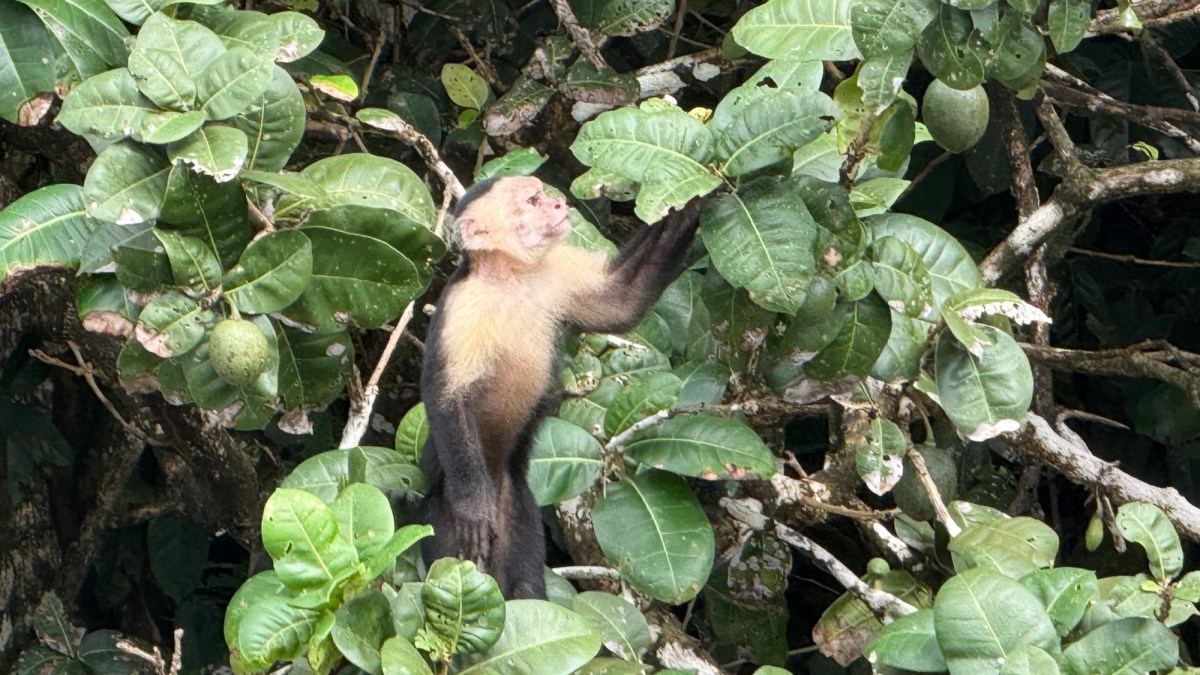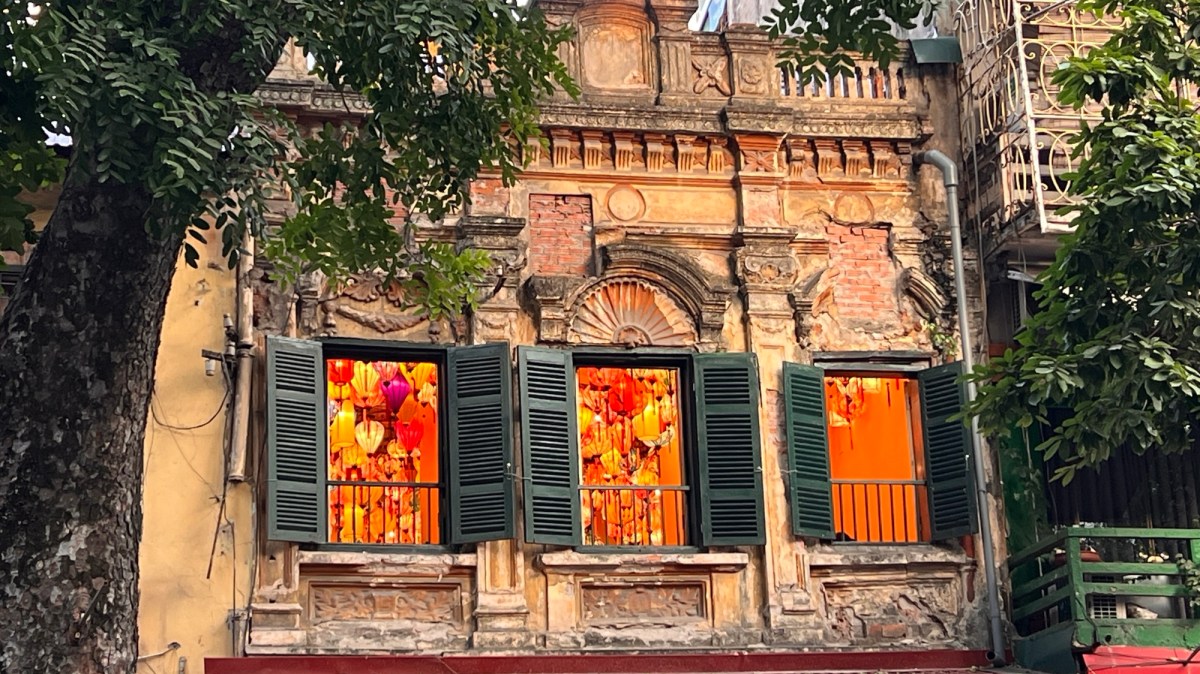
Rain and Rejuvenation

I’m sitting here on my patio watching the rain come down—again. We’ve had a ton of rain since Hurricane Melissa first appeared as a blip in the Caribbean. It must be true that October is the rainiest month in Costa Rica. We’ve had over twenty inches of rain this week, and more is falling.

And let me tell you—it knows how to rain here. It’s never just a “passing shower.” Back in Utah, we’d call these “gully washers.” For example, our pool’s water level usually sits about six inches below the lip, but last night, after just two hours of rain, it reached the overflow drain. For the next four hours, the drain couldn’t keep up, so I had to pull the cover off to let the water escape before it spilled over. Our pool is about eighteen feet long and twelve feet wide. I’m no mathematician, but that’s a lot of water.

Why did I mention Melissa?

Part of learning to live in a new country is learning its weather. We don’t have regular TV here, so most of our information and alerts come through WhatsApp. I saw a question recently posed to a local meteorologist: “If the hurricane is in the Caribbean, why is the Pacific coast getting high tide surges and flooding—while it’s sunny on the Caribbean side?”

Here’s where it gets a little nerdy. A hurricane is a living, breathing, seething wonder of nature. It pulls energy from all around it—even thousands of miles away. Just off the Pacific coast of Central America sits the Intertropical Convergence Zone (ITCZ), which holds an immense amount of humidity—a marine layer of warm, moist air. The hurricane literally pulls that ITCZ over the nearby countries, where it becomes supercharged by local weather patterns. The result? Torrential rain that can last all day.

During a “normal” rain, you can feel the humidity rising. The air gets heavy and oppressive. It’s no wonder everything here grows so fast, so big, and so green.

This week, we’ve also begun a new path toward better health—a change in diet, shifting old habits, and replacing them with more holistic practices. We’ve started giving back to our small community by volunteering and joining in the local energy and vibe. We’ve taken up Tai Chi, sound healing, and slow forms of yoga and breathing.

Today, I attended a “Morning Melt: Cacao and Devotional Singing Ceremony” at a local shop here in Uvita. There’s always some class or workshop on wellness, spirituality, or healing happening here. It’s about getting well—not just treating symptoms.

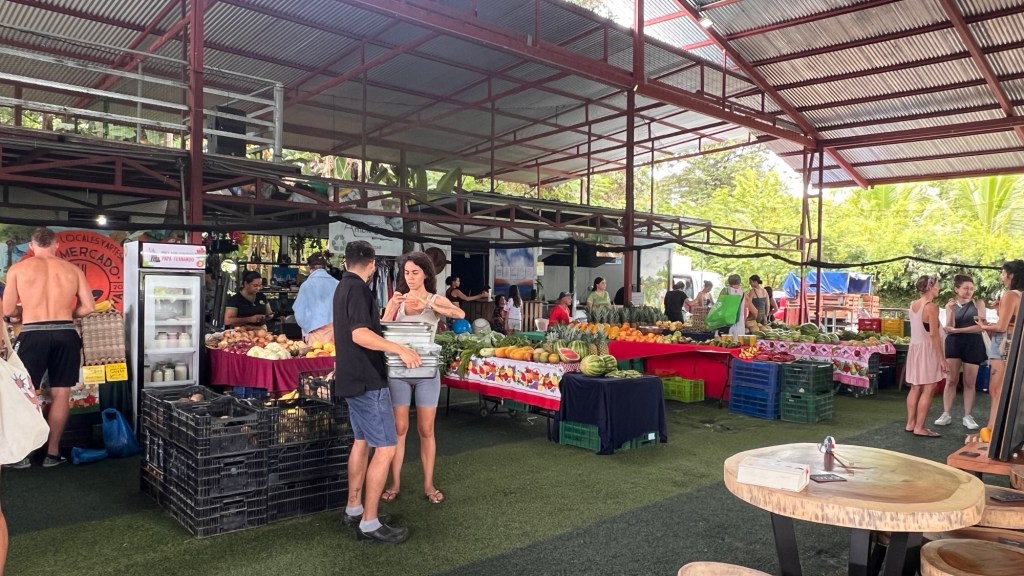
We eat fresh produce from the farmers market, grass-fed meats, and organic everything. We know where our food comes from—nothing is trucked in from far away. If it’s in season, we get it fresh. It all adds up to our main reason for moving here.

Here, in Costa Rica, we just might become young and spry again.

Christmas in SE Asia

Back on a bus headed for Hoi An, Vietnam. It’s Christmas Day. The weather has taken a turn from hot and muggy to a pesky misty rain and much cooler temps. We have hit many cities so far in Vietnam and again we hear, from our local guides, about the horrors of war and the way of the communist rule here in SE Asia. I’m reminded of the famous line from Apocalypse Now…”the horror.” It’s only been since 2000 that westerners have been welcomed back into these countries, and unless you are hearing an account, such as the Tet Offensive, you’d never know how ravaged the people have been. As travelers, we now are bolstering the economy and making a better life for the Vietnamese, Laotians, and Cambodians. They’ve opened up to share their culture, their very kind souls.

As we’ve been traveling about in these countries, I can’t help but feel that slight embarrassment of being from a country that gave up after engaging in such horrorable acts. Our guide said it quite perfectly yesterday, the people choose to live in the present moment. Harboring hate and anger only eats at the lively hood they are enjoying. They are a proud, hard working and very considerate people.

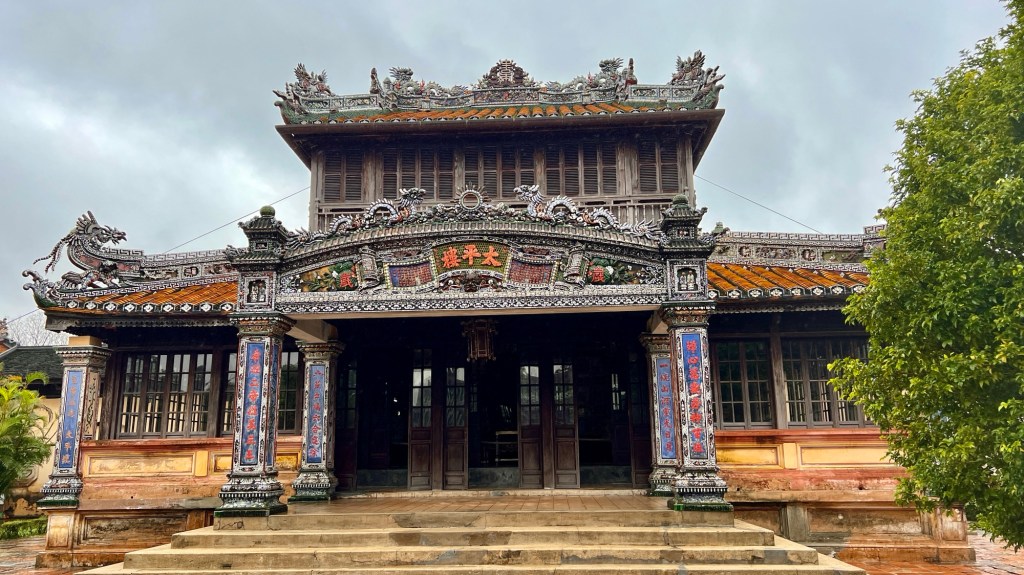
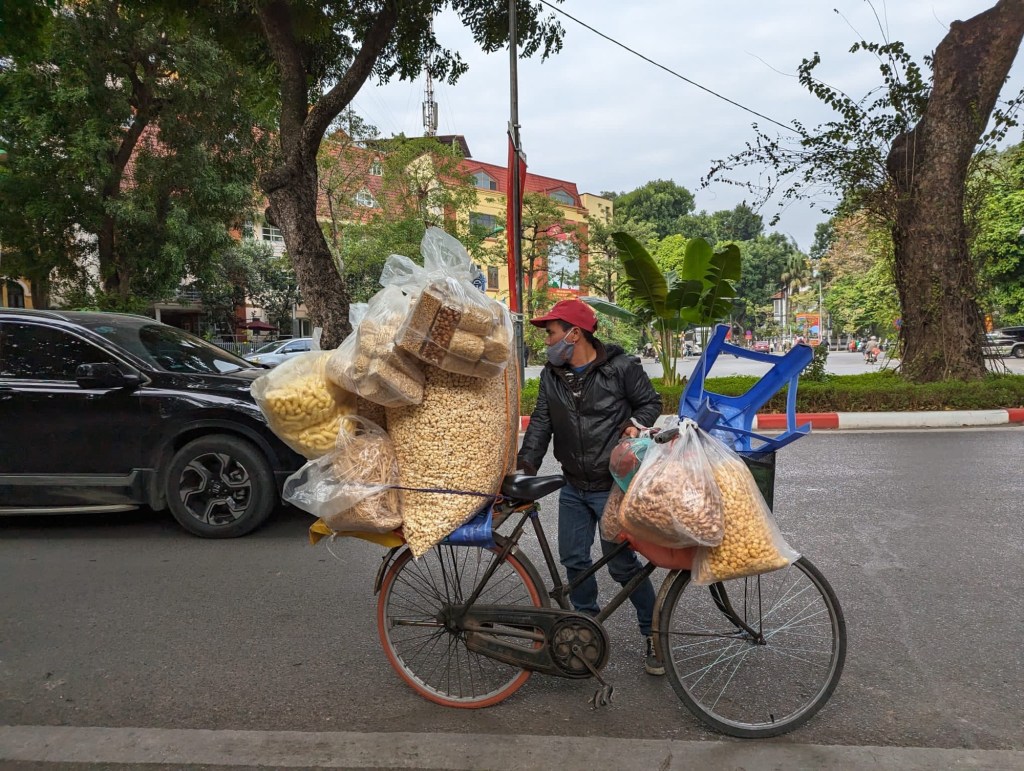
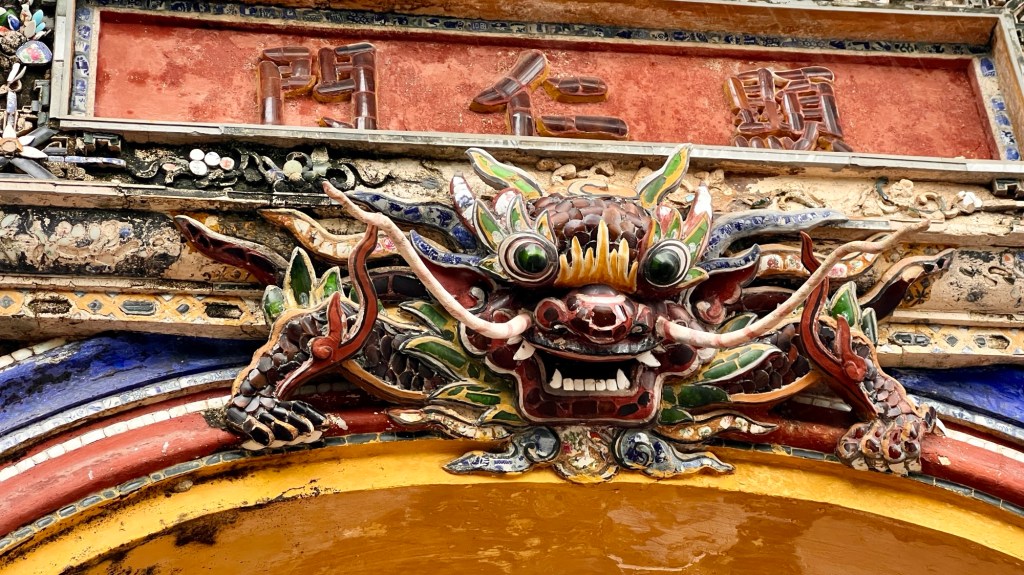
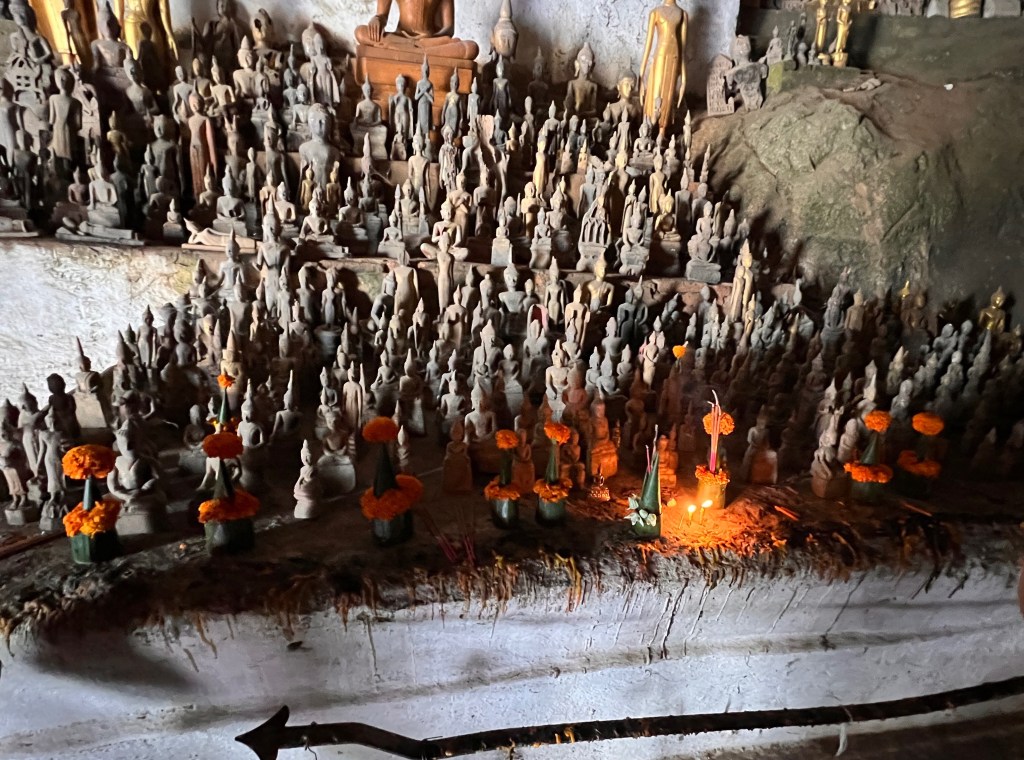
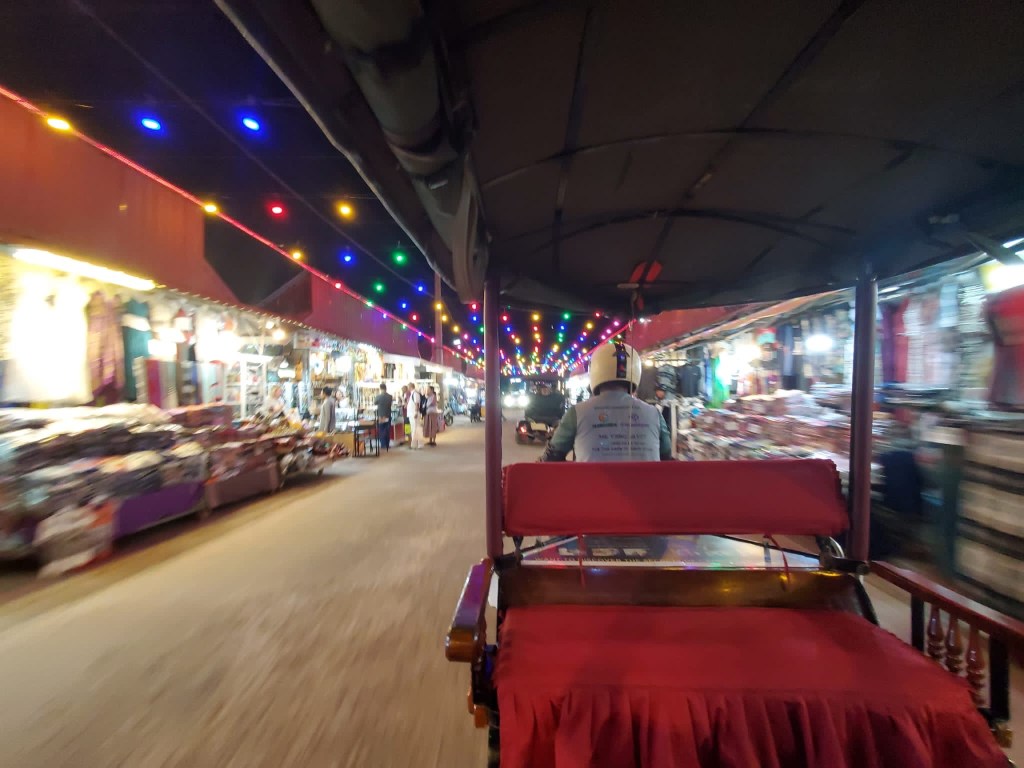
Throughout Vietnam, we’ve seen Buddhist Temples, King’s Tombs, Pagodas, museums and memorials. A culture dating back before anything I can imagine. The streets are lined with markets and food stands, restaurants and hotels that welcome the traveler in. The flurry of motor bikes, cars and buses, vying for a little piece of the road, and even the sidewalks. Two, three, even four people stacked onto a small motor bike. Huge piles of textiles, packaged goods, food and even other motor bikes and animals, all carefully balanced on these small motor bikes. Who needs a van…

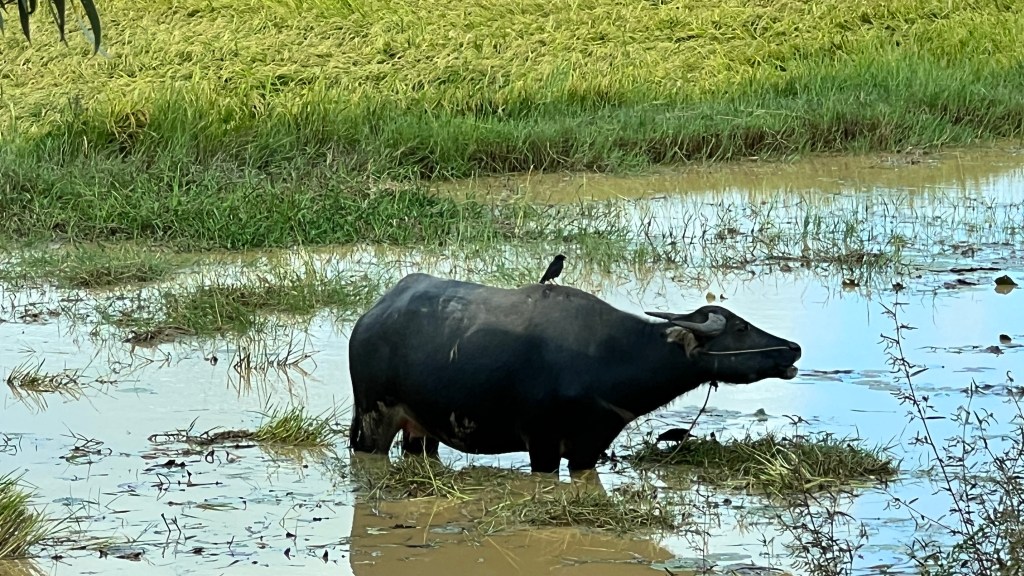
Then there’s the thick jungles, farms and cemeteries, stretching as far as the eye can see, when traveling by bus or train from destination to destination. Buddhist Temple and Monasteries stitch together communities, both in the cities and countrysides. The buildings and houses are covered in thick moss and mildew creating a patina only Mother Nature and time can create. The hard working farmers, often are seen plowing muddy fields with water buffalo. Villagers in conical hats, stray, skinny dogs laze around waiting for some kind soul to drop a tasty morsel, perhaps the only food they will get. Ancestor houses at the entrance of every home, carefully decorated in flowers and incense. Huge rivers meander silently, providing transportation and food, through these countries. Mystical and beautiful in its own way.

The rain pitter patters on the window, breaking my stare and bringing me back to the bus, as I watch the bumpy black ribbon of tar take us away from Hue to Hoi An and another city to discover its secrets and stories.

A Slow-boat Down the Mekong

It’s been a few weeks, it seems, since I’ve taken time to gather my thoughts…to recap our adventures…so here we go. Forgive me if I pass those by for now to bring you to this current moment.

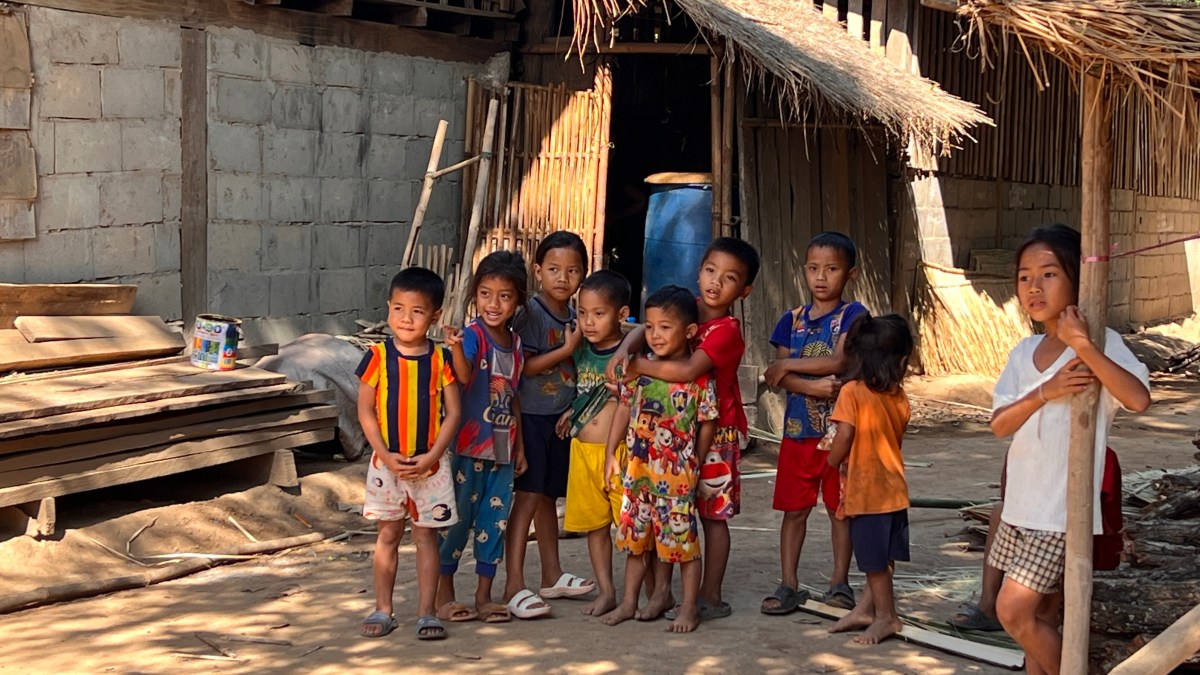
Today I find myself sitting on a “slow boat”, cruising down the Mekong River in Laos. My company on board is that of 8 other individuals from around the globe and two guides. In Laos, we are required to have a local Laotian to escort us to the wonderful temples and small riverside villages of the local hill tribes. Sang, our guide, is of small stature, as are many of the Laotians. His voice is calm and soothing and full of pride for his country. Moh, pronounced ma, is our tour guide for GAdventures through Thailand, Laos and Vietnam. Moh is full of a good life force and spreads the joy of her job and her country’s treasures with us as we go along.

As we have been exploring Thailand and Laos, I find myself troubled at times. Moh will be telling of the history of war in these countries and I almost feel ashamed, as if I, myself, had done something to hurt these people. To hear of the horrors of war, one people killing and controlling another, and for what…land grab, slavery, political turmoil, religious differences…again, I am saddened deeply, that human beings can be so cruel. Perhaps my kind spirit feels tarnished in some way, perhaps in another life, I was here or suffered as these people. Sorry for the rant.

Take away the people and you’re left with the scenery, the raw nature, the dense jungle, muddy water and blazing hot sun. The smell of jasmine and wild ginger, sweet basil fill the air. The occasional herd of cattle, goats or water buffalo, and we even encountered two elephants playing in the shallows of this mighty river. What a gift that was.

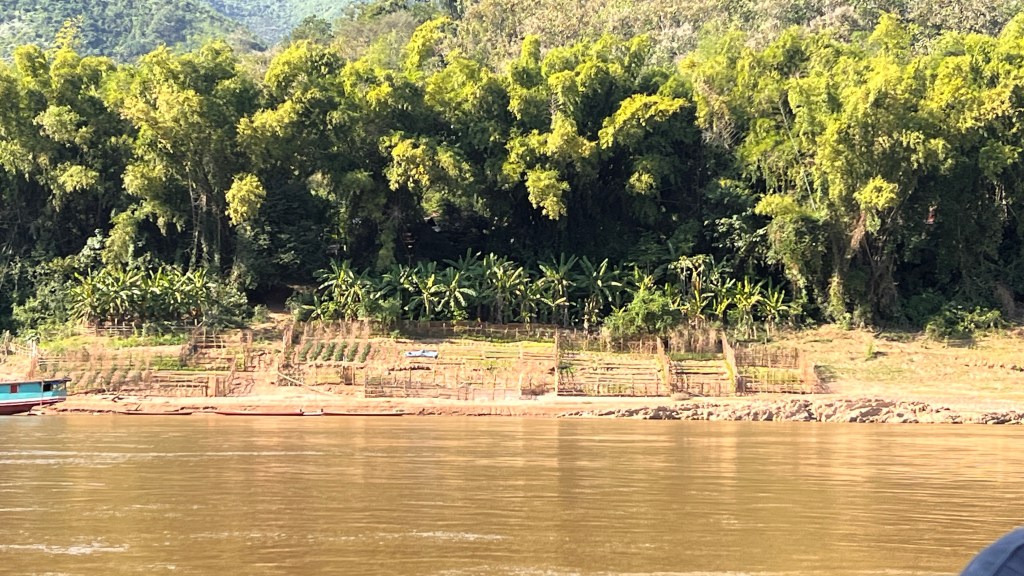
The Mekong is a mighty river with powerful flows and jagged rocks and vast sandy beaches, holding it in place. The Mekong flows from Tibet 4,500 miles to the sea. It is the border of many countries throughout SE Asia, and has been fought over by more than one. The dark brown water bubbles and churns, almost bringing the boat to a standstill. It seems chaotic in its flows. In the monsoon season, it rises almost 40’, laughing at the rocks and sand as it consumes them as if in a great flood. Each dry season, a new riverbank is introduced, as the power of water transforms it. Waterfalls come out of the jungles, carving deep gorges in the sand, cascading over well worn rocks, finding their way back into the mighty Mekong River. In the mornings, the clouds blanket the hillsides as the sun attempts to burn through, one giving way to the other in the natural progression of things.

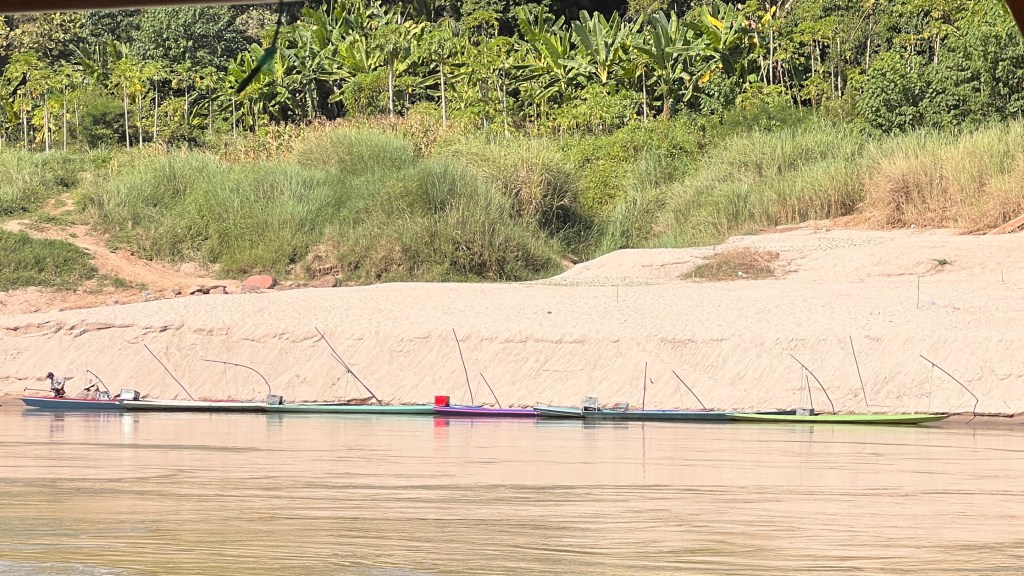
The limestone and granite display along the banks are often incredibly showy. If you look long enough, you will see a complete myriad colors, from purples, pinks, shades of whites, blacks and yellows. They pose an impenetrable barrier, often times hidden under the water. The local hill tribes use the cracks and crevices to secure bamboo poles strung with fishing nets or lines. Small flat bottom boats transport families and supplies, some using motors and others paddles and bamboo push poles. An occasional farm house, perched high on stilts with a crop of corn, rice or potatoes surrounding it, often planted on the rich sand banks deposited by the river during flood stage. You’re left wondering how they can live in, what seems to us, such harsh conditions. We are so privileged and spoiled.

Riverside gardens
Riverside Hill Tribe Village
Local fisherman

The sun has finally broken through and the cool breezes will soon be welcomed to all on board. The green foliage comes to life, some reflecting the brilliant sunlight and others creating dark shadows. The dark brown muddy water lightens up as it refracts the light as it pierces the surface. The sand glistens along the banks. It’s all so powerful and humbling.

Cambodia: A Personal De-brief

Cambodia Recap

Today we all boarded the bus headed for Bangkok, Thailand, bright and early. We have a 6+ hour ride in total, 3 to the border and 3.5-4 hours into Bangkok. We drew the lucky straw and got the 45 passenger bus for 14 of us. Plenty of room to stretch out.

It’s nice to get a really early start…most of the daily activities of the locals happens before the sun is blazing high in the sky and the humidity kicks in. As we roll past rice fields and farms, small road side stands, typical houses and the ocasional neat and tidy, brightly colored home, everyone is busily preparing for their day. Families out in the rice fields, wielding scythes and woven baskets, others walking behind their water buffalo with long, thin switches, herding them to the tall grasses and thick muddy fields. Women, with straw brooms, sweeping the dirt in front of their fruit stands. Children in blue and white uniforms, gather under large thatch roof structures, absorbing knowledge from the teachers. The bright saffron robes of the monks, collecting their offerings from the villagers and shop owners. Honking horns, motorbikes, buses and tuk tuks, dodging each other jockeying for their purchase of pavement, turning 2 lane roads into 3 or 4. Others take their place, swaying gently in their hammocks, observers of life as it passes by the hour. There’s a certain peace about the chaos.

I can’t help but to reflect on the last 3 days of diving into the history and religious culture. The archeological perspective of a hard past… pride and humility, defeat and triumph, war and peace, life and death. Ancient ruins, carefully extracted from the jungle that sought to take back its natural state. Temples built on the backs of slaves and beasts of burden. Time capsules of history. Places of sacrifice and enlightenment. Schools and places of deep worship. Inside the stone pillars and walls, etched with great talent and insight, these are the words and lessons of past masters, kings, and ancestors. The desire to reconstruct and refurbish the towers and galleries was quite evident as all around us men carefully removed huge slabs of deteriorating sandstone and others etching the past back into the replcements. The mastery and skill needed to recreate such revered symbolism is highly prized.

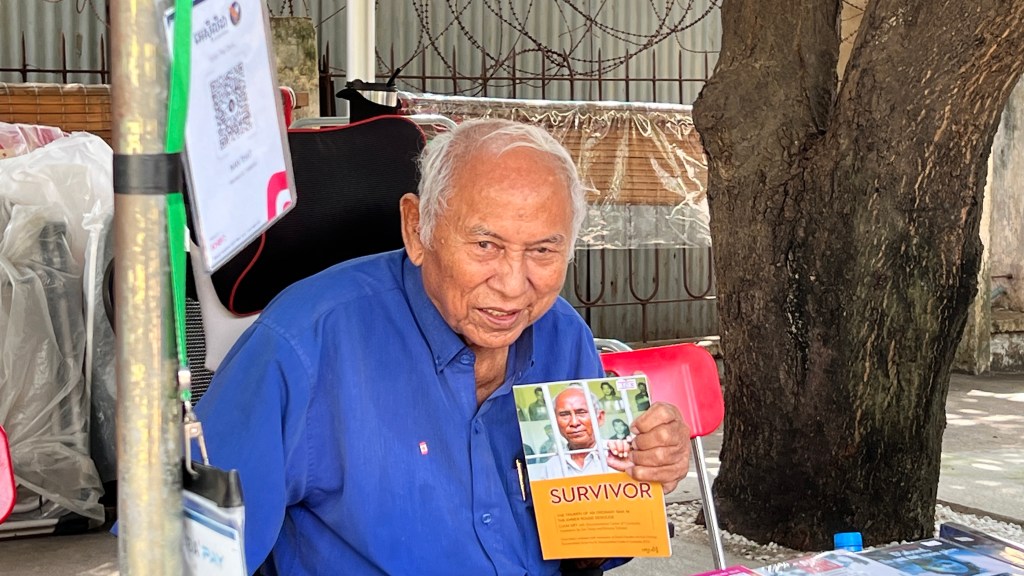
Cambodia has reclaimed its place in SE Asia. The entire society, for the most part, is young and full of vision. Every family has been touched by the hand of war and genocide. It was hard to visit S-21 Re-education camp, (Security 21, a re-purposed high school used to interrogate and torture those that the Khmer leader Pol Pot, felt was a threat) and one of the many Killing Fields, mass unmarked graves. To hear the stories from those who were directly effected and yet somehow survived the horror, was tear jerking. The emotional scars pouring out in quivering voices and sudden looks of horror as they recant their personal demons. A sudden and palpable silence falls on the room as we were told stories of tyrannical torture and degradation of an educated section of the population, through the eyes of our local guide. Something as simple as wearing eyeglasses could be your death, but not only of yourself, but friends, family and so many others. Over 3 million Cambodians died in a 4 year period, either at the hand of the Khmer Rouge regime or from starvation and disease as whole populations were forced into labor and out of their homes.

From here, there’s not much more to tell. A resilient culture, proud people, and a young nation, struggling to change for the better. A loving people, lead by Buddhist teachings of respect and kindness. Cities…new and bristling with growth and new infrastructure. A simple folk just living day to day with smiling faces.

A Prayer: Just for Today

Just for today…
May I revel in the innocence of my inner child
May I look at the world with wonder and amazement
May I summit every obstacle with the ease of a trained athlete
May a calm mind and steady determination bring me and those around me joy
May I always remember to be kind in my actions and words
Just for today…

Impermanence…a personal commentary

What is the one constant in everyone’s life? No matter black, white, brown, or green…no matter if you live comfortably with means, or are barely scraping by…no matter if you live north, south, east or west…animal, insect, plant or human, impermanence is at play in your life.

Photo by Pixabay on Pexels.com

Over the last year, our lives have been greatly impacted by this often times unwelcome part of the life cycle. Everyday things change. Our likes and dislikes, our health, plants bloom and die, trees loose leaves, even as simple as outgrowing our favorite outfit, everything is in a constant state of living and dying…change. We live our lives as if we have a life-time of living to be had, fall through each day as if there will surely be another. Will there be? Are you sure?

Photo by Mario Wallner on Pexels.com

In my Buddhist practice, my teachers and their teachers and right on back to the Buddha, have always talked about impermanence. Nothing is without change. It is not only about a physical human death, even that is not permanent, but more about the constant flux that is a naturally occurring part of everything, living and dead. Humans are the worst at accepting this phenomenon. We try hard to make sure things are as we like them, to be sure we are always comfortable. We diet to stay the same weight, facelifts to prevent the inevitable force of gravity, even engage in risky behaviors to slow the aging process. Western medicine is all about treating the diseased so that death can be cheated. We never even think about death. To speak of our death is considered taboo, macabre, not something accepted in a “normal” daily conversation.

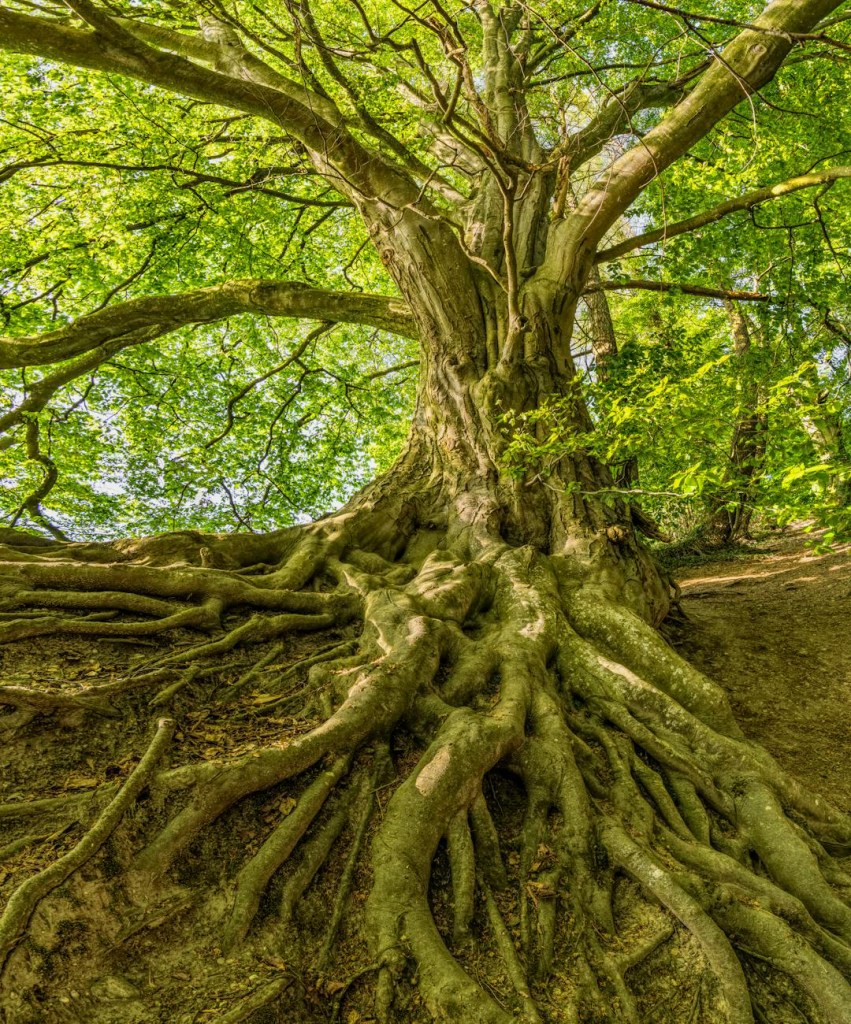
I know that the hardest part of accepting death, is to realize that death is not the end, not a permanent condition. Yes, our physicality comes to an end, but there is so much more to all living things that just a failing vessel of blood and organs, all things are made of the most basic of matter, water and carbon, formed into a structure that can resemble many different things, from a tree to a worm, yes and the human body. The essence of which is held together by energy. This energy is universal, it exists in the chair you’re sitting on, the flowers blooming in the spring, and even the ancient old growth forests rotting on the forest floors.

Photo by Pixabay on Pexels.com

OK, so you may be thinking, how do I stop or slow change? How can I accept something, death for example, that seems so final…so permanent? What happens to that life force when the vessel dies? Religions have been trying to pacify the panic and mourning that goes along with death with the promise of heaven and hell. Alchemist have been trying to find the secret of eternal youth since the beginning of time. No matter, impermanence is just a universal condition to be accepted and worked through on a daily basis. If you knew you were gonna die tomorrow, would you do anything in your power to stave off this inevitability? You are not alone. Why not live everyday as if it were your last?

Photo by Brett Sayles on Pexels.com

If I told you that to slow, maybe even end the violence in the world, the pestilence, the hate, anger, and all the “man-made” destruction of the planet, all we have to do is live each day as if it were a gift, treat each other with kindness, show unconditional love and acceptance to our fellow human beings and stop harming even the smallest of insects, would you at least try? It is so much easier to find fault, to feel the anger and act without thinking, to pass judgement and spread gossip, to continue to pollute rivers and oceans as if they were an endless resource. To avoid change at all costs. What if we all just gave it a little effort? What if everything you said to someone, stranger or friend, ally or foe, went through three gates first. Is it true? Is it necessary? The hardest one, is it kind? What if you smiled at a stranger, held the door for someone, didn’t honk and yell at the driver you feel is being crazy or stupid. Could you make a pact to do one kind thing for someone or something everyday? Could we each start a pay it forward society just by one kind act? What if it were really that simple?

The world is suffering, we all are dying everyday, tomorrow is not for certain. Every where Chris and I go, we bring love and light into someone’s darkness, whether we know that person or not. We are not alone. It is never too late but it does take an army to move an anthill these days. I implore you to at least try, how can it hurt? We can’t stop change but we can influence it with just a few random kindnesses.

A Small Tear on my Heart

It’s been a month since we said farewell to Gandaulf. I still have moments in the day when my eyes fill with tears and the words get stuck in throat. Times when all I want is to feel his thick, soft fur between my fingers, and smell his musky odor. At night I swear sometimes he is still there at the bottom of the bed snoring. Of course I sit with the feelings, let the tears fall and, like the clouds in a blue sky, it passes and I am left in the present moment…to move on.

Playing in the water was a favorite past time

We continue to sell off all our possessions and donated 4 big boxes of women’s clothing to the women’s shelter and odds and ends to the DI. Our shed is becoming more and more vacant everyday. Getting rid of “stuff” is fun, freeing and terrifying all at the same time. What I want to get rid of, Chris thinks we might need someday and sometime visa versa. No matter we settle and the item stays or goes and we move on to the next.

We have started our trial packs. It takes almost as many clothes to be gone for a week long vacation as it does to pack for a year. Save a nice outfit for the occasional fancy dinner or cafe hopping, a few more necessities for hiking or swimming, and an extra pair of shoes…they make a thing called a washer and dryer, so…just like at home, you still need to stop for a domestic goddess day.

The farewells continue almost daily. I have hooked up with some healers that are concocting some plant medicines for me to continue my journey of good mental health and a balance of mind and body. It’s been almost six months since I went cold turkey on anti-depressants and entered the world of good, wholesome plant based medicines. The journey has had its ups and downs, but I am a whole new person, not better, just changed and more energized and grounded.

Between this change and my spiritual endeavors, I have broken through the ancient fortress built around my heart and mind, and found a strong, safe foundation to build a new life on. Yes I have many small tears left on my heart, but I am free from this old baggage and free to build a new adventure in loving kindness and peace.

The Child and the Mountain Sheep

It was an enchanting day and the child woke up feeling quite energized. The nights chill still hung around in the trees and bushes. The child stretched to the sky and sighed. What new things will I encounter today, the child thought.

She picked a few flowers and a ripe apple from her favorite tree, and set off on her walk through the woods. She had made a special request to sit with the wise old owl. She had so many questions, but one, in particular, was of dire importance. She bit into the crisp, tart apple and added a bit of a hurry to her stride.

The sun had peeked above the mountains and the clouds hung tight to the tops. The mountains were ablaze with a patchwork of colors. Bright yellows, crimson reds, intense oranges, all scattered throughout the green of the forever trees. Forever trees never loose their color or shed their coat of leaves. The birds and insects began to buzz about with the warming of the day.

The child passed the otter’s den and saw she was busily collecting moss and twigs to insulate her home for the winter. She waved and they exchanged a smile, then set off towards the wise old owl’s treehouse.

The day wore on, the sun climbed high in the sky, creating shafts of brilliant light that filtered through the canopy of trees. The child was beginning to tire when suddenly a black and white burro appeared.

“You look like you’ve been walking forever”, noted the burro.

“Yes, since the sun came up”, answered the child.

“Where might those little legs be taking you” asked the burro?

“I have an audience with the wise old owl. I have many questions I want to ask him. He is the oldest and wisest of all the forest creatures”, the child told the burro with delight in her eyes as she spoke.

“I don’t have anything too pressing to do today. Would you like a ride to his treehouse”, offered the burro?

“That would be so kind of you”, and the child slipped onto the burro’s back and off they went.

The child began to tell the burro all the wonderful things she’s learned from her animal friends. She told him of her sorrows and delights and all the things she’s discovered since she came to live at the edge of the forest. How she was special and deeply loved. The burro plodded along slow and quiet, listening with great interest.

After some time, walking quietly, the forest opened up and a huge tree stood in the middle. The most magnificent tree you could imagine. The shafts of light illuminated the tree as if on display. Half way up the tree was a wooden door that led into the enormous trunk. This was the home of the wise old owl.

The child graciously thanked the burro and hugged him tightly. She then began to climb the enormous tree. This posed no problem to the child, she had always climbed trees to get away from her worries, and she was good at it. She climbed and climbed until she stood at the old wooden door. She gently knocked on the door and it slowly opened and the owl flew out without a sound and landed on the branch where the child sat.

“Good day child”, spoke the owl in a gentle but powerful voice.

“Good day Mr Owl”, the child said politely. “I have come to ask you so many questions”, stated the child. “Otter told me that you would be able to answer them all”, squealed the child.

The owl moved closer and put his huge feathered wing around the child and told her to ask away. The child began to speak, each question more involved than the last. The owl was taken back by the curiosity of the child. “And now, for the most important question”, stated the child.

“Well my my young one, where do all these queries come from”, asked the owl?

“I dream the most wonderful dreams”, answered the child.

The child went on to explain that she had noticed that when the days grow shorter, and the trees come into their best colorful show, the tall mountains are always covered in clouds. Why?

The owl summoned the hawk and told him to take the child to the tall mountains so she could see for herself. Needing to know, the child climbed onto the hawks back and he began to ride the thermal currents, round and round, until they reached the clouds on the mountain. The hawk found one of the big ram sheep that live on the mountain and deposited the child at his feet.

The ram stood taller than the child but had a kind demeanor and soft brown eyes. His white coat was thick and curly and his horns were curled tight around the sides of his head. He looked frightening and yet so cuddly, the child jumped up and gave him a huge hug.

“What brings you so high into the mountains my child?” asked the ram.

The child began to tell the ram all about the owl and her questions. She told him that she was told to go to the top of the mountains with the hawk to find the answer to the one question she needed the answer to. She explained how she noticed the clouds were always draped around the peaks when the trees turned colors and the days grew short. The ram sat back and listened intently as the child told him of all the things she had learned, telling him story after story.

When she finally finished, the ram told her to climb onto his back and he would take her to see. She climbed on and held tight to his giant horns and he began to climb, and climb, and climb. The child showed no fear, even though she was terrified, she wanted to be brave. As they came closer to the clouds she could see hundreds of mountain sheep huddled together around a huge lake.

The ram helped her down and took her over to the herd. She noticed that several of the sheep would grab the clouds as they drifted past. Then the rest of the herd would hold it until the cloud relented and dropped all the water they held. The water was collected in the lake at the top of the mountain. The child couldn’t believe her eyes as she watched this carefully orchestrated task.

The ram looked at the child and said, “now you see with your own eyes.”

“But why?” asked the child.

The ram began to tell the child about hunters and cars and dangers that lurked for the herd if they descended from the safety of the mountain tops. They needed to figure a way to get water so they asked the great spirit for help. He told her that one night the great spirit appeared to the herd and told them of the plan. From that day forward, mother’s never mourned the loss of their ewes and ewes were no longer left without the love of their mother. The child felt the sadness that the ram explained.

“This was a great plan,” exclaimed the child in a joyous voice. “Mothers are important,” said the child, “and being without one is hard and lonely.”

She tried to hide her tears but the old ram felt the sorrow and curled around the child and she fell into a deep sleep. When she awoke, she was lying back in her hammock at the edge of the forest. She threw her legs off the edge and sat still, gazing at the clouds clinging to the mountain tops and smiled.