Transitioning: A place to call home

When one transitions from van life back to living behind the four walls of a house, believe it or not, it takes quite a bit of adjusting. One might say there’s a bit of separation anxiety or grief. Why do I say that? Perhaps it’s something that can only be understood by someone who has experienced living for more than a month in a custom van. Allow me to explain.

We first moved into “SleepyTurtle”, our self-built Ford Transit, in June of 2020. We transitioned from aprox. 6,000 sq ft to about 40. Now that in itself was actually easier than you’d think. See, living in a van opens up your “home” to all the outdoors. Don’t like the scenery…move. Don’t like the weather… drive to a new location. Your overhead boils down to fuel, both propane and petrol, camp spots, water (in some countries), food, insurance (health/car and travel), repairs and maintenance of your rig and of course connectivity, be it cellphone, internet/WiFi, or satellite radio. Simple. 

Living in a van allows you freedom. 

Living in a van allows you solitude.

Living in a van allows you to connect with nature and like-minded people. Simple people. 

Living in a van there’s no agenda aside from what direction you’ll head, where will you spend Winter this year, Summer? 

Living in a van makes you conscientious of trash production, water and power usage. 

Nature becomes your front and back yards. Wether beach, mountain, lake or desert, it can all be yours for as long as you choose. Fancy another country for a few months, years? Go for it! You’re mobile!

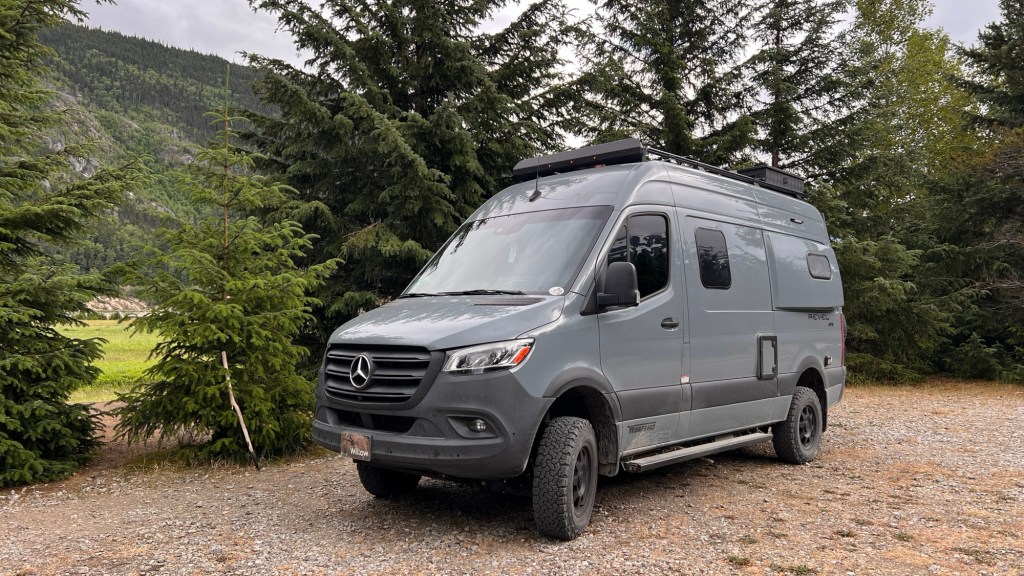
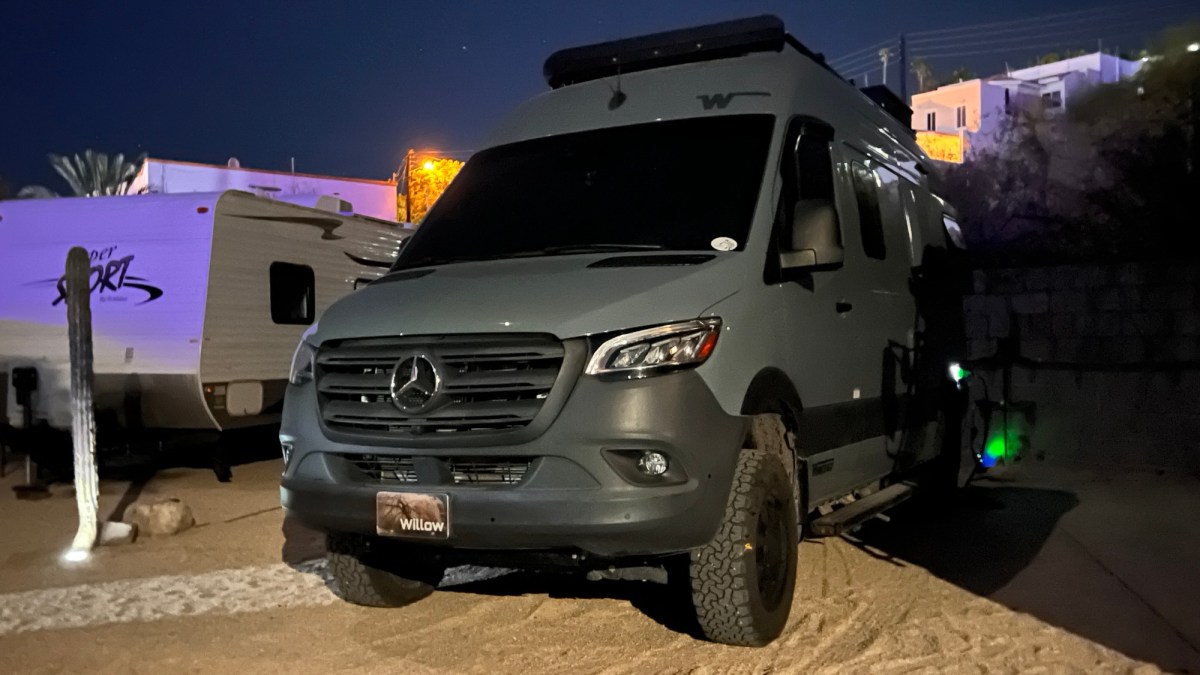
In the last five years, we’ve owned and lived in 2 different vans. Each served a purpose geared to the trip ahead. “Willow” was built and enhanced for a trek to the Arctic Circle, Alaska, BC and Alberta Canada and finally South Dakota and all the way to the tip of Baja California Sur, Mexico. Willow performed like a champ and is now retired and will be put up for sale soon. We’ve now moved onto Costa Rica where we are AirBnBing it for the next while. 

So, back to transitioning. We now reside back inside. I remember the first night back in a walled building. I lie awake listening to the hum of the electricity, the sound of water and flushing toilets. The hiss of central AC and heating units. I missed the silence. 

There are the “comforts of home”, TV, WiFi (no longer isolated to brick and mortar), running water, a big fridge and ice cubes, climate control, clean hot showers, a plug on every wall, and beside every table and chair with an unlimited source of power. The price tag for such niceties is pricey and often requires a job or takes a big chunk out of the monthly budget, and takes a chunk of your freedom away. But every now and then, you feel the need to “nest”, meaning to settle down in one place for an extended period of time, or as Chris puts it, “a place to put your stuff…” of which we have little material things left. 

I’m currently sitting in my air conditioned room, looking outside. It looks beautiful but I am in a city. There’s no seeking silence out there only in here, with the hum of the mini-split, running water and TV. The transition is tough. The freedom of the road or a “place to put our stuff” and call home? Not all exploration can be done in a van I guess. A new chapter has begun for the chicas. 

Driving while gringo

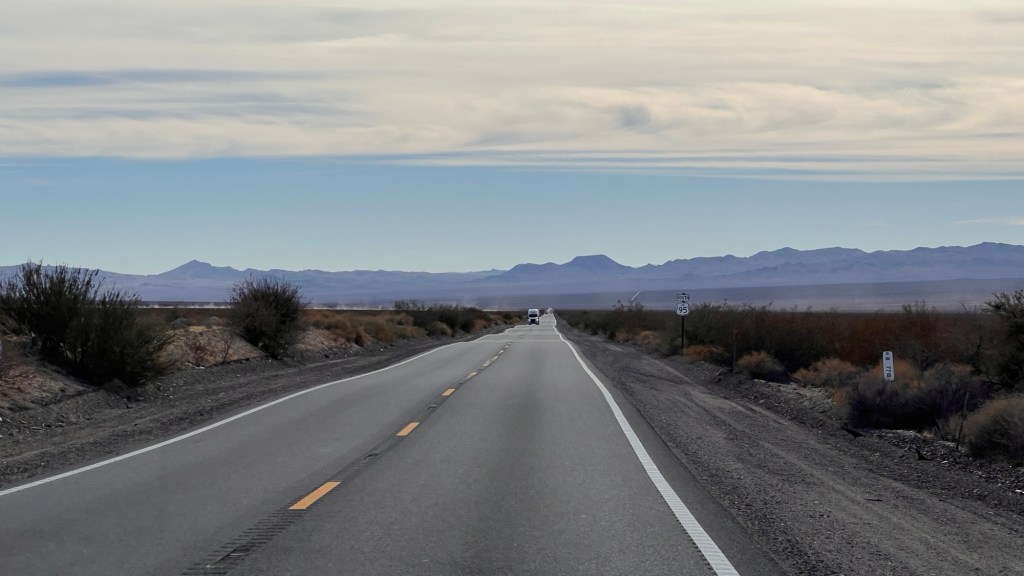
We are booking it back to Salt Lake City. We are about 30 miles outside Mesquite Nevada and our camp for the night. 

Getting back into the FUSA was quite an experience. 

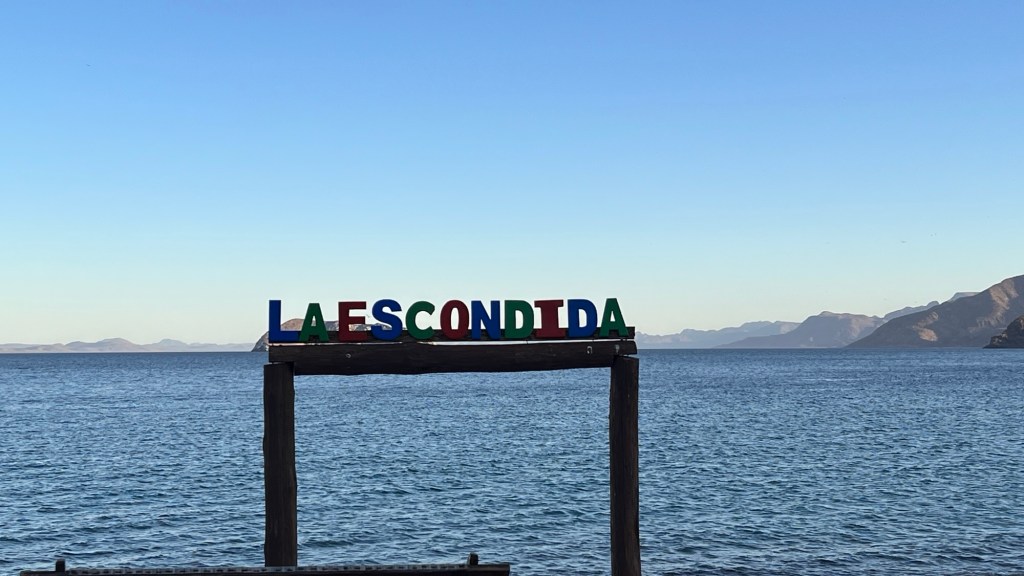
We left San Filipe after visiting with our new friends we met on our beach in Playa La Escondida. They had come down for Laurie’s birthday and happened upon the Hidden Bar, our little beach bar, open everyday except Monday and Thursday. We sat at the table beside them and started talking like old friends. I found out that she had owls as a spirit animal and finally I understood who I was making the owls for. We grabbed dinner with them and then took off the next day. 

It’s quite a slog all the way to the border from San Filipe in one day since the roads suck so bad. We pushed all the way to the border and arrived at around 1:30 or so. As was typical, there were no signs directing traffic so we cut into the double lane with a tall yellow curb preventing anyone from cutting in or out except at certain streets. The lanes were moving terribly slow and we remembered that we had global entry and that worked at the borders too. SO we got out of the slow lanes and went into the ACCESO lane. 

Well that was a mistake. 

So first three Mexicano Border guards desired to take a good look in the van, back utility boxes, bathroom, cabinets and then let us go. Next was the US border agents. It was then the mistake became clear. We were asked for our passports specifically. He said that since we decided to come down the wrong lane, we had to go through a secondary inspection. What? We informed him we had global entry and he said oh, well it’s too late now. We were directed into a stall, told to leave all electronics, including our watches and cellphones in the car and go sit in the office. We were told to open all the doors and hood. 

In this room were two rows of chairs, backs to the window so we couldn’t watch them. I sat on an end chair and watched anyway. I had brought back 2 large scallop shells and stuck them in the outside pockets of the trash-a-roo, in plain sight. The inspector asked about them, where they came from? I told him and he was pretty sure I wasn’t supposed to have them. The inspector got another inspector who allowed the shells and that was the end of it. Basically we were getting our hand smacked for being in the wrong lane. We were allowed to leave. 

A few learned driving habits, good ones, died hard after crossing. In Baja, we MUST come to a COMPLETE stop at all stop signs, and anticipate which crossroads had, or were supposed to have a stop. When coming up on some bad potholes, an accident, or just slowing traffic, the 4 way blinkers come on, signaling an abrupt change in speed. There is no texting and driving since some towns have an access lane for businesses and a thru lane for traffic just passing by. This can create some tricky maneuvering as any car can turn left across all lanes from the far right lanes. Essentially making it a 6 way stop. At anytime, solid lines, curves or coming up on a hill, any vehicle will pass you, and with skinny lanes and no shoulders, this can be quite hairy and not recommended for us Gringos who are used to wide lanes. There are so many others that are just wonky but serve their purpose in Baja. 

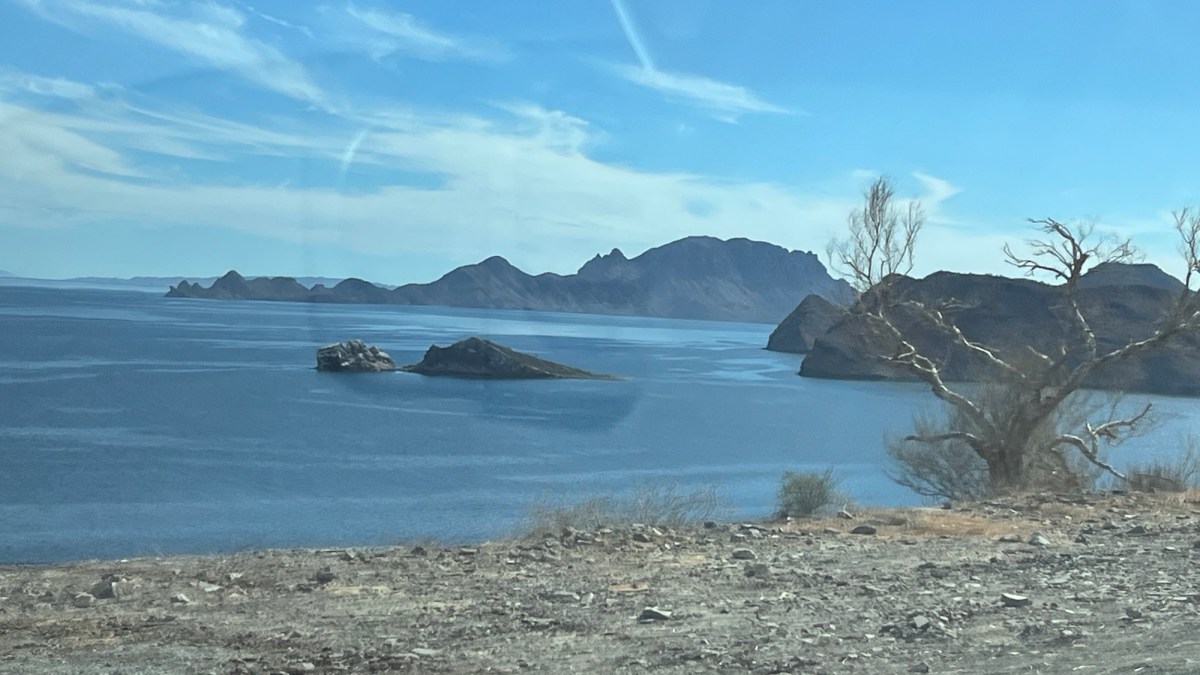
Well, we survived Baja once again. Traveling three months from top to southern tip and back again. We met new friends and caught up with longtime friends. We sat in the emptiness, created in one’s mind, while on a beach. Swam in the salty seas. Played upon the glassy bays with our paddle boards. Ate fresh caught fish, fresh veggies and fruits, and dabbled in new tasty treats while in Oaxaca. Time seemed to slow as we became alive with new experiences, like children in adult bodies, new discoveries fascinated us. Living with purpose, relaxing into a timeless existence. Accepting whatever came our way, without needing to change it as it unfolded. Living in the moment, not the past or future, just in the moment. 
A fast paced life? Not for me

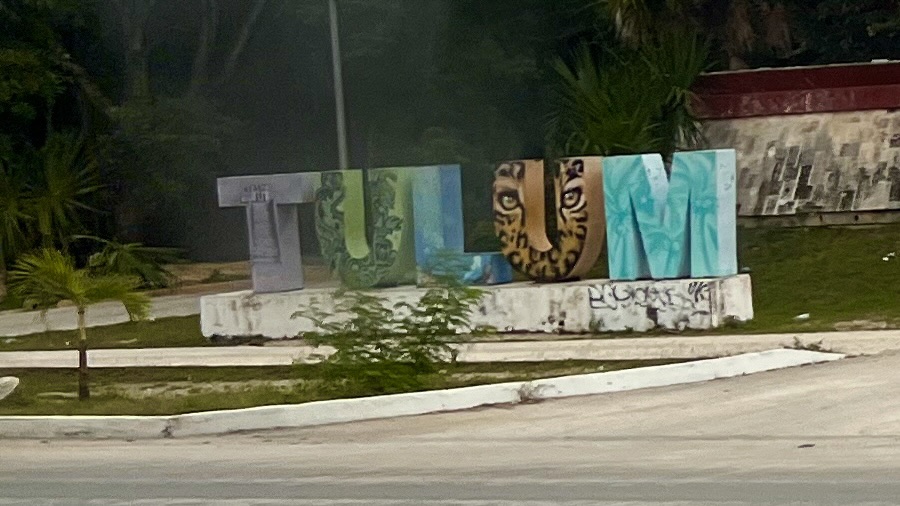
In the last 75 days, we’ve traveled the entire length of Baja Mexico exploring both the Pacific Coast and the East side of the Sea of Cortez to the South and East of Cabo San Lucas by Van. We also flew to the Yucatan Peninsula   to visit Tulum and the far southeast of mainland Mexico to explore Oaxaca. That’s almost 3500 miles. Every mile has been worth it. The culture, the people, the sights, sounds, art, architecture, history and food, all have played an integral part in the experience. A lifetime of memories packed into a measured amount of time. Amazing comes to mind. 

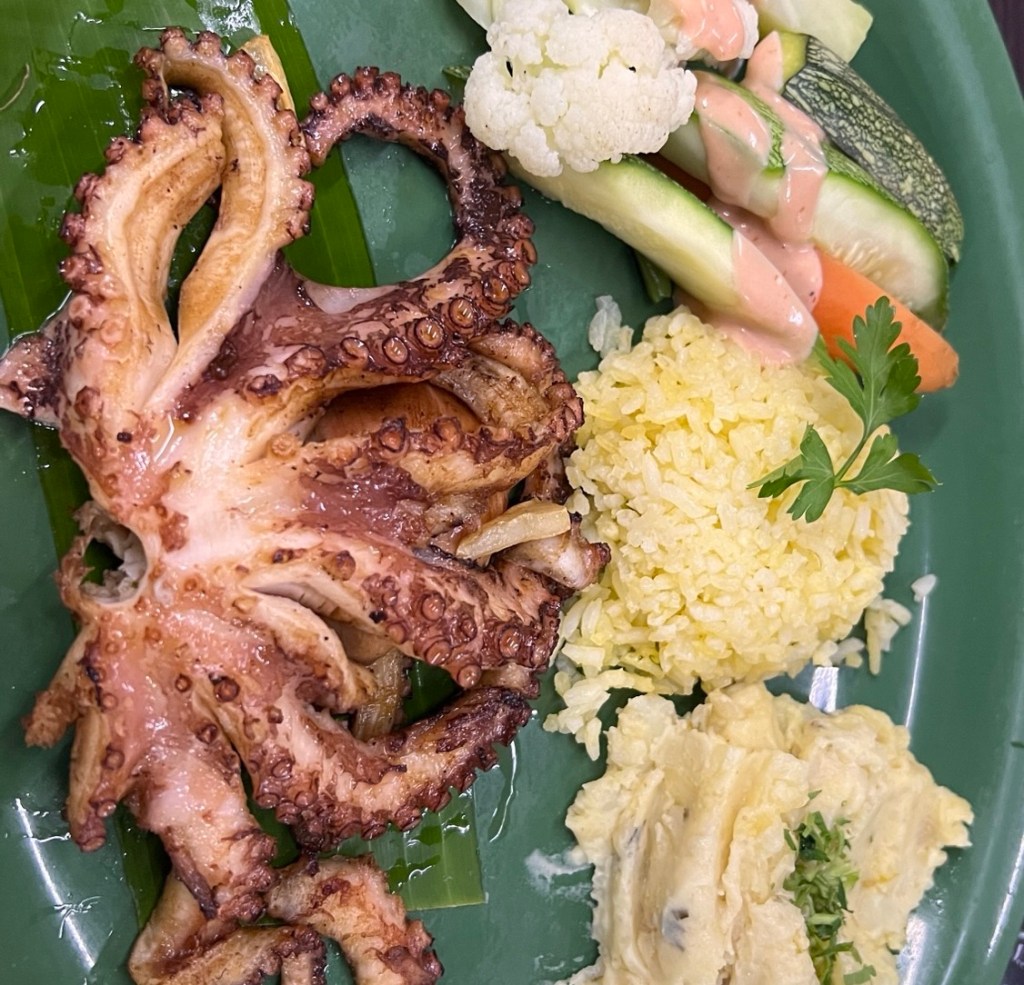
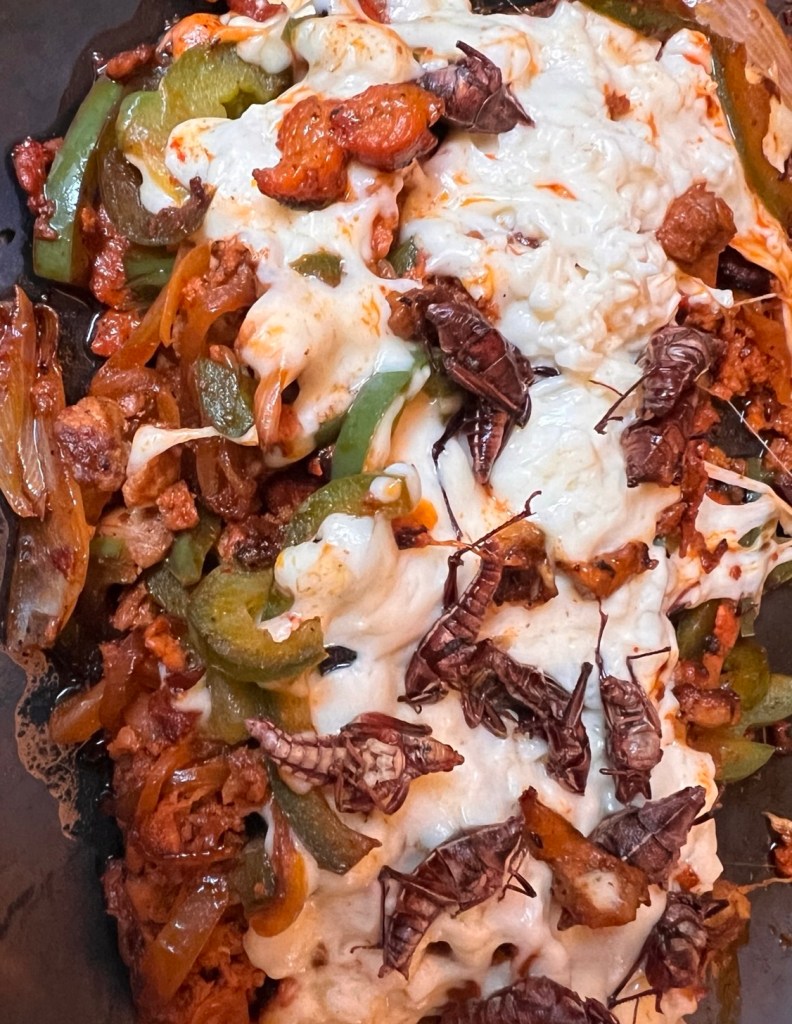
We have tasted new flavors, textures and savored the aroma of the local foods. Fresh, full of flavors I don’t think I’ve ever tasted before. A cacophony of zings and sweetness, fiery hot and creamy smooth, crunchy, chewy, stringy and saucy. I’ve tried things I couldn’t quite identify and the translation from the menu, just made you laugh. We’ve aimed our phones at so many menus, attempting to decipher the dishes. Often times the pictures spoke volumes, although the color has often times faded from the strong Mexican sun. Just sit back…giggle and breathe…it’s all part of the adventure. 

Walking around as much as we do in these cities, is also an experience. First rule, never step on a manhole cover or other covers in the sidewalk or the telephone and fiber cable boxes, water meter boxes and water tank fill boxes. Often these boxes no longer have intact lids, making for some perilous walking. Why should the sidewalks be any different than the roads? Crosswalks…well no, not really, more of a suggestion as are the 4 way stop signs on every block. It’s like a read my mind game. Which drivers are gonna stop and is it safe to cross? It’s kinda a cat and mouse game, no maybe more like chicken. The drivers are usually kind and if not in a hurry, will wave you on or flash the lights. As this happens the entire street full of cars at the intersection, blow off the stop signs and continue in a stream of metal, until…a driver inches his way out enough to stop the flow and take his turn. Impatient horns are a thing here too. Not the lay on the horn of the American culture, there is no road rage, just an impatient honk honk and a friendly acknowledgment from the other driver. 

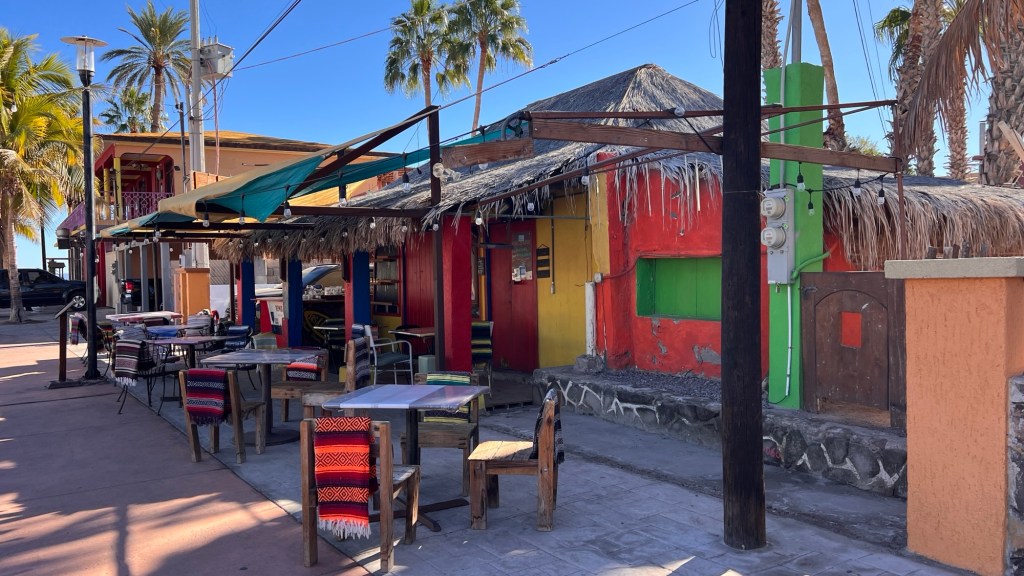
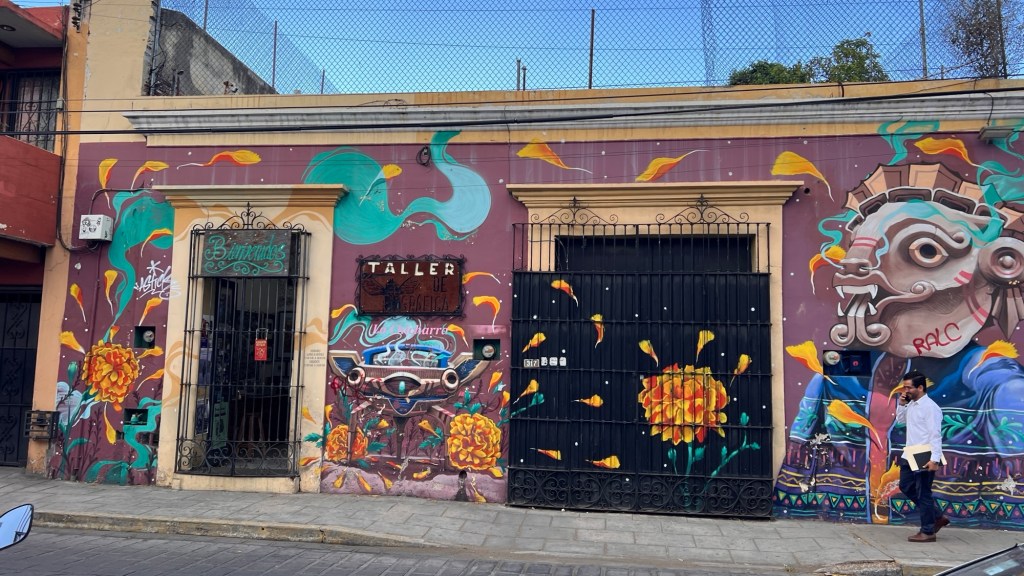
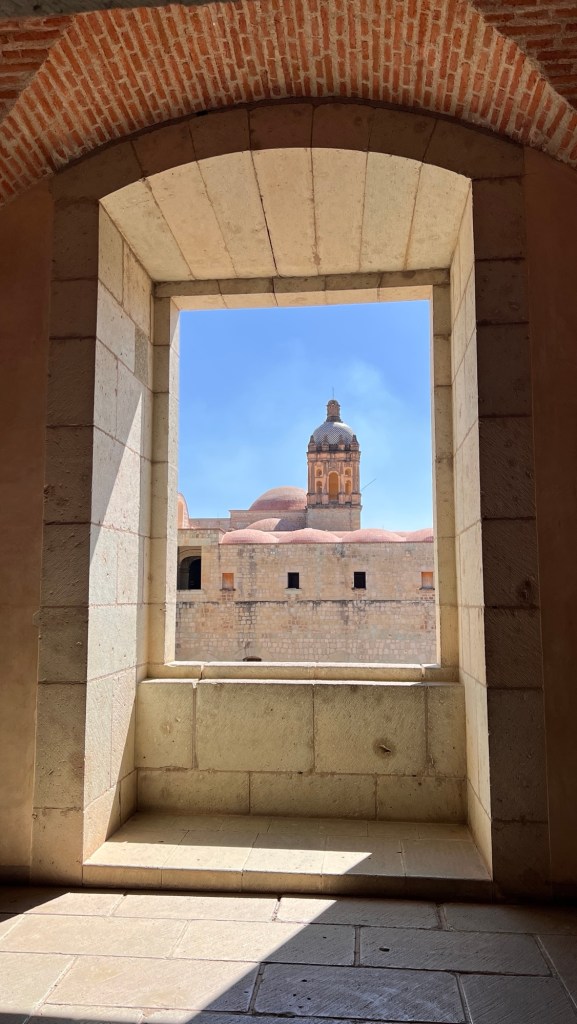
One could liken walking around in these small Mexican towns to Christmas. Behind every wall is a prize. Brightly colored rooms lit in soft lighting, families gathered around tables sharing a meal, artisan shops and galleries all hide behind these walls. Everyone surrounds their homes with tall walls, often imbedded broken glass or spikes line the tops, warding off any intruders. There are often elaborate gates and a gang of rescued street dogs warning you to not enter. The walls, as in Loreto and Oaxaca, are often embellished with creative designs, incredible artisan images of life, history, nature or cultural themes fill entire sides of buildings. Some tell stories of the hardships of life in Mexico, the kindness of the people, the industriousness of Mexico. Others are underwater worlds depicted in large murals. 
To be able to experience this and so much more requires us to slow down. To really take a look around. To watch our step and smell the air for what is on the menu. To really stop and admire the painting, carving, saying, design, posters and even the graffiti. There is no hurry, life is too short to not live it fully, here and now. We’re so lucky to have the leisure time we do and the means to travel…and the guts to step outside our comfort zone to try something new. 

The Roads of Baja

There is a strong draw, felt by a number of nomads, to explore the wild spaces rarely visited by “tourists”. One reason is the lack of transportation capable of handling the washed out, wash board dirt roads found in these areas. Another, the urge to stay in the familiar, attached to cell phones, TV and the comforts of the brick and mortar of a home. When we tell some of our journeys, they all gasp and wonder where we ever got the need to wander.

There is a pull to the desert that has enveloped Chris and I. A need for open spaces, a dry climate and room to roam freely, sometimes without seeing another soul for days. The chance meetings often turn into deep conversations and a fire side chat recounting trials and tribulations of life on the road. We share our stories, sometimes harrowing and unbelievable. Perhaps it’s a draw to face death at every turn, or perhaps the thrill of adventure and to push the envelope beyond the comfort level of the normal human. This takes us to today, four and a half years of being free and able to travel at will, one with our surroundings.

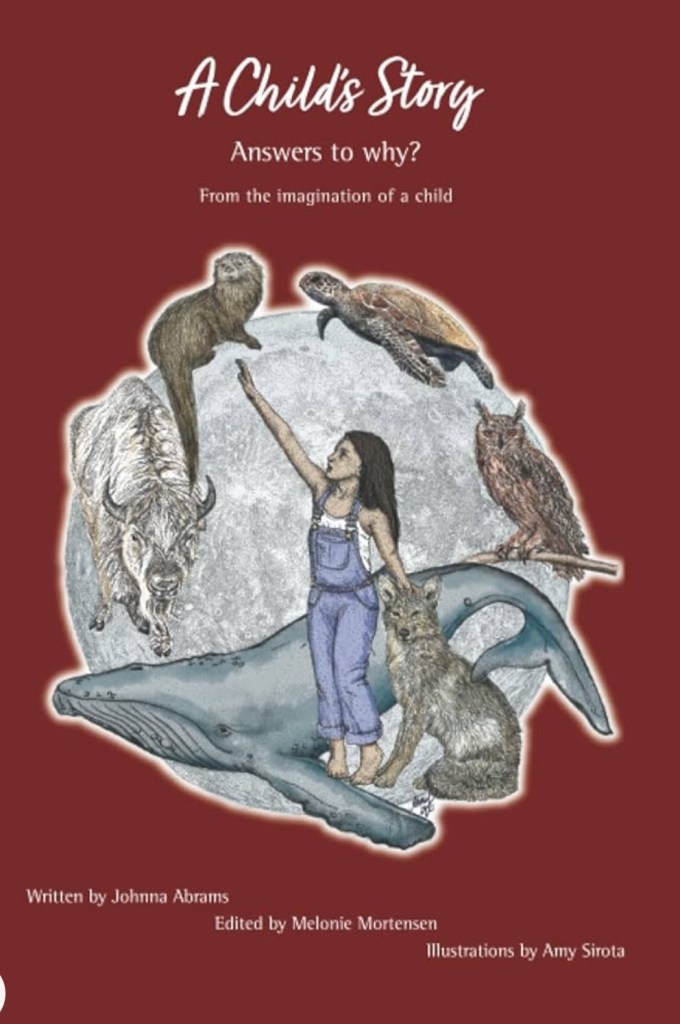
In February of 2021, we hooked up with a caravan of three, Chris and I and two other gals, and crossed the border into Baja Mexico, for the first time. There’s a call we lean towards and freely give into, that paves the way for our wander lust. Baja seemed like the great western frontier that we needed to explore and conquer. Armed with only our cell phones and a good translation app, Garmin GPS, and a competent van, we set out to explore a country unknown to us; a 1,000 mile journey full of new flora and fauna, animals and sea life. I found it so inspiring that I wrote a book while traveling through Baja for 3 months. Fast forward to January 2025 and here we are again.

https://www.amazon.com/Childs-Story-Answers-Why/dp/B09PHHCGWX?dplnkId=38cdaa69-0263-42c6-afe6-a62c7c7e4057&nodl=1

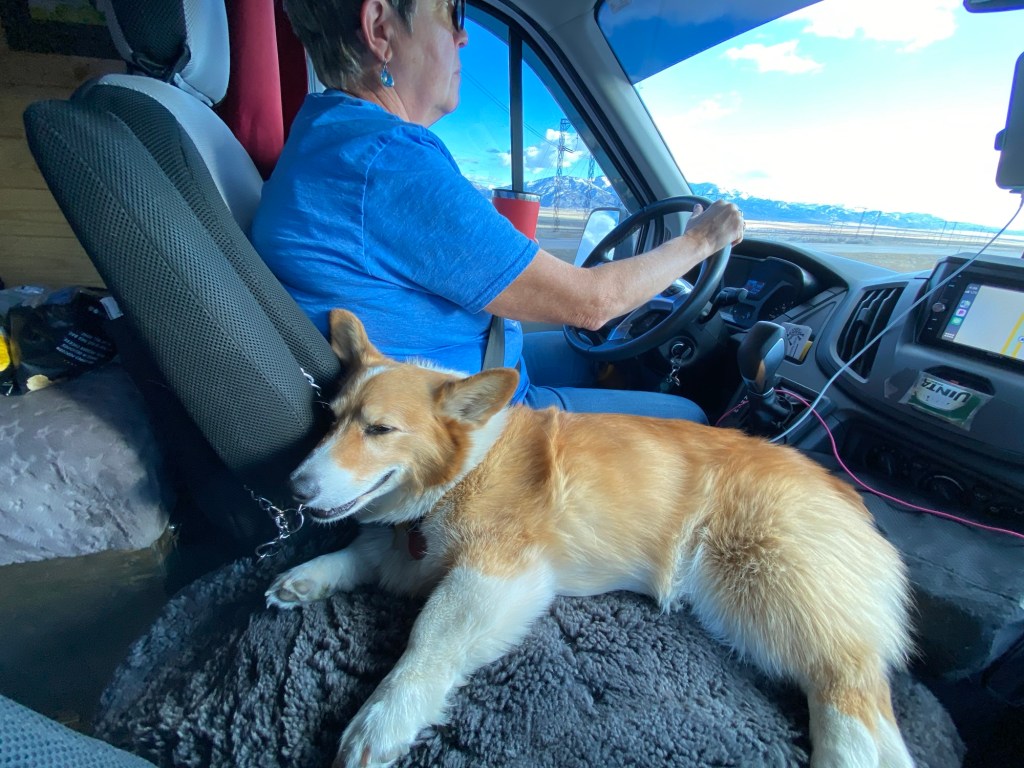
It’s been a tough 2 years emotionally. After loosing our corgi Gandaulf, we sold our first van and all the toys we had accumulated during our travels and set out to travel around the world. Seven months traveling around Europe and another four months in SE Asia, Indonesia, and Malaysia, then back to the States where we purchased another van to complete the Canada/Alaska trip we missed out on during our two and a half years living on the road.

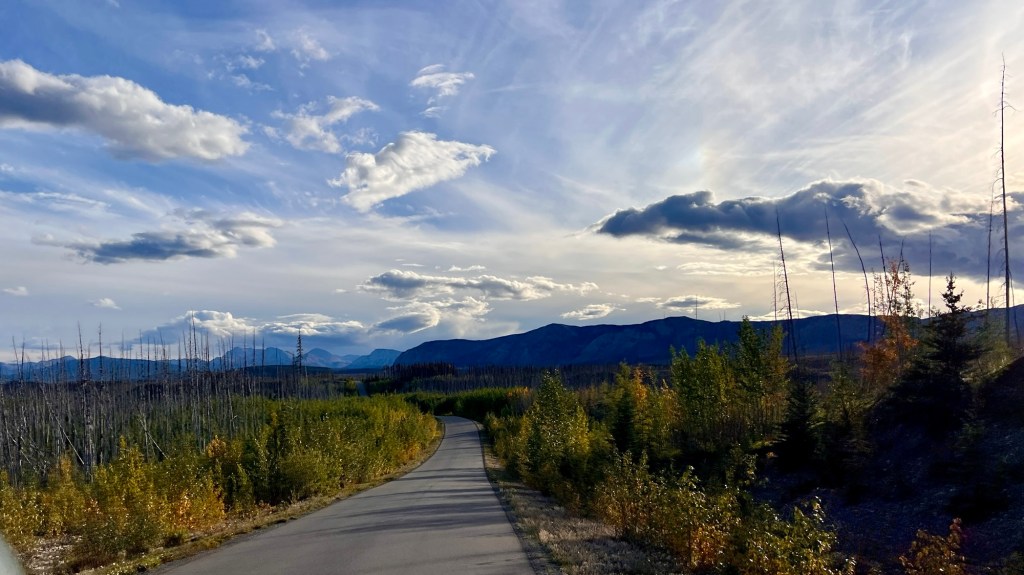
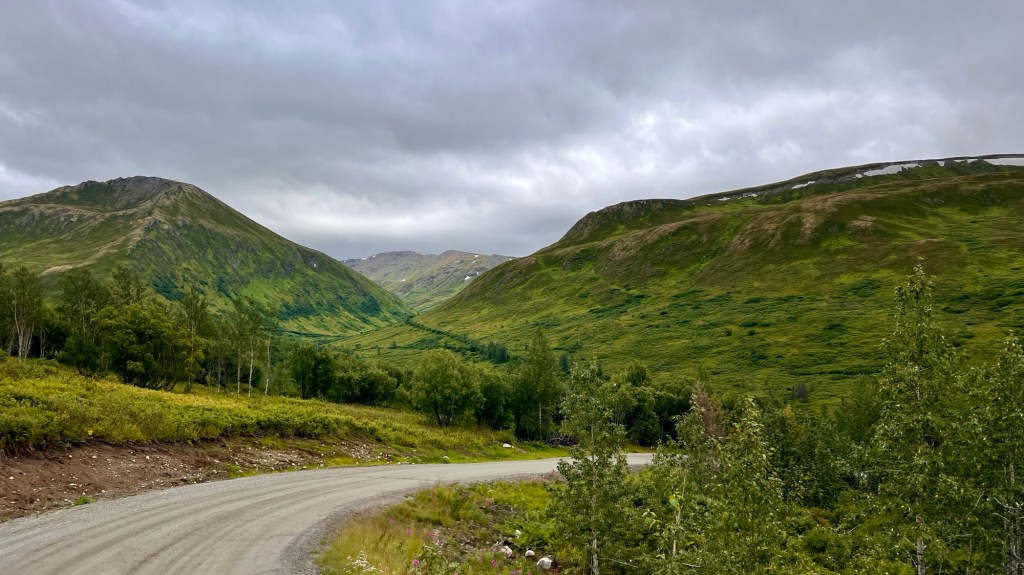
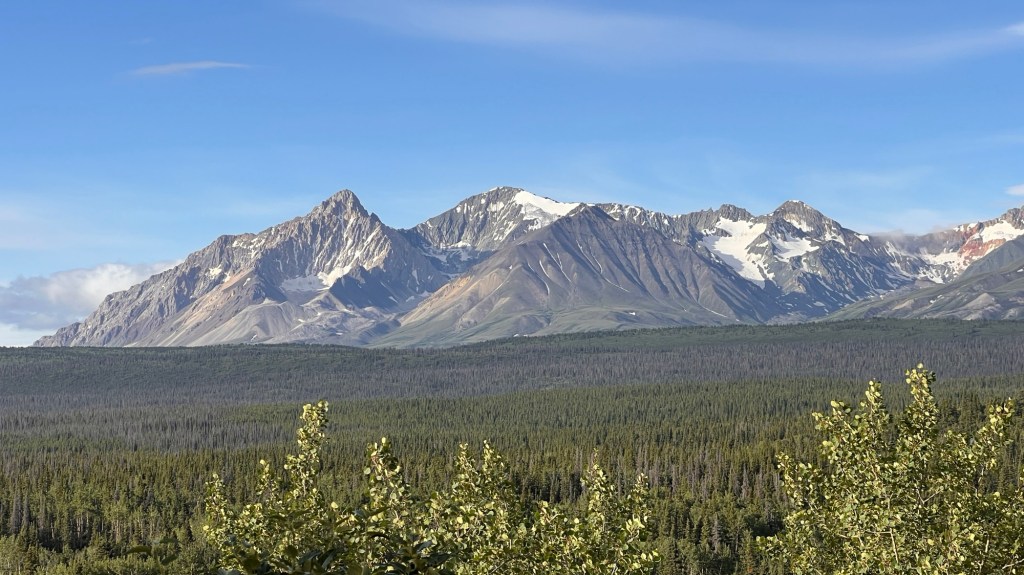
Alaska and western Canada is another frontier of sorts. Not like the desert but just as grand and open. The roads in each very similar; pot holed and delaminated. The punishing washboard roads in dire need of repair, are enough to put any van build or truck to the test. there would be whole days of traveling 3-400 miles and never cross another vehicle. We were never sure if the paved sections of the roads were better than the dirt roads, both held their own dangers. The grandeur of the Alaskan and Yukon outbacks are hard to match, even in the deserts of the south western USA. Still, the desire to revisit Baja California, Mexico and the desert was strong.

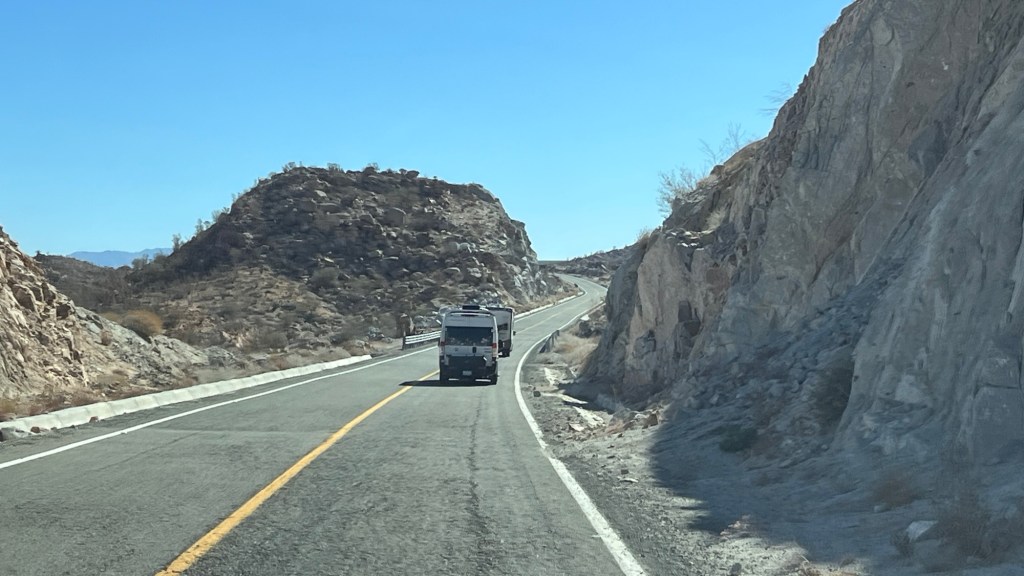
Today, January 6, 2025, I’m writing you while enjoying coffee and the warm sun of La Paz, Baja California Sur, surrounded by fellow travelers. We’ve traveled 1350km so far, with another 300km to go. The roads to this point have been narrow two lane highways, with little to no safety lane and often no shoulders. There are times when we must come to a complete stop to walk the van through deep potholes and slow to a crawl when passing trucks come barreling around blind corners. There are constant signs of accidents, both with roadside crosses and mangled guardrails, straightened out or completely ripped from the supports and trailing off into deep ravens as if pointing to the site of a wayward vehicle leaving the road and plummeting to its end. Often times, there will be stretches of road that have carcasses of dead cows, horses or the unidentifiable remains of some unfortunate animal, usually struck at night by a speedy semi, as they come to the flat roads to sleep. It’s a constant reminder that it only takes a second of misfortune to end a life.

So our nomadic wandering continues with so much more to see and experience. We may be absent but we are always present where ever we find ourselves. Living in the moment, sometimes with no set direction but forward. Always savoring the newness of each destination and rolling with whatever may come our way.

Down a Winding Desert Road

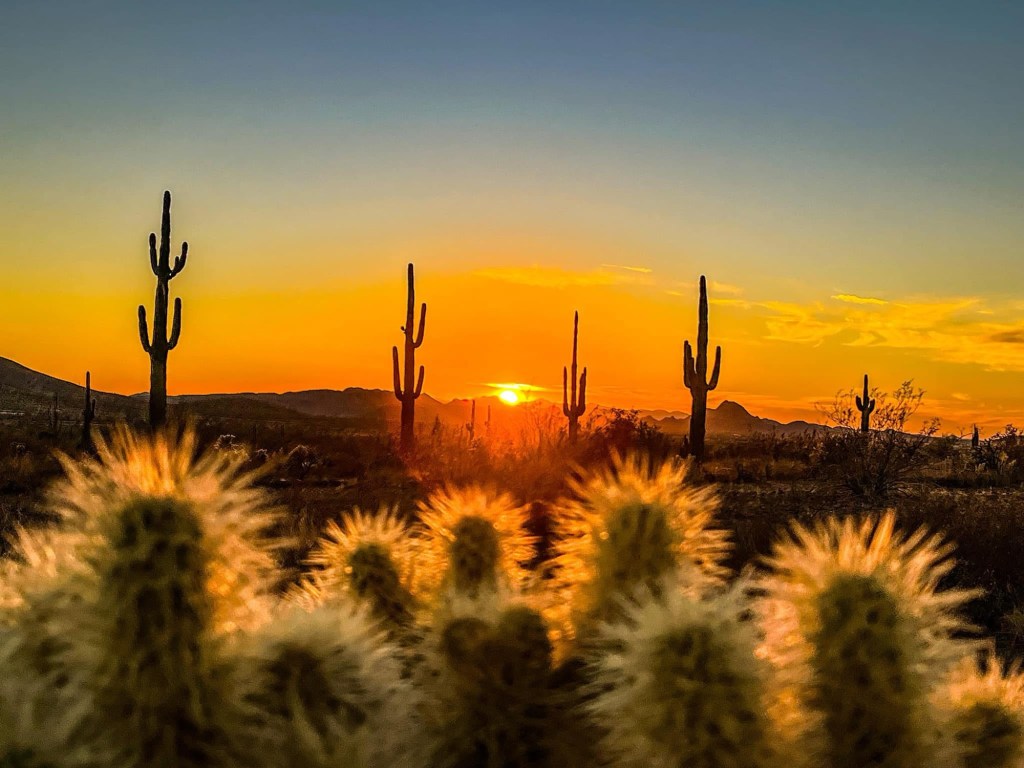
To say our lives are boring, would be the biggest lie anyone ever told. Today we find ourselves on a pilgrimage down to Baja California. Driving through the barron desert of California’s Mohave. The vast emptiness is overwhelming and all encompassing. Creosote, desert rose, sage, Joshua trees, and various other spiny shrubs, dot the desert floor. Whips of dust circle and rise into the sky in thin tornadic spouts. The desert has a beauty all its own.

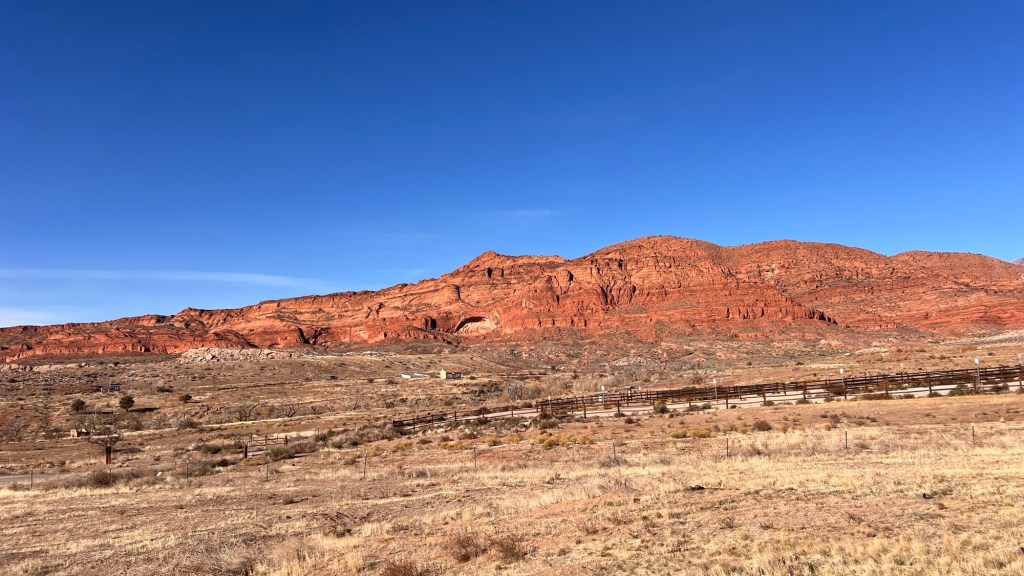
As we make our way, small desert communities spring up in the middle of nowhere. Towns like Needles, Searchlight, and Topok breakup the monotony of flatness. We wonder what the inhabitants do for fun? Chase jackrabbits…wander around in altered states of mind. Sit on porches rocking in old wooden rocking chairs. Commune with the vast sky? There’s a certain peace found here in the desert emptiness, vastness that is beyond measure. A kinship with Mother Earth, a pleading of the poor souls living among her scorched soil and dwarfed trees and plants.

For the next few months we will enter this environment willingly, searching…searching for that kinship, immersed in the life of leisure. Healed by the salt air. Lost in days unknown, time lost, only day and night. Wander around with like souls just living life on the peninsula’s terms. It’s time to disassociate from the tension and unknowns of life in the US.

We are looking for somewhere to call home base. Someplace we can travel out from or just hunker down and become part of a community. Who really knows. What I do know is, we have wandering spirits that are hard to quench, hard to convince to stay in one place…wanderlust.

Southward Bound

It’s warm and cozy, sitting in Willow (our van) with the heat on. It rained last night, as usual, and the morning sun is busting out at the seams as the heavy clouds give in to the coming day. 

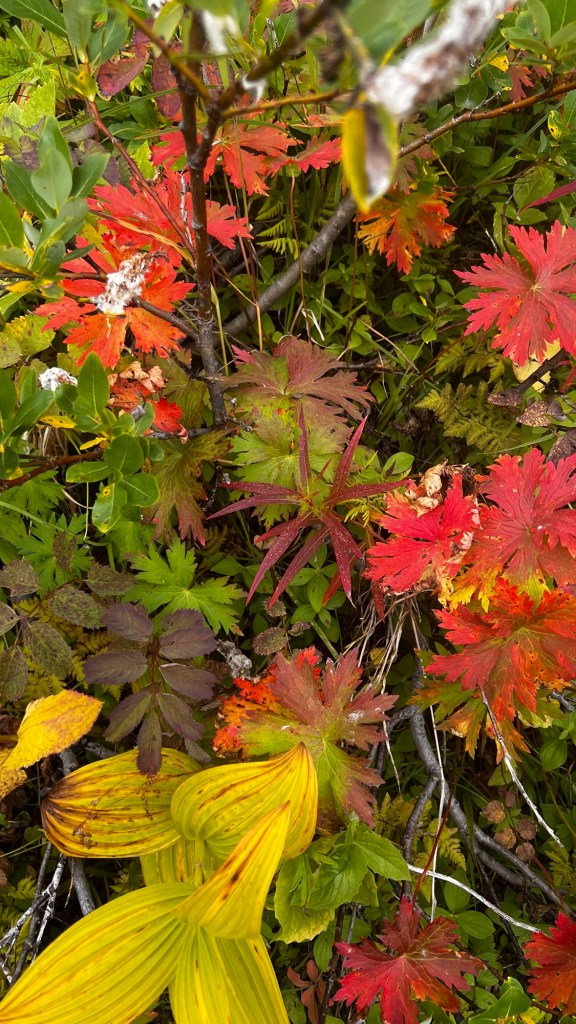
The rain drops sit poised on the edge of the turning leaves and bushes on the forest floor,  just waiting to bedazzle the world when the sun finds its small existence. The lack of squirrels portends the coming of the fall chill and the stupendous color change beginning. For the last month, these busy little creatures have been scurrying from tree to tree, digging holes and filling them with a winter bounty, if they can find them under a blanket of fresh snow. The geese have been filling the skies in huge, jagged Vs, honking as they begin their southerly migration. Perhaps we should take note of these happenings and head south ourselves. 

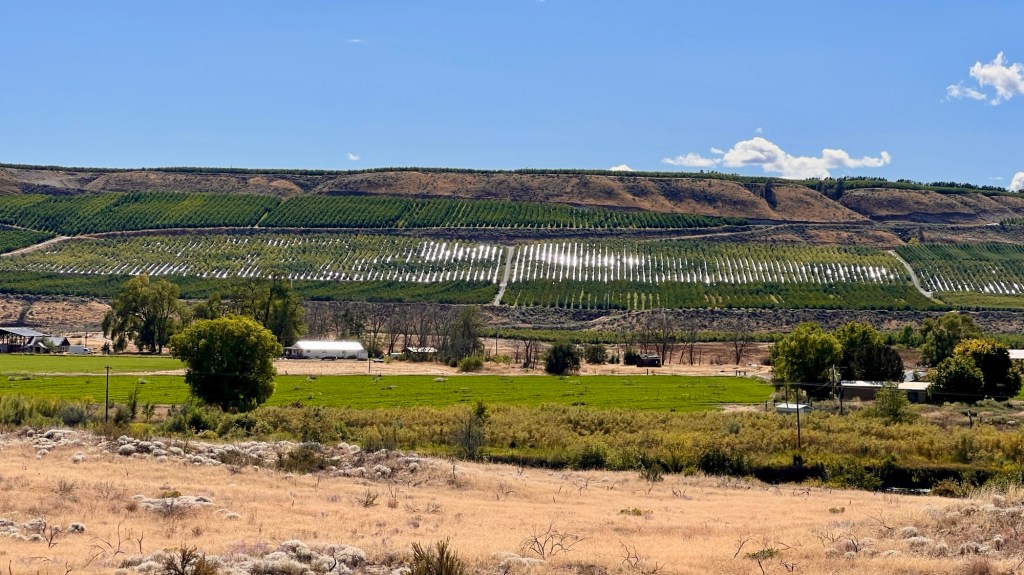
We crossed the border from British Columbia Canada, a few days ago. The fall colors slowly fading out and the green leaves have reappeared as if we passed backward through time. The spectacular mountain vistas giving way to the subtle rolling hills covered in orchards and vineyards, then the unending flat fields of golden grains, farm houses and rogue silos, interrupting the golds with a few ancient cottonwoods, tin roofs glinting the suns rays like a diamond amongst the fields of gold. We’ve been sticking to wandering the backroads, trying to eek out whatever new experience we can find as we meander southward. 

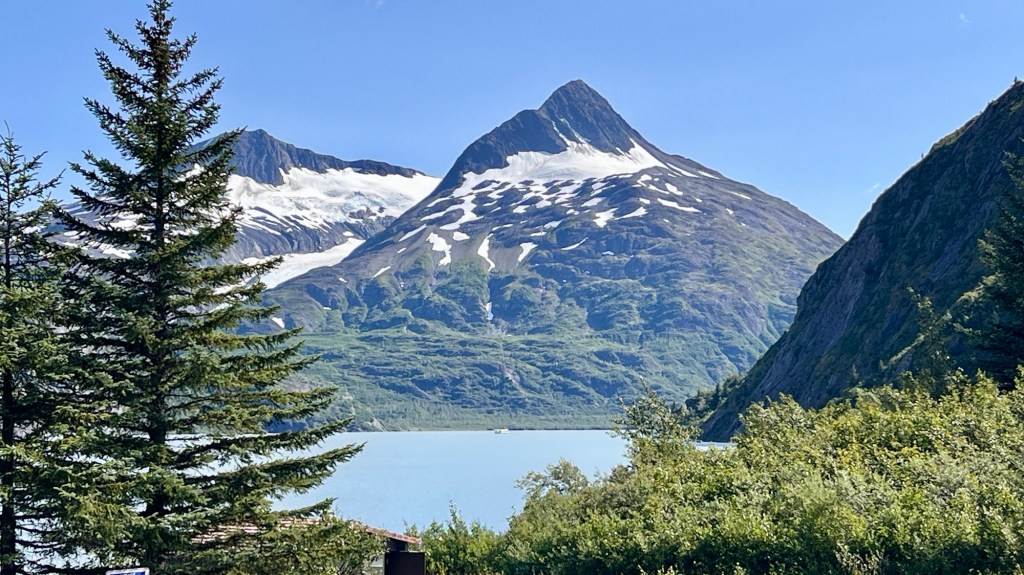
It’s always bittersweet when we move from one place to another. This trip, now spanning over 9,500 miles, has seemed like a blur. The vast Canadian wilderness, coupled with the wildness of the Alaskan frontier, has made it easy to immerse oneself in nature, primal and raw. To have an intimate insight into the lives of the First Nations people, the animals and fishes that roam the vastness, the small plants, boreal forests, 14,000’ mountains, glaciers and lakes, Arctic tundra, towering fiords, and so much untamed beauty…has been a blessing that is etched into my mind forever. 

Universal Being

As we drive down the long, 

lonely, thin road…

My gaze transfixed on the horizon.

Eyes gazing at all before me

The golds of the aspen 

The blood orange of alder

The reds of the fireweed 

Accented against the tall green conifers

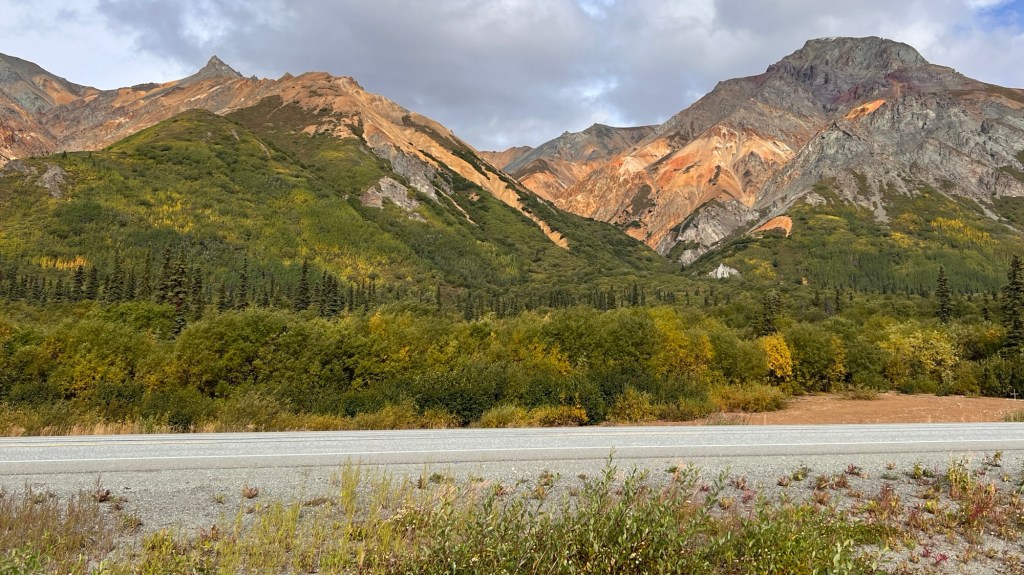
Making a patchwork quilt of the mountain sides.

The beauty is palpable

My heart leaps with joy

My mind solidly fixed in the emptiness of this vast land

The turquoise and aqua green braids of water

Glacier milk

Green rivers  

Cool clear streams

Shimmering lakes

The pulsing life blood…water.

The glaciers hold still and fast to the craggy folds

Slowly receding back into the hollow canyons.

The icy blue fingers relenquishing their grip.

Water cascading down

Wisps of white showers

Pooling and spilling over the deep crevasses cut into solid stone.

The roar deafening. 

A cahcaufony of sounds

The shrill chatters of the squirrel

Titter of the titmouse

Squawk of grey jays

Call of the raven

Piercing cry of the eagle

Whisper of the wind 

Rush of the stream.

The sun… 

streaming down from the most stunning blue sky.

Warming

Inviting

Soothing

Clouds hanging free

Heavy black

Wispy white

Outlined in gold and chartreuse as the sun exits and night slips in behind.

Hews of purple 

blue and green 

paint the sky

A vast inky black sky 

awash with stars 

Galaxies

Nebulas

Planets

Endlessness.

I drift off to sleep

Part of this natural world

Part of the intricacy of life

Rapid Changes

Today I woke up to 41 degrees in the van…who knows what it is outside. With everything we need in our little capsule of steel and rubber, there’s no big rush to go outside and find out. 

The sun is making its way into the sky, creeping slowly from behind the snow capped peeks, but has yet to shine on the opposing peeks across the river valley. 

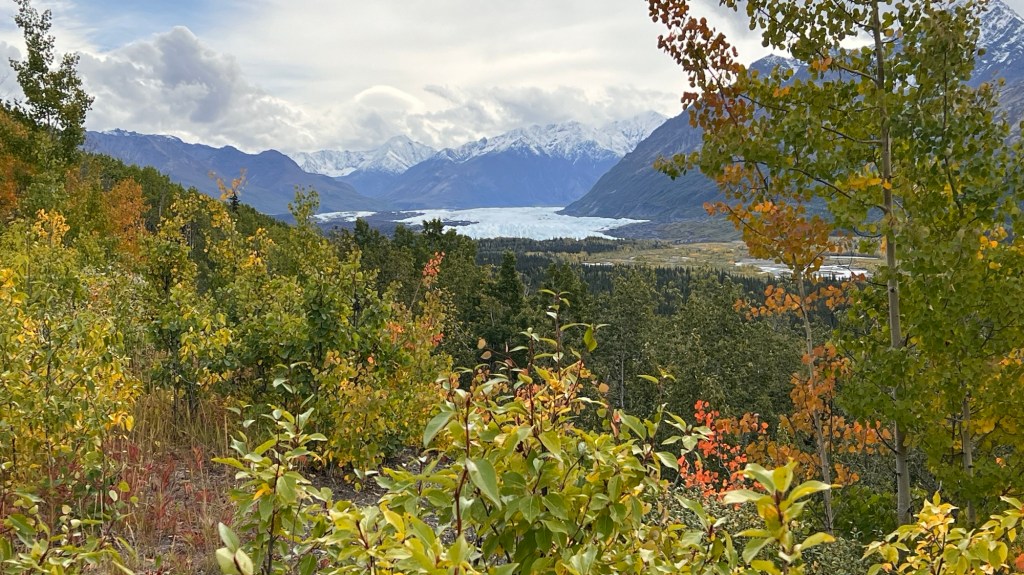
Our camp last night was right beside the Matanuska River, surrounded by Alders, sporting their new yellow fall colors, Drayas, also in showy white tops, and Fireweed that has lost its towers of red flowers and turned to tangled white silky seedpods. The mountains surrounding this valley are topped with snow from the thunder storms 2 nights ago, accenting the harsh, craggy peeks. 

Yesterday, we drove up from Ninilchik to the Russian River Ferry crossing and joined the throngs of fisher people hoping to catch a nice coho salmon, or at least hook into one of the giant red sockeye on the Kenai River. These fish are huge! As your standing in the water, these fish are lined up, heading upstream. Every now and then, one will breech the surface slowly or jump out of the river all together. With your concentration on your line and indicator, this is quite alarming at first, but soon becomes the norm and you settle in to the rhythm of casting. 

It’s time to begin our month long procession east then south, out of Alaska, into Canada, and finally, the lower 48. Time to say good-bye to the wildness of this beautiful land, where it is easy to forget your worries, clear your mind, and refresh your inner most being. To the fresh, crisp, cool air, the bears, moose, squirrels, seagulls ravens and bald eagles, all etched firmly into my mind, a sorrowful good-bye. A fond farewell to the mountains and glaciers, turquoise rivers and milky white glacial streams and waterfalls, thousands of lakes and fiords. To leave behind the thousands of miles of pot-holed, wavy, and frost heaved roads of dirt and tar. 

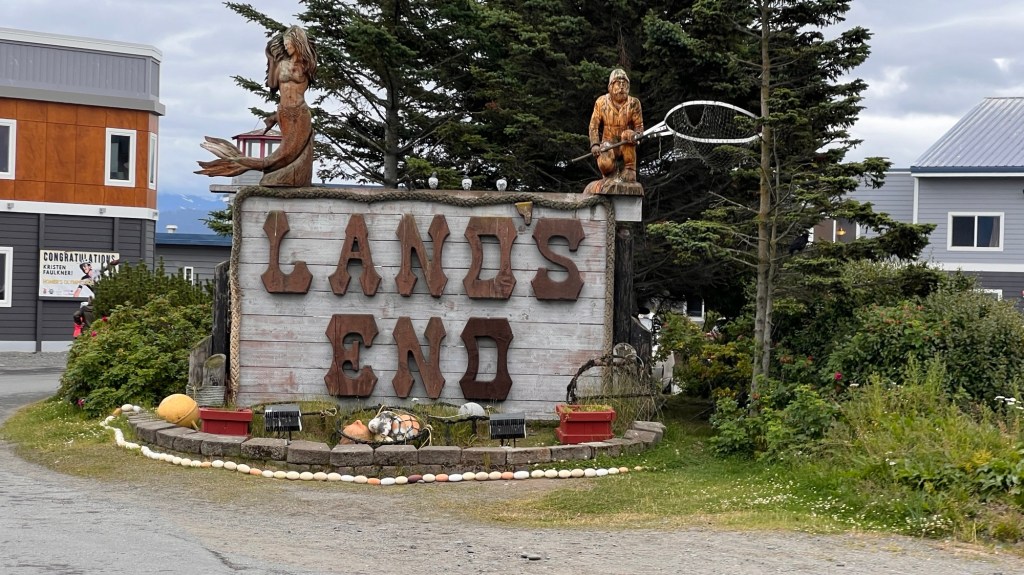
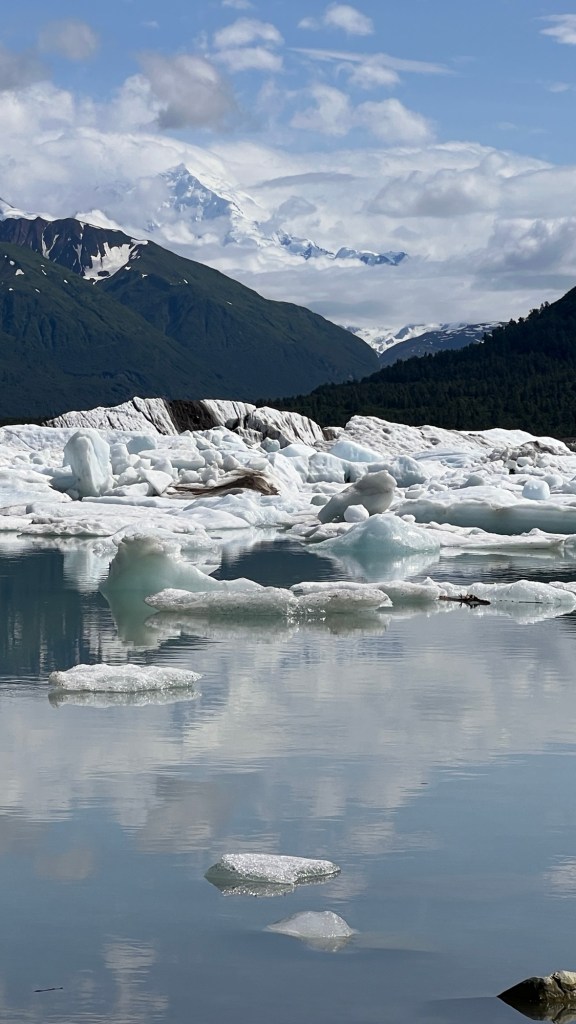
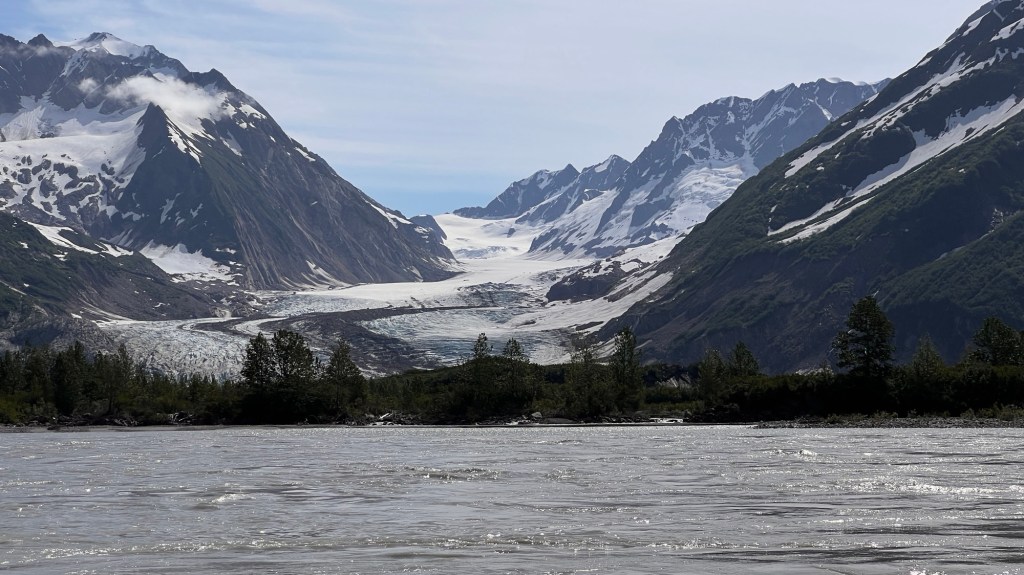
Although the journey has not ended just yet…we’ve traveled almost 6,000 miles since Salt Lake City. We’ve driven on almost every road in Alaska, been from the Continental divide (Antigun Pass) to Lands End (Homer). We’ve traveled by ferry along the Inside Passage between Juneau, Skagway and Haines. Took a wild ride down the Tatshinini and Alsek Rivers, played with icebergs and bergy-bits. We’ve had our share of bear encounters, some too close for comfort. I’d say it’s been a wild and encompassing ride for sure with still more to come. 

The Wilds of The Alaska Frontier

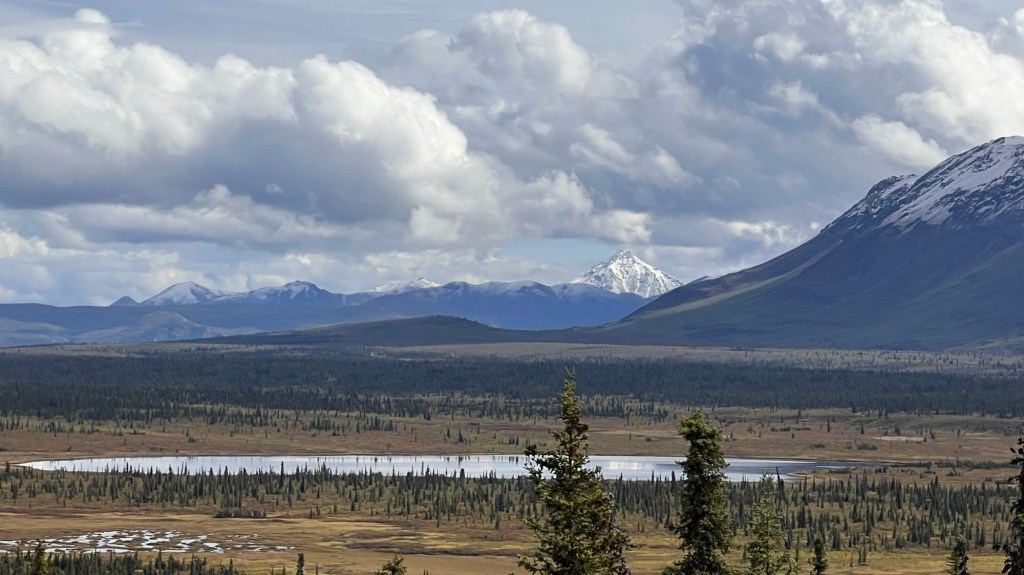
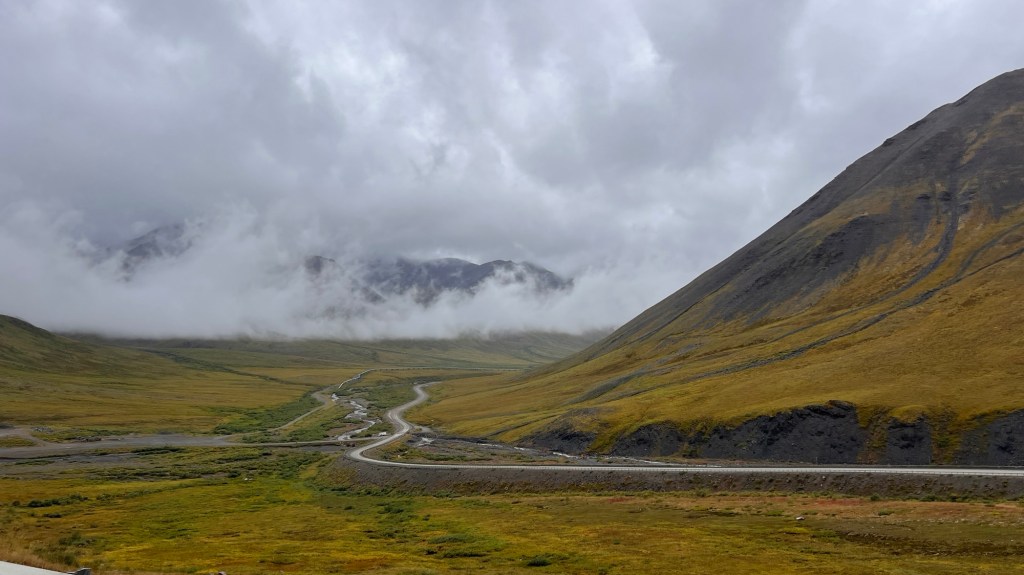
The clouds, like ghostly apparitions, glide across the mountain tops, getting stuck in the rocky crevasses and at mid-mountain, the tops of black spruce groves. White gashes of the snow fields and silent glaciers, creep across the mountain passes, carving deep scars into the ancient Arctic tundra. The tree stands dot the sides of the hill in a spattering of greens, yellows and reds, as the fall closes in. A hint of chill hangs heavy in the air tonight. It’s gonna be a cold one, clear skies and a light breeze from the NW. The lake stands still as glass, reflecting the grandeur of the surrounding alders, willow and poplars. All is silent and eerily still.  

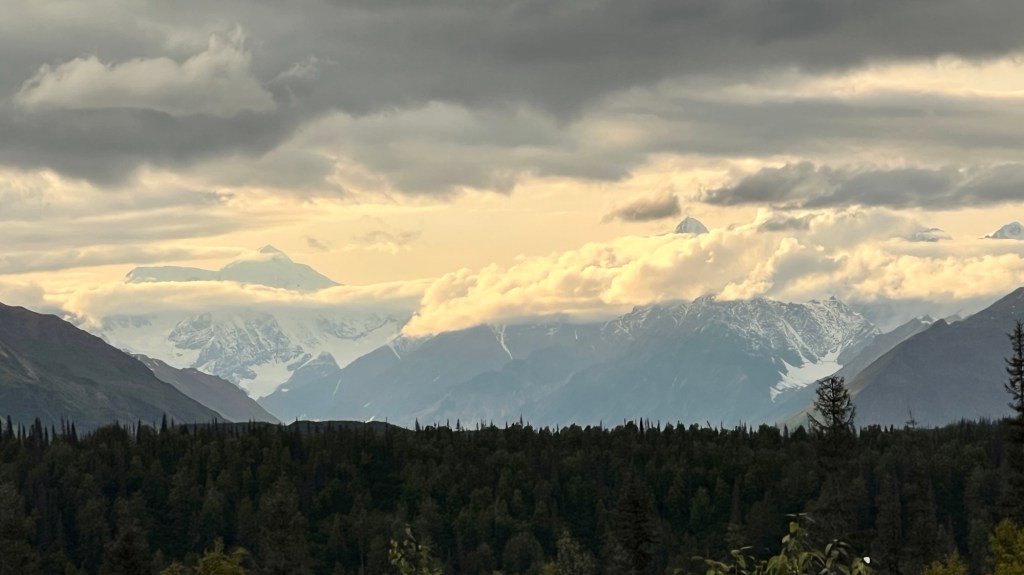
It’s been a week of travel from the Antigun Pass of the Dalton Highway above the Arctic Circle. We took a side trip to Chena Hotsprings for my birthday, before heading south down the Parks Highway. Denali, or more correctly, Mount McKinley, was playing peek-a-boo with those of us that hunkered down for the night in the makeshift view point parking lot campground for a night of boon-docking. The sun is starting to actually go down now at a more reasonable hour. The long days of the mid-nite sun, have gone for the summer, and the march towards the winter darkness has begun. 

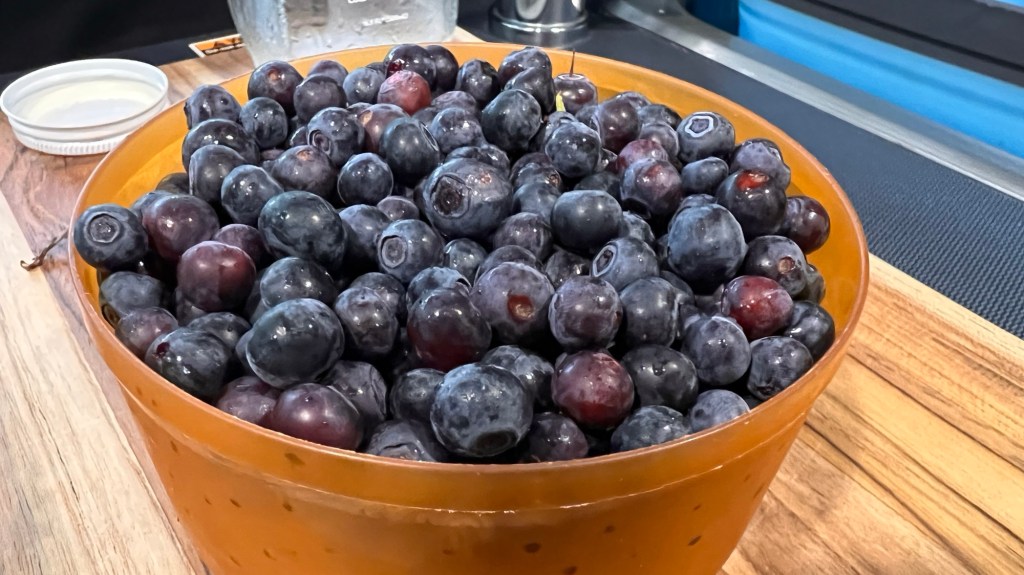
The weather has been, well typical Alaskan. In any given week, at least two days will have sun, two will be cloudy and three will be wet. The wet days are usually drizzly and overcast, which both ignites the colors and makes for flat lighting, muting the contrasts. Good trade. Sometimes these are prime wildlife spotting days, since a lot of the visiting humans hunker down and stay dry. Bears, both black and brown, love to forage for the blueberries and raspberries that are covering the hills and road sides. Moose are a rare sighting in any weather, so the fact that we saw one was almost a miracle. The fish don’t much care if it’s raining, bright in sunshine and clouds, we caught our fair share of the Arctic Grayling. Porcupines waddle across vast empty ribbons of highway minding their own business. Ground squirrels and prairie dogs scamper about the puddles and dig in the soft black soil. It’s a struggle for survival that we have had the good fortune to observe while here. 

The salmon run has begun in most of the streams and rivers. These mighty titans of the fish world, fight with every ounce of life they have left to make sure the population survives. Their bleached bodies, still sporting the deep red color of the end of life, struggling upstream in shallow creeks and streams or their corpses lie rotting on the sides of these rivers and streams, providing nutrients and sustenance for opportunistic predators and scavengers like the raven and gulls. Even the majestic eagle makes a showing at this feast. In the way of the salmon’s final goal…stands humans and the grizzly bear. Both worthy foes. 

We’ve seen the landscape change. Not just the beginning of autumn’s colorful show, but the craggy mountains, smooth rolling hills, flat Arctic tundra and massive lakes and rivers, glaciers and gigantic snow fields. We’ve floated down a river, through an iceberg choked lake and seen temperate maritime weather. We’ve flown over 12,000 feet in a seaplane through the snow laden Fairweather Mountain peaks. We’ve seen thick subarctic boreal forest and sparse arctic tundras, vast inlets, bays and fiords. The wildness is everywhere. 

The Dalton Highway, Alaska

A trip to Alaska is a once in a lifetime thing…especially if you drive there.

We set out almost 2 months ago from Salt Lake City, UT…and hit the road for the long 2500 mile journey to Skagway, Alaska. Since, we’ve hit a good deal of Eastern British Columbia, The Southern Yukon Territory, and have made our way to Fairbanks, Alaska and up to the Antigun Pass on The Dalton Highway. Over 3500 miles covered.

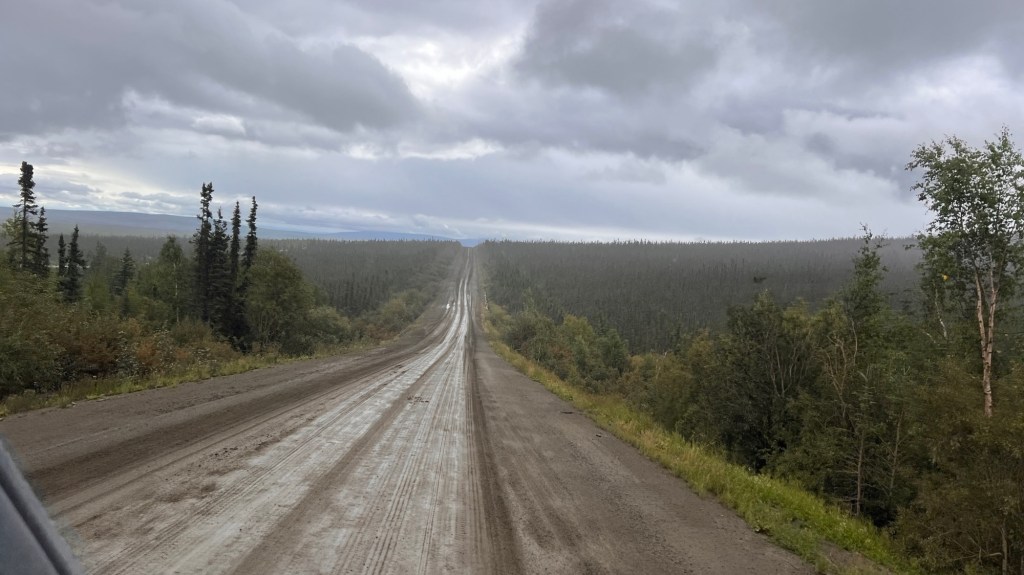
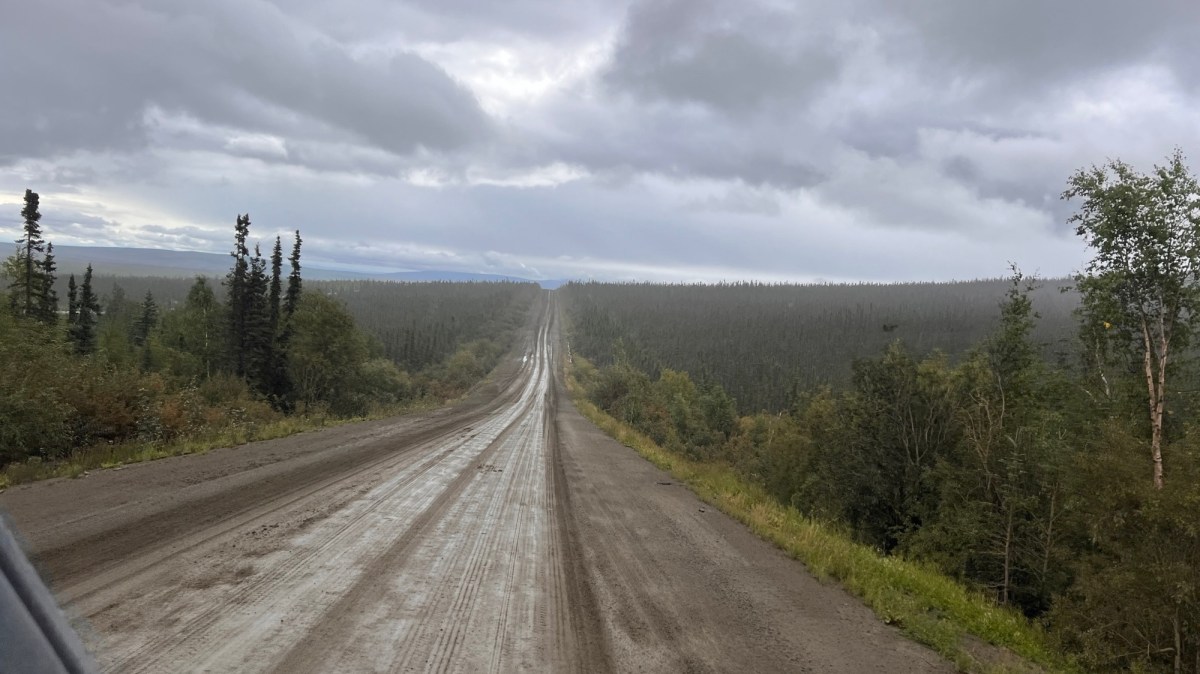
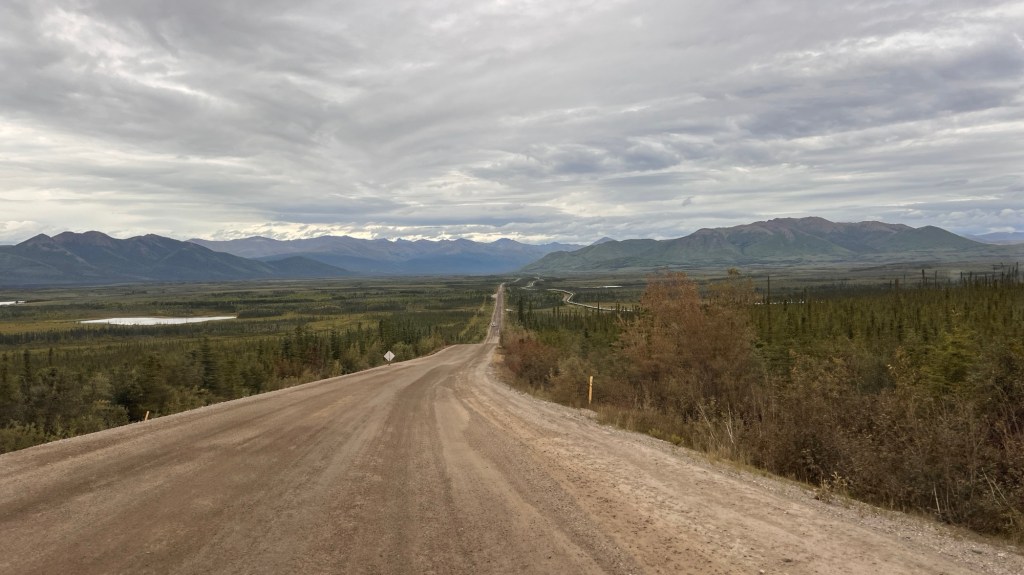
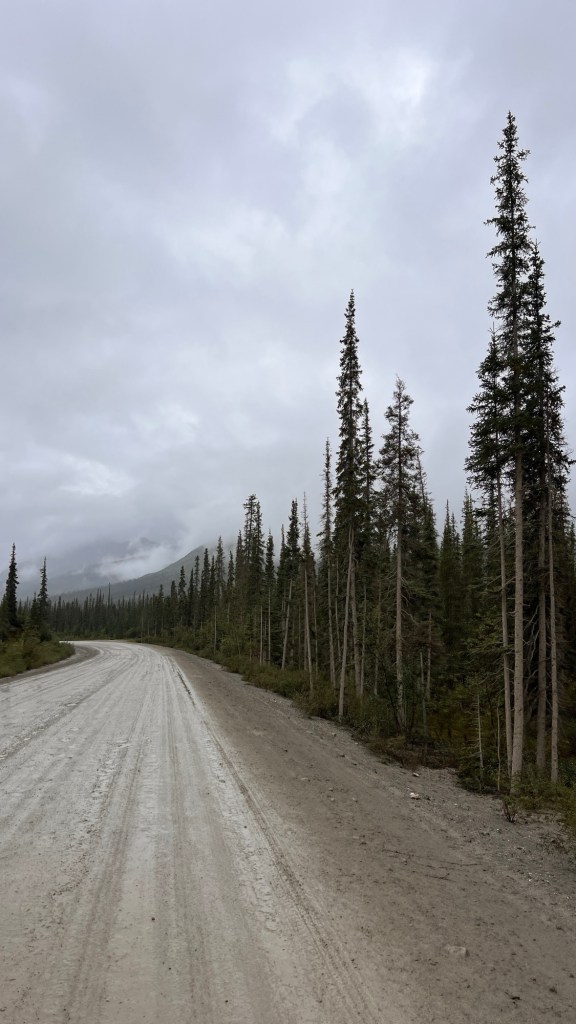
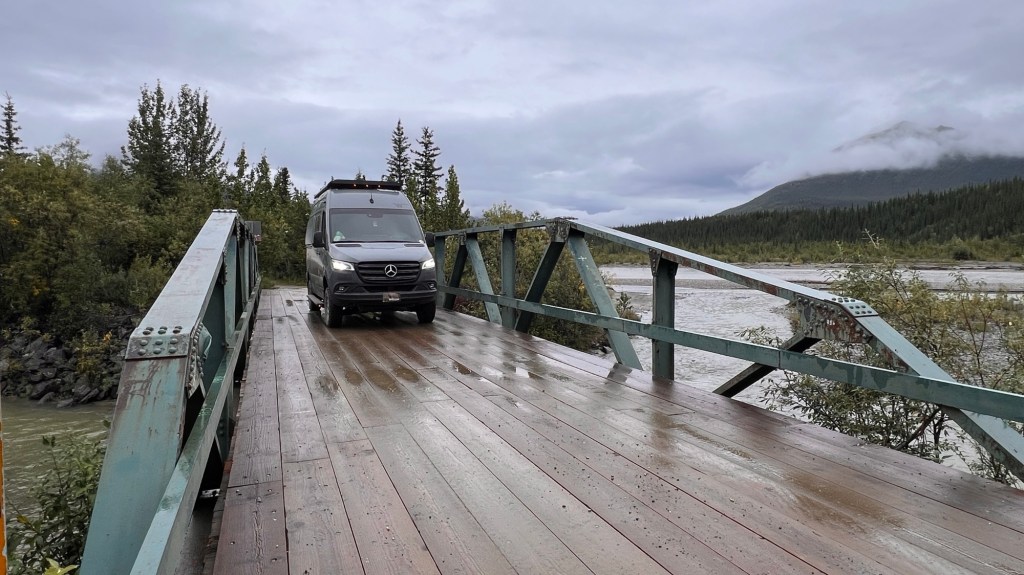
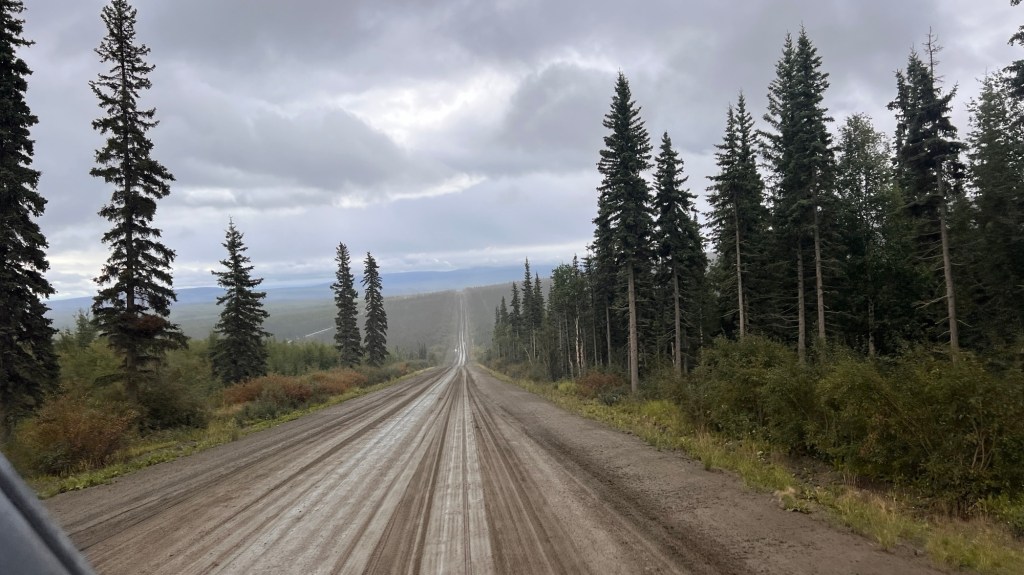
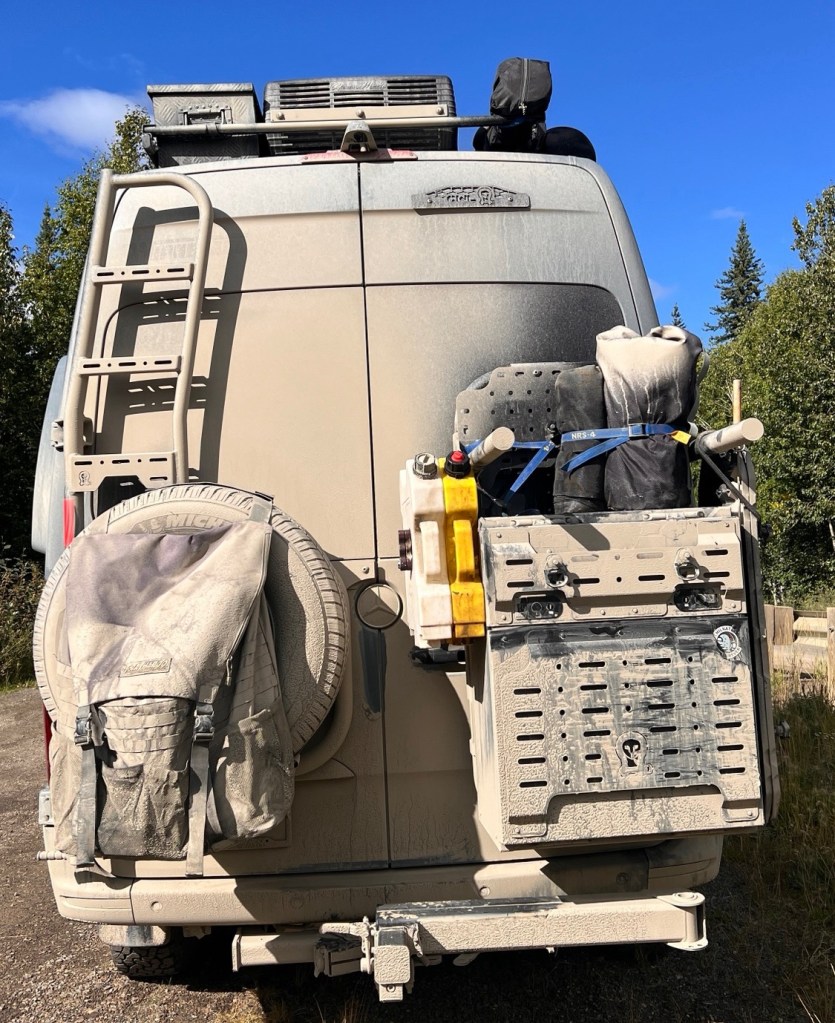
I must say that the Dalton Highway, or the Haul Road, has been the most technical driving we’ve done. On a dry clear day, the road is just a dusty mess, rocks flying from passing vehicles, and deep pot holes. Now let’s add in road construction where they thoroughly soak the road with water and grade the road. Our once dusty road, becomes a swampy mess with mud showers for the van as semi trucks blast through the now water filled pot holes. By the time we reached Yukon Crossing, the van was covered in grey brown mud half way up the sides. The running board were piled an inch thick with mud and gravel. The back of the van was covered in mud and made it difficult to open the doors without becoming covered yourself.

The first night, we camped at Mile 60 BLM Campground and slept well. The next day was more of the same road conditions, but the landscape has changed dramatically. We had gone from huge Alder trees and thick, lush green forests to scrubby conifers, aspens and birch trees. Soon we reached the Arctic Circle, 66.33 degrees latitude…the goal we set out to accomplish. We pulled into the BLM Campground and settled in feeling very satisfied at our achievement.

The next morning, blue skies and sunshine, beckoned us to venture the next 60 miles to Coldfoot, a small town of about 125 people living a sustenance life off the land. It’s the last stop for gas and food before heading into the Arctic Tundra and the North Slope Mountains, Perdue Bay and Deadhorse, big oil mining towns and the beginning of the Trans-Alaskan pipeline. We buttoned up the van, cleaned off the windows and set out north for Coldfoot.

Just outside of Coldfoot, is an Interagency Visitors Center with the most helpful rangers who will answer all your questions on road conditions, weather and wild life sightings, mainly grizzly, Dahl sheep and Muskox. They also encouraged us to drive to the Antigun Pass, another 50 miles further north, and another notch in the ‘been there, done that’ belt. We were given a weather forecast for both Coldfoot and Antigun Pass, told the driving etiquette, and again, encouraged to explore further north.

The next morning, fog hung heavy in the treetops, but the skies were wanting to part so we made the decision to make the drive. I didn’t have much faith that the weather would clear with rain and snow in the forecast, and I was not getting my hopes up for a great photo day, but we packed up and bit the bullet, and we were on the road.

“The first 30 miles are paved,” one of the rangers told us the night before. Yes, indeed the road seemed like it was better than the last 200 we had driven…until…One thing I can tell you is, I’m not sure which is better, paved or unpaved?

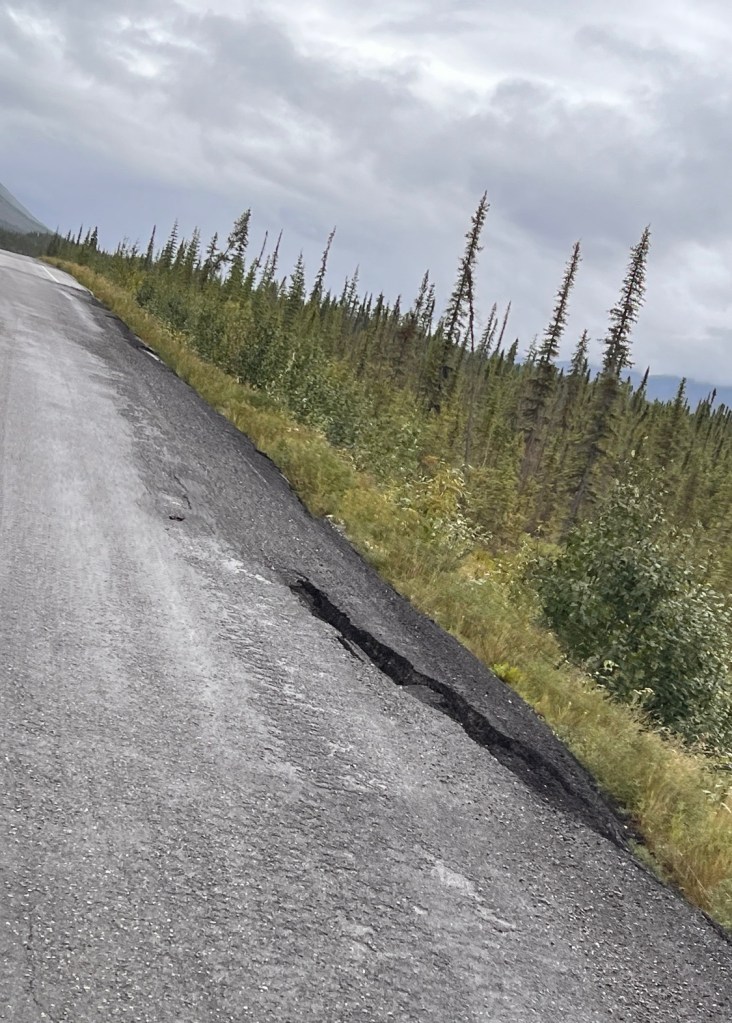
Paved roads seem to sluff off on the sides where the permafrost has begun to melt, leaving no substrate to hold the tarmac in place. Second, the frost heaves are accented by skid marks as the drivers before had slammed on the brakes as they were launched into the air. Next are the potholes, they seem to grow in size as each passing semi bounces through them, some covering almost the entire road.

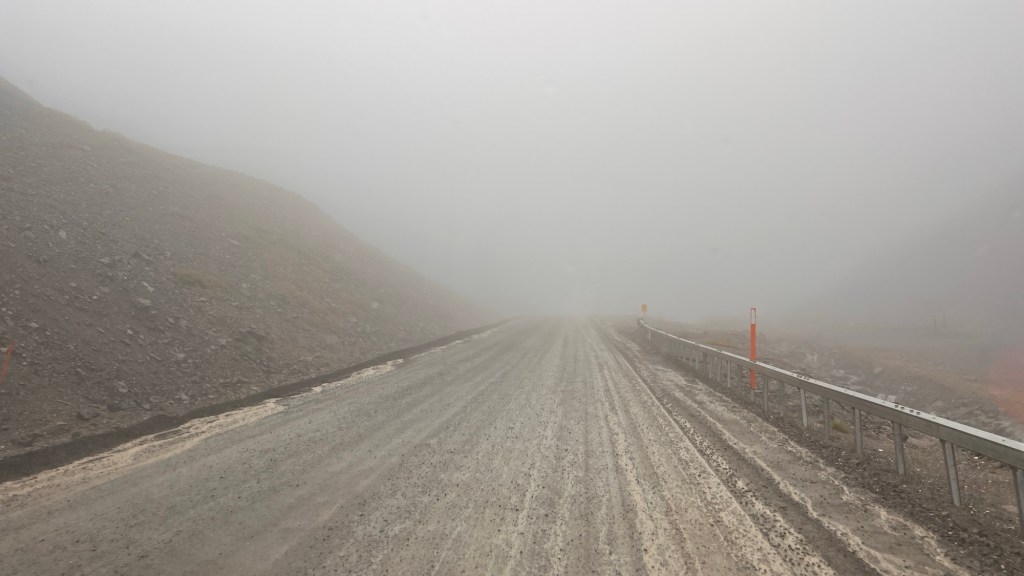
Dirt roads, well they have their issues and advantages as well. Rocks are by far the worst part of a dirt road. The Dalton Highway is renowned for breaking windshields. Second would have to be the mud, thick grayish mud, resembling concrete. The rain turns this into a slurry mess, coating everything it touches in a casing of grey slop, making entering the van nearly impossible without gloves or wiping handles and the edges of the doors with a rag. The dust, on dry days, is a fine powder that infiltrates rubber door seals, mechanical objects begin to squeak, and everything becomes covered in a light coating of white dust. The potholes are much more numerous and often times lined up just perfectly that there’s no choice but to slow to a crawl and step through each one. The best thing about a dirt road though, is it can be graded and potholes filled and compacted. This was witnessed by us both north bound and south as the crews watered and graded.

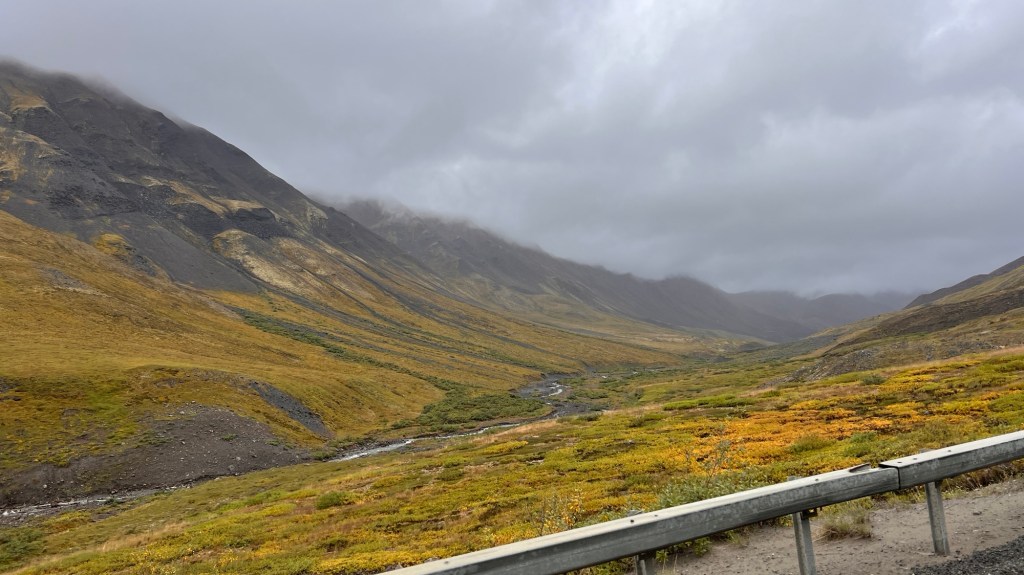
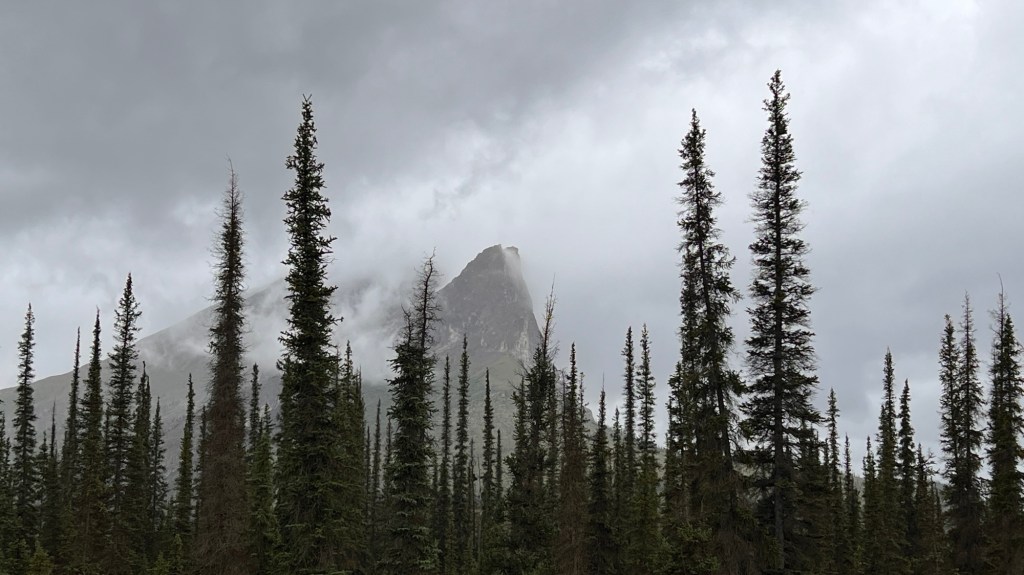
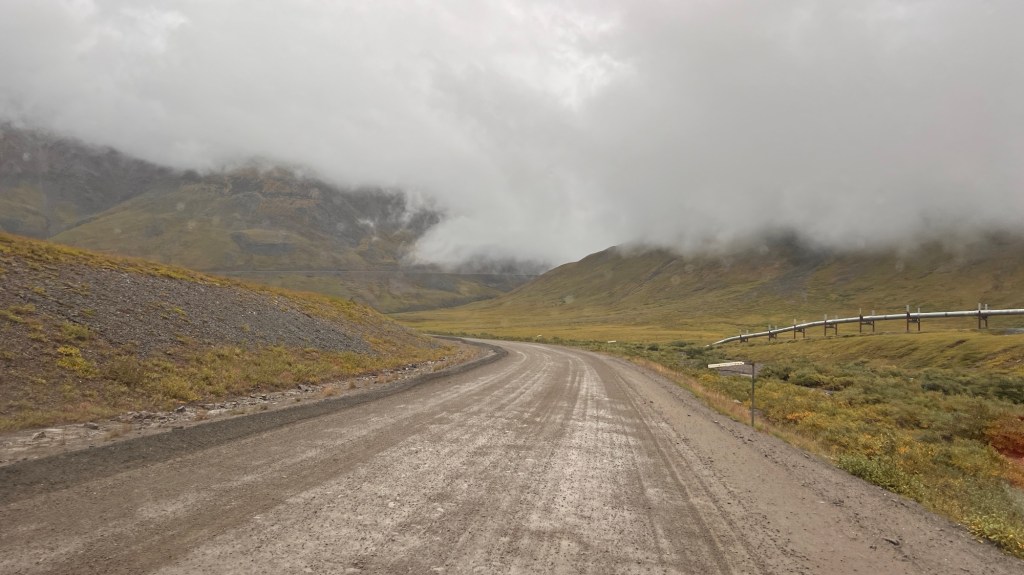
The day we decided to do the Antigun Pass, the weather didn’t hold and it rained most of the way. The first 30 miles of paved road was a pacifier for the last 20+ miles of muddy dirt road. I can’t imagine how we could’ve managed without the BFG KO2 tires on the van. At times the road was a soupy mess of mud as slick as snot. We made it to the top of Antigun Pass, covered thick in heavy clouds and rain, we jumped out of the van and took some photos and turned around for the decent back into Coldfoot.