Costa Rican Wild

Another early morning. The torrential rains last night have cut down the humidity, for now. The birds are crying out to the world, its time to get up, in a cacophony of squeaks, chirps, screeches and sweet songs. The sun is climbing steadily up the backside of the jungle covered mountain in the background and the clouds are parting for her like sentient soldiers spreading a veil. A few pockets of mist cling to the verdant trees, adding eerie apparitions floating through the trees like water flowing around rocks in a river. There’s a hint of jasmine in the air. 

The days are filled with a flurry of activity early, as the humans try to beat the heat and humidity of the coming day. We scurry about, doing chores, getting those last staples at the stores, running off to work, cleaning up whatever the rains brought down from the trees last night. 

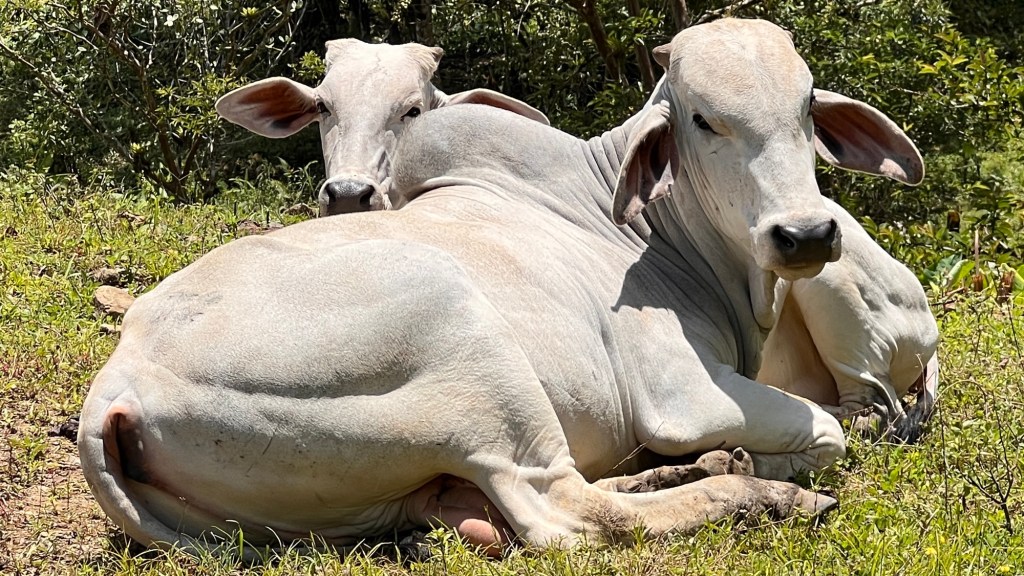
It’s a symbiotic relationship one develops with nature when living in Costa Rica. The fertile ground will grow anything and the jungle throws down a lot of things. Even we humans add to the growth with a seed tossed out while on a walk, an upset garbage can can be full of seeds from the copious amount of fruits and veggies we eat. Fresh and organic. There’s not much concern about spots and imperfections on our fruits, no dyes added to the fish or poultry. Beef is not a big thing here nor is cheese. Cheese, in all forms is a delicacy. Beef can run from tough to sublime depending on the region. 

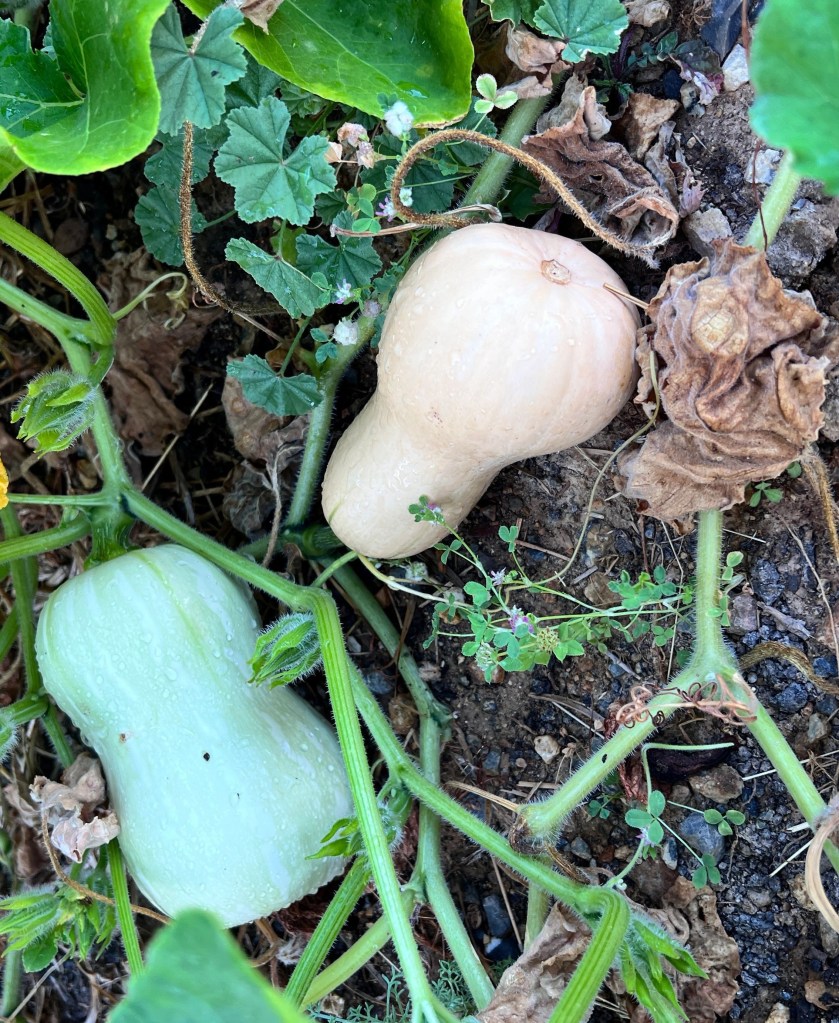
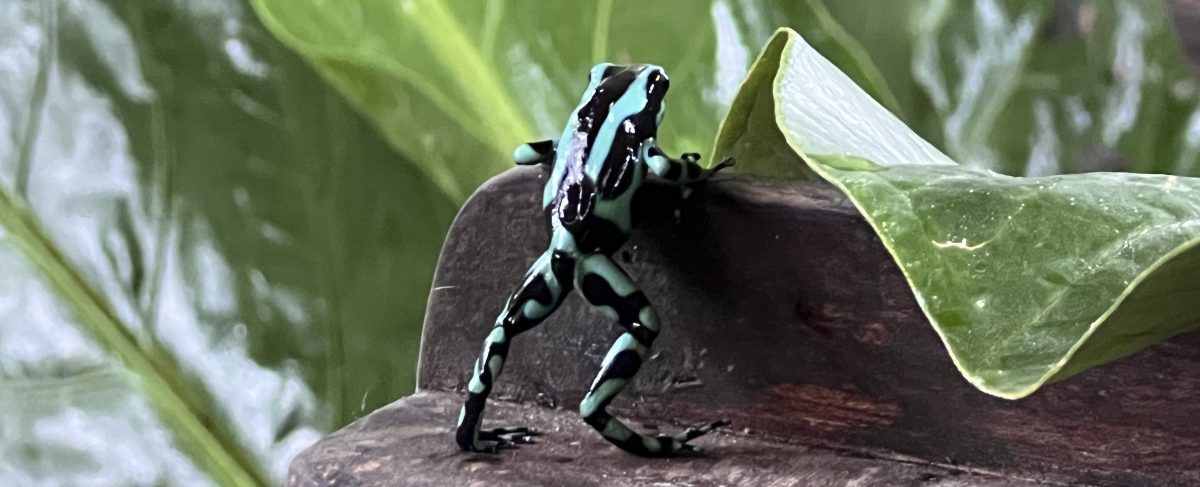
Fruits and veggies grow like weeds here. It’s not uncommon to find squash plants growing on the side of the road or in a vacant field that has become a natural compost. Fruit trees are ‘fruitful’ and multiply if left unchecked. Most of these accidental plants become food for the vast variety of wildlife here. Birds, amphibians, mammals small and large, and the insects, all enjoy the bounty. 
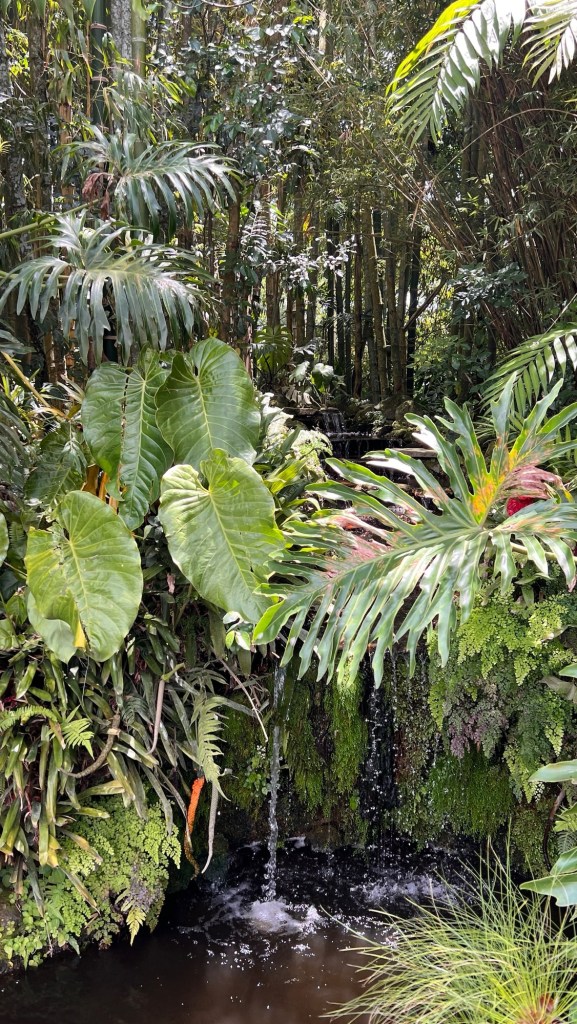
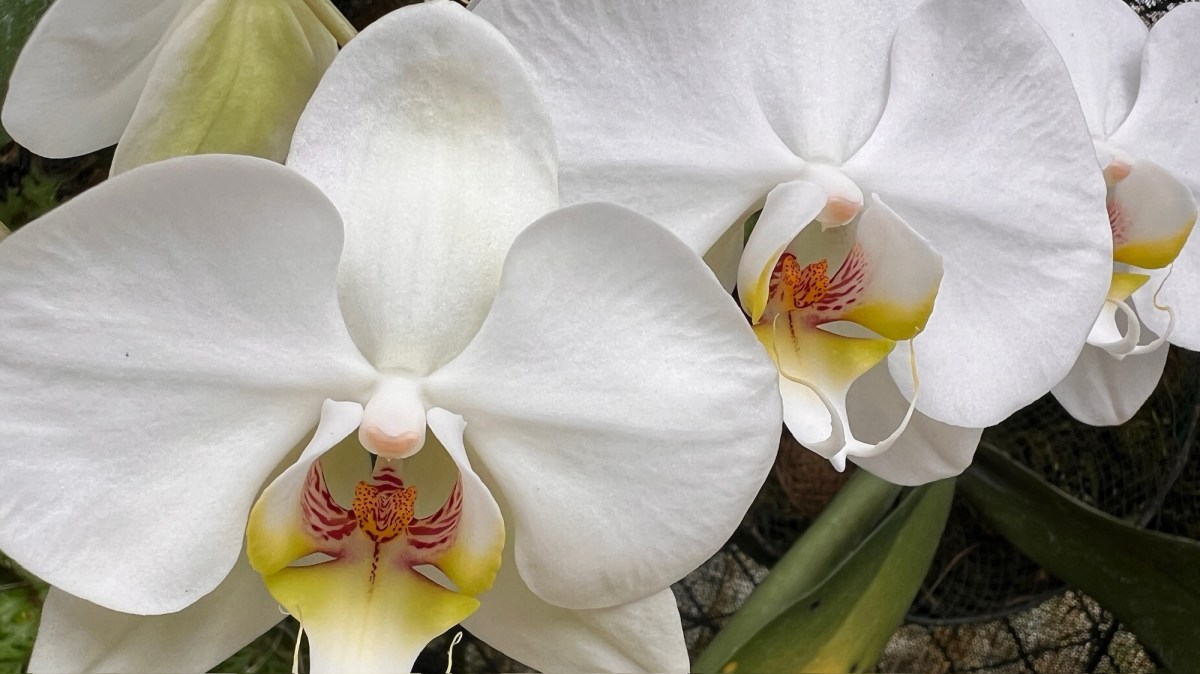
Costa Rica is wild and wonderful. It’s harsh and gentle. It’s teaming with life. The vibe is one of calmness and a natural rhythm, a stasis between man and nature. A constant battle between water and land, plants and the tiny space one carves out to call home. A hidden world in the lush tropical forests and a world of wonderment. Someplace that we feel alive, small, and acknowledge the heavy weight of being a steward in a country with so much untamed beauty. 

Hopes, Dreams and a New Year

And again, it is time to move along to our next destination, Singapore.

The last 10 days have been spent recovering from a 43 day tour of SE Asia, including Thailand, Vietnam, Laos and Cambodia. The things we have seen, heard and experienced, will be indelibly etched into our psyches forever.

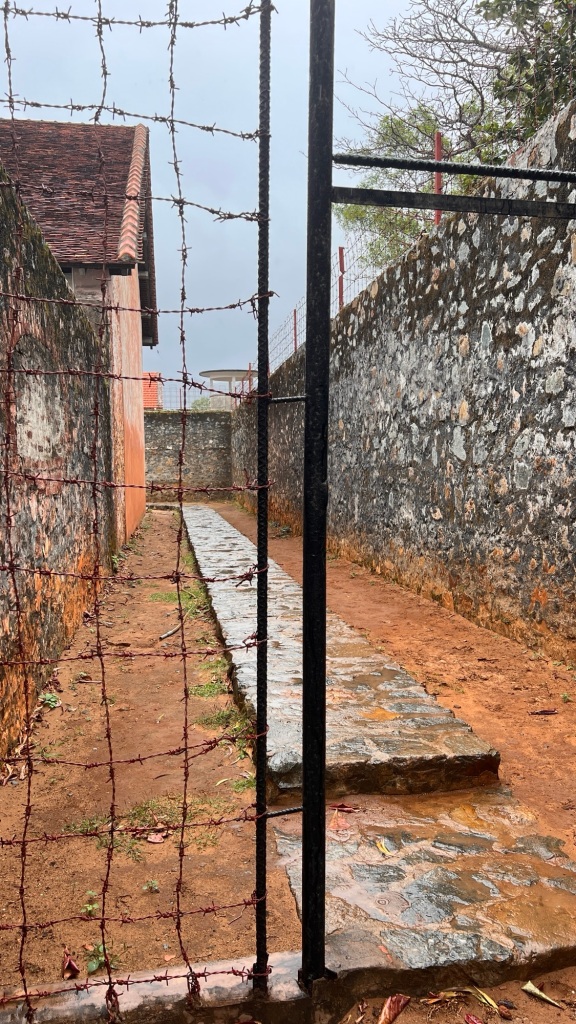
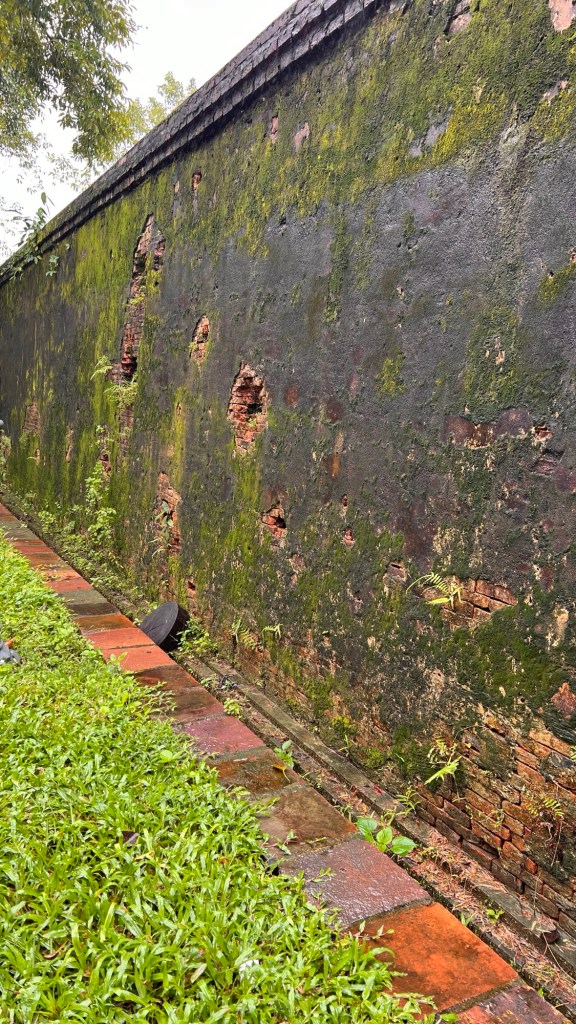
The kindness of the locals, the stories told by our many guides, the sights and sounds of countless prisons, war museums and mass grave sites.

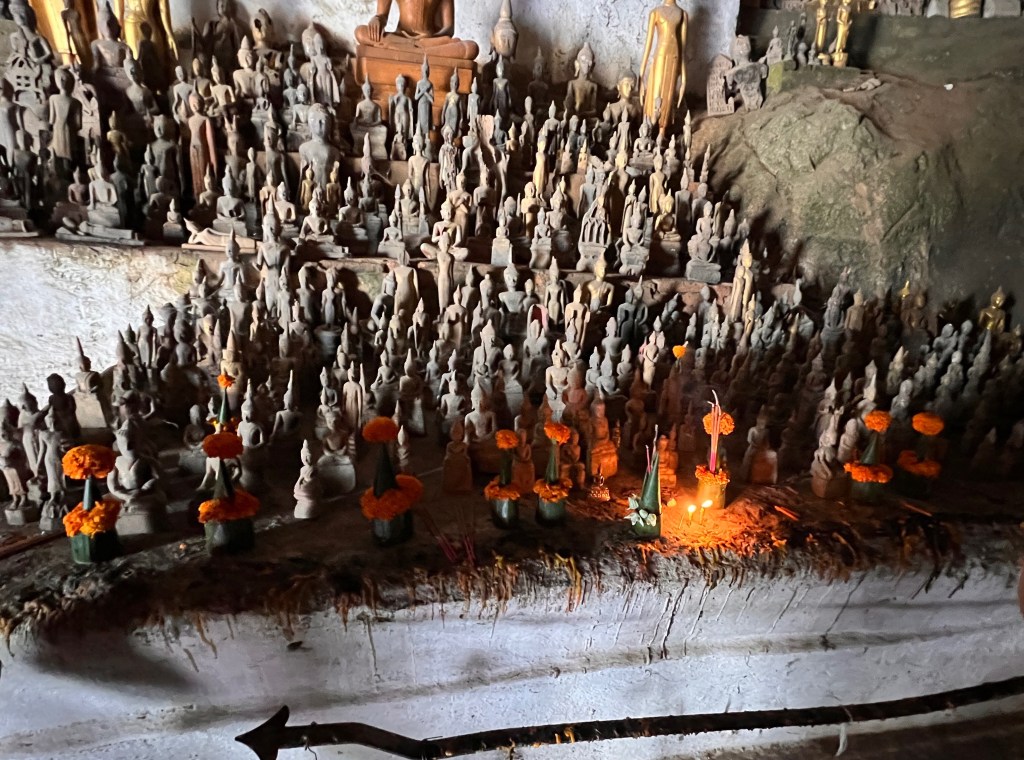
The opulence of beautiful temples. The immense grandeur of karst mountains jutting up from azure blue waters. Tiny, brightly painted long boats and giant wooden boats gliding down the Mekong and bobbing in silent, protected coves.

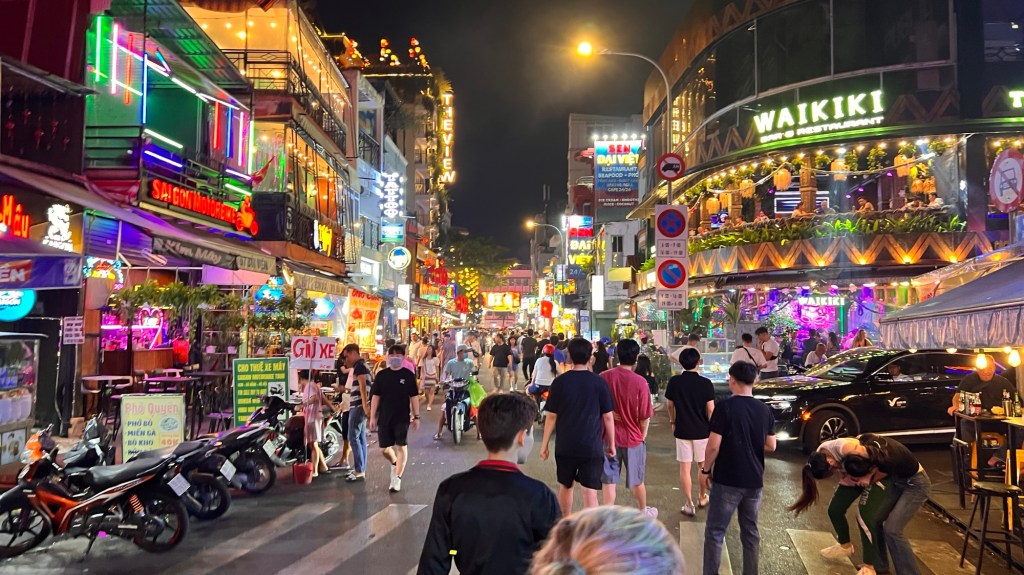
Stunning, powdery white sand beaches, towering skyscrapers in bustling cities, the sensory overload of horns and music blaring from establishments, to the gentle crashing of waves.

All these things paint a picture in our minds eye of life in these countries. We hunger for more as our thirst for travel and new experiences hasn’t waned in the 9 months we’ve been traveling.

What have we learned? Well, how to live in the moment, how to sit in silence, how to take life as it comes with no preconceived notions of what the next destination will bring. We’ve learned to accept that which we cannot change and make the best of it. Mostly, I’d say we’ve learned to slow down. We aren’t just living a dream but also have responsibilities. We have time to pick and choose our battles and how we will approach them. As a teacher of mine always says, we have the luxury of leisure.

It warms my heart to know that sometimes, just the words I write, can transport some of you outside of your haste and allow you 10 or 15 minutes to dream and escape reality. Perhaps they stir a deep longing inside of you to travel outside of your comfort zone.

The life of a traveler is constantly stepping into the unknown and overcoming any trepidation that may arise from traveling to a new destination, one we’ve never been to before. Learning new languages, customs and new currencies. We are traveling to find a place to settle in and become a landing spot, after all, we can’t continue this pace forever and the urge to stop sometimes looms large. But in the mean time, we plan a few weeks to a month and do it again and again. I hope you will continue to follow us and join in our exploration.

A Slow-boat Down the Mekong

It’s been a few weeks, it seems, since I’ve taken time to gather my thoughts…to recap our adventures…so here we go. Forgive me if I pass those by for now to bring you to this current moment.

Today I find myself sitting on a “slow boat”, cruising down the Mekong River in Laos. My company on board is that of 8 other individuals from around the globe and two guides. In Laos, we are required to have a local Laotian to escort us to the wonderful temples and small riverside villages of the local hill tribes. Sang, our guide, is of small stature, as are many of the Laotians. His voice is calm and soothing and full of pride for his country. Moh, pronounced ma, is our tour guide for GAdventures through Thailand, Laos and Vietnam. Moh is full of a good life force and spreads the joy of her job and her country’s treasures with us as we go along.
As we have been exploring Thailand and Laos, I find myself troubled at times. Moh will be telling of the history of war in these countries and I almost feel ashamed, as if I, myself, had done something to hurt these people. To hear of the horrors of war, one people killing and controlling another, and for what…land grab, slavery, political turmoil, religious differences…again, I am saddened deeply, that human beings can be so cruel. Perhaps my kind spirit feels tarnished in some way, perhaps in another life, I was here or suffered as these people. Sorry for the rant.

Take away the people and you’re left with the scenery, the raw nature, the dense jungle, muddy water and blazing hot sun. The smell of jasmine and wild ginger, sweet basil fill the air. The occasional herd of cattle, goats or water buffalo, and we even encountered two elephants playing in the shallows of this mighty river. What a gift that was.

The Mekong is a mighty river with powerful flows and jagged rocks and vast sandy beaches, holding it in place. The Mekong flows from Tibet 4,500 miles to the sea. It is the border of many countries throughout SE Asia, and has been fought over by more than one. The dark brown water bubbles and churns, almost bringing the boat to a standstill. It seems chaotic in its flows. In the monsoon season, it rises almost 40’, laughing at the rocks and sand as it consumes them as if in a great flood. Each dry season, a new riverbank is introduced, as the power of water transforms it. Waterfalls come out of the jungles, carving deep gorges in the sand, cascading over well worn rocks, finding their way back into the mighty Mekong River. In the mornings, the clouds blanket the hillsides as the sun attempts to burn through, one giving way to the other in the natural progression of things.

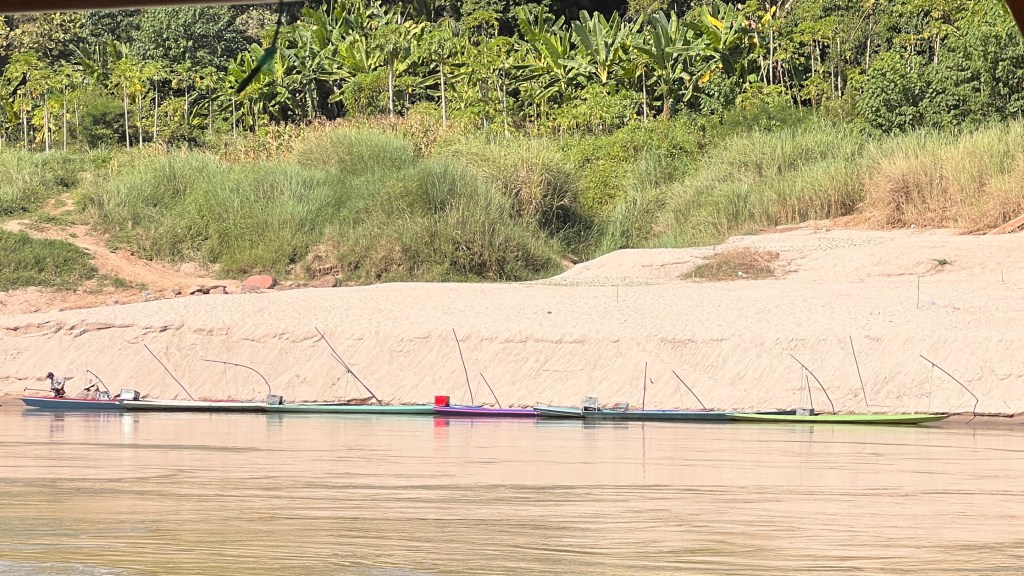
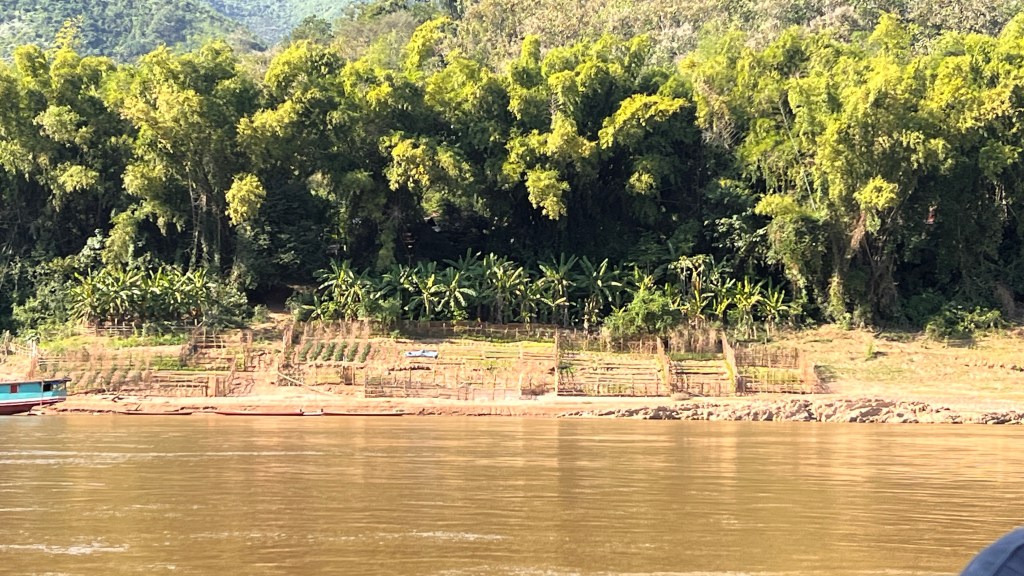
The limestone and granite display along the banks are often incredibly showy. If you look long enough, you will see a complete myriad colors, from purples, pinks, shades of whites, blacks and yellows. They pose an impenetrable barrier, often times hidden under the water. The local hill tribes use the cracks and crevices to secure bamboo poles strung with fishing nets or lines. Small flat bottom boats transport families and supplies, some using motors and others paddles and bamboo push poles. An occasional farm house, perched high on stilts with a crop of corn, rice or potatoes surrounding it, often planted on the rich sand banks deposited by the river during flood stage. You’re left wondering how they can live in, what seems to us, such harsh conditions. We are so privileged and spoiled.

Riverside gardens
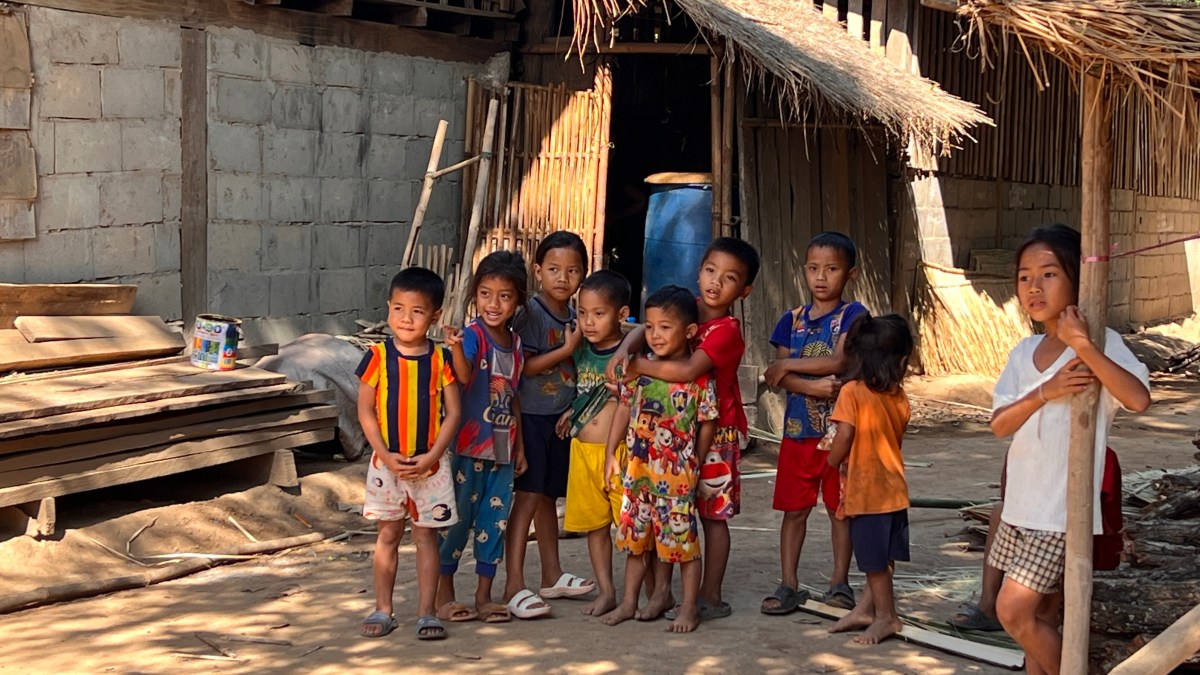
Riverside Hill Tribe Village
Local fisherman

The sun has finally broken through and the cool breezes will soon be welcomed to all on board. The green foliage comes to life, some reflecting the brilliant sunlight and others creating dark shadows. The dark brown muddy water lightens up as it refracts the light as it pierces the surface. The sand glistens along the banks. It’s all so powerful and humbling.

Black Sand Beaches and Reality: North Cyprus

Here I am again, sitting here turning my wildest dreams into a reality on a black sand beach on the Mediterranean Sea. The warm waters and calm surf are perfect for bobbing and swimming. This island is so MUCH better than anyplace we’ve been so far this year.

The people are genuinely friendly. English is commonly spoken as well as Turkish and Greek. Americans are few and far between maybe because so many of us live in the bubble of propaganda and have never taken a chance to travel. Like really travel. We were afraid too.

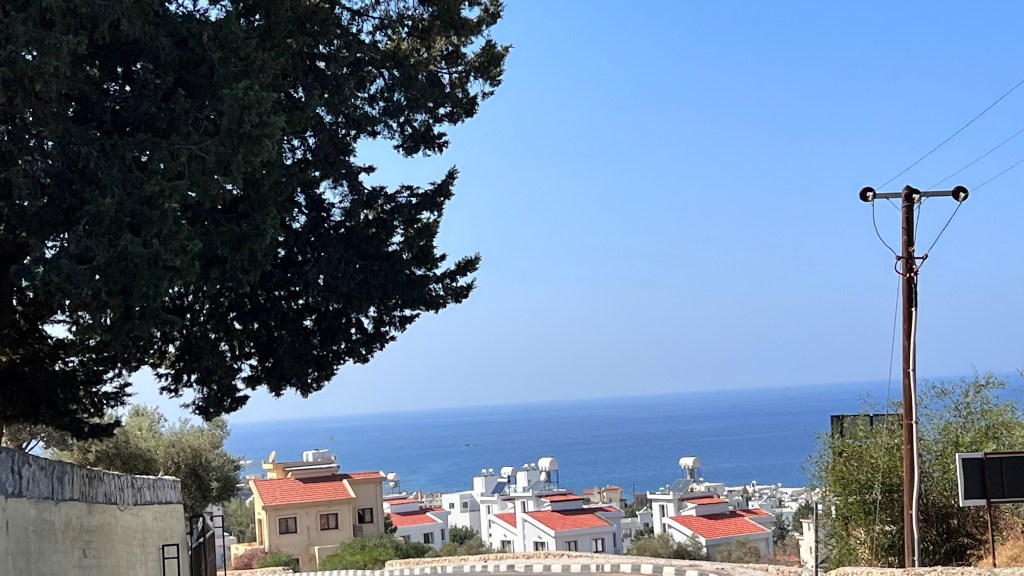
Up until a month ago, while visiting Montenegro, I had never considered Cyprus, but more proper, The Turkish Republic of Northern Cyprus or TRNC. Now we’ve bought a garden apartment with a walk-out pool in a complex that will terrace its way up the hill in typical domino stacks of bright white buildings spilling into the sea.

It’s somewhat like Portugal’s Algarve coast, Croatia or Montenegro’s coastline but without the crowds. It’s a beautiful vista backset against the verdant green slopes of the mountains rising up from the sea. Albeit with much less of a dramatic gain in heights and angle.

This is a burgeoning area bringing itself and its people together to make a future. It’s easy going and pretty laid back. Food is incredible, even though french fries is a food group here. There is a good solid infrastructure and new hospitals. There’s an International University here, at least one I know of. We have actually used the medical system here twice this month.

Gas, food and lodging are pretty low priced and of excellent quality. Wine and beer are cheaper than a bottle of water here. Even the WiFi is incredibly fast. Cost of living is cheap and the Island checks off most of our boxes for a possible home base or investment for the future. One other plus, compared to the EU, people here tend to smoke less.

So back to the beach…the one thing the US has on every beach in the world we’ve been to is the desire to keep the country clean. Beaches, parking lots, natural environments. I love to look for beach glass, stones and trinkets. Seems no matter where I go I can pick up a half melted price of hard plastic waste that looks like a stone. There’s bits and pieces of various plastics and cans and a mountain of cigarette butts. And still, it’s too bad that this is “not too bad.”

The sun is warm today, we’ve had two days of rain, wind and heavy surf and the sea is calm and inviting. The warm water surrounds you in a warm watery blanket. Bobbing up and down like a bottle on the sea with a secret letter inside. Cares just drift away as the rhythm of the waves take over all sound. You melt into the calm.

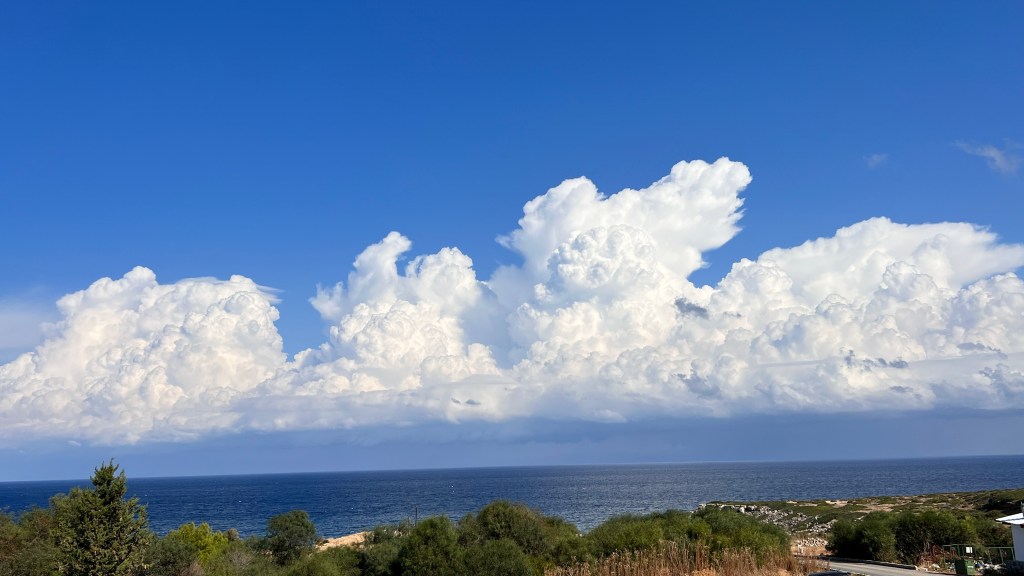
The definitive line between horizon and sky is more like the edge of a mirror, reflecting sea onto sky. A few ghostly clouds from the storms, hang far-off on the horizon. The sea claps again breaking my stare.

It’s a Wrap…Montenegro

The weather is beginning to cool down quite a bit now. The leaves are beginning to change colors. The tourists are starting to disappear. The days are growing shorter. It’s now fall in Montenegro. Our time here is drawing to a close.

We have really covered a good portion of this beautiful country, from the Adriatic sea to the lakes and rivers in the Dinaric Alps. We spent days walking around the Kotor and Budva Old City Walls, toured around the Bay of Kotor, hiked up and around Sveti Stefan, relaxed on Red Beach in Bar, fished for days on the Tara in Mokjavic, and finally explored the National Park Durmitor in Zabljak. Each of these places has its own secret charm, history, and culture. Each has its own attraction for us.

I find it funny to think that I can’t understand a word of what most people are saying. Most people speak Serbian. None of their words remotely resemble English and the farther north we went the less people spoke any English including grocery stores, or pharmacies.

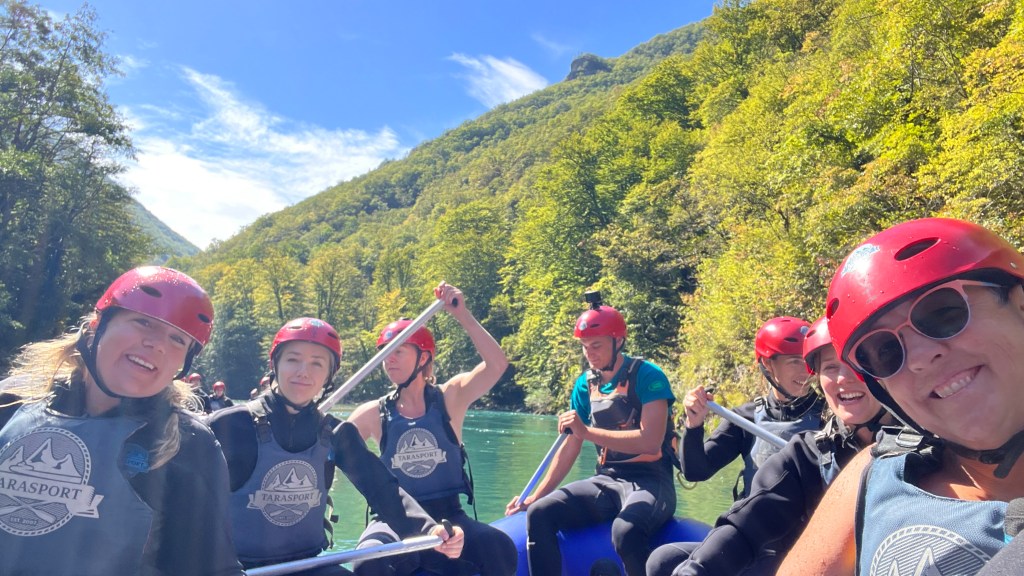
A couple days ago, we went on a white water rafting trip on the Tara River with 11 women from the Netherlands. They all could speak English but they were more comfortable speaking to each other in Dutch. We could pick up on many things they were saying. They were laughing and telling stories but we couldn’t engage with them. Laughing is universal though, so we laughed along with them.

Our cleaning lady, here at the apartment, comes in everyday and has a whole conversation with us in Serbian, full of expression and totally genuine feelings, but we can’t understand a word. Google translate is our best friend.

In all its beauty though, there are a few things that really upset me. Number one is the inability to get away from cigarette smoke. It’s hard to enjoy a meal when someone is sitting at the table next to you and lights up without a second thought. The apartment we have rented here in Zabljak has a strict no smoking policy that is not being enforced. We have moved to three different apartments before we found one that had not been smoked in. Sad.

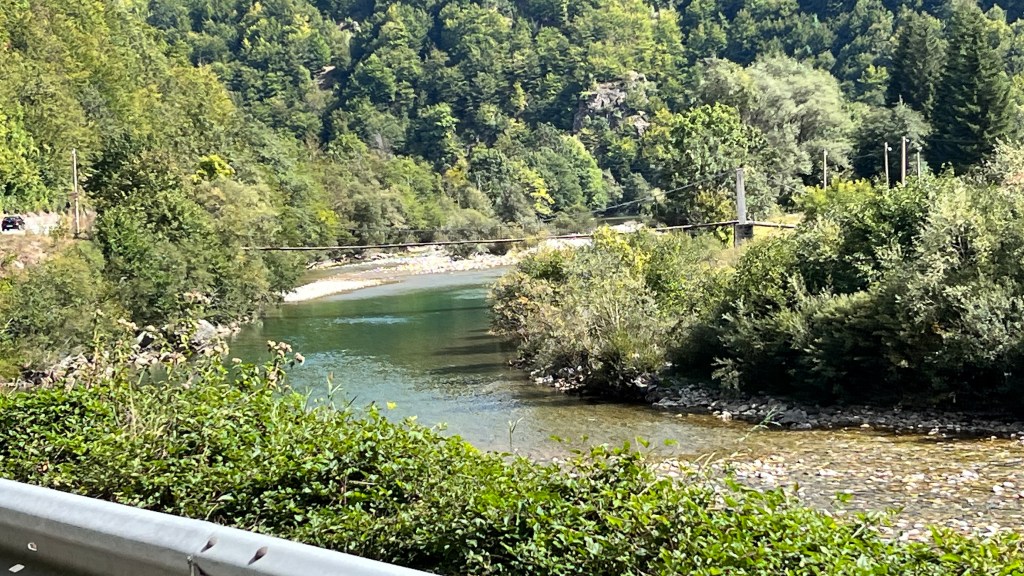
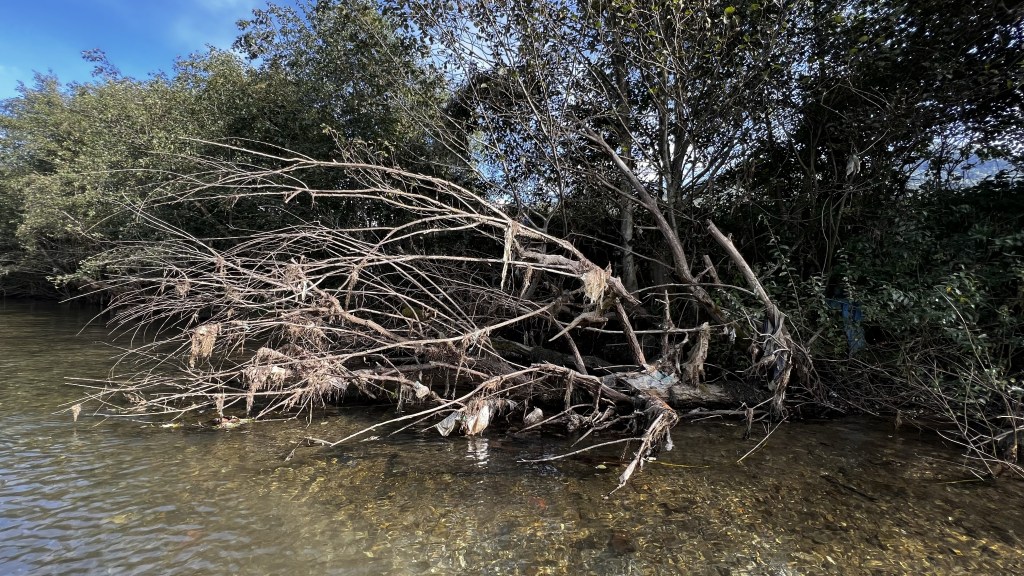
Secondly, Montenegro has a trash problem. Some towns are better than others. Zabljak was relatively clean but Mokjavic, for an example, had piles of garbage along the sides of the roads and at every fishing pull out. The rivers were so polluted with garbage it was hard to enjoy fishing them. It’s as if no one really cares. We mentioned it to our guide and he tried to blame tourists. Also sad.

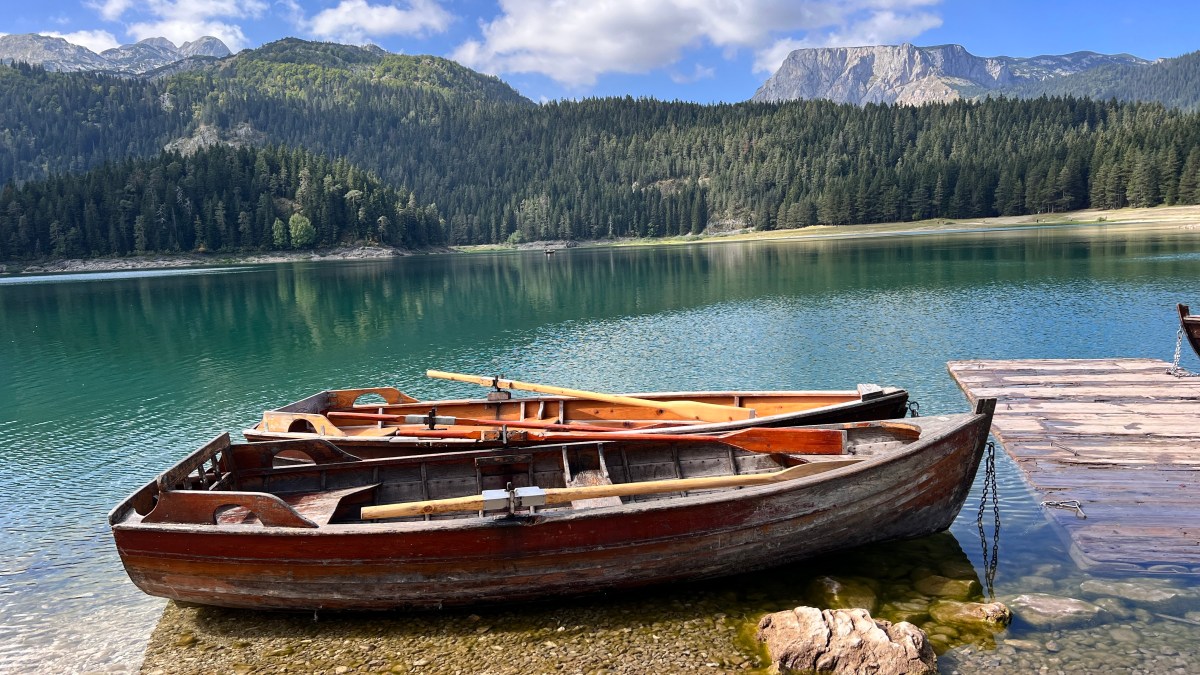
We are in Zabljak now, the city with the highest elevation in Montenegro. It is surrounded by a National Park called Durmitor, one of five in the country. The stunning vistas are to die for. Not only does it have fifteen glorious mountains, there is a plethora of alpine lakes and one of the last endemic forests in Europe with 122 species of trees in all, some exist nowhere else on earth. Some are in excess of 400 years old and reach a height of 150 feet.

The Tara Canyon is the deepest and longest in Europe and second deepest in the world at 1300m deep. The Tara River is currently free flowing with no dams in its 78km path spanning from Mokjavic across to Zabljak, and along the border of Montenegro and Bosnia & Herzegovina. The water is a beautiful turquoise blue and only 7-10 degrees celsius.

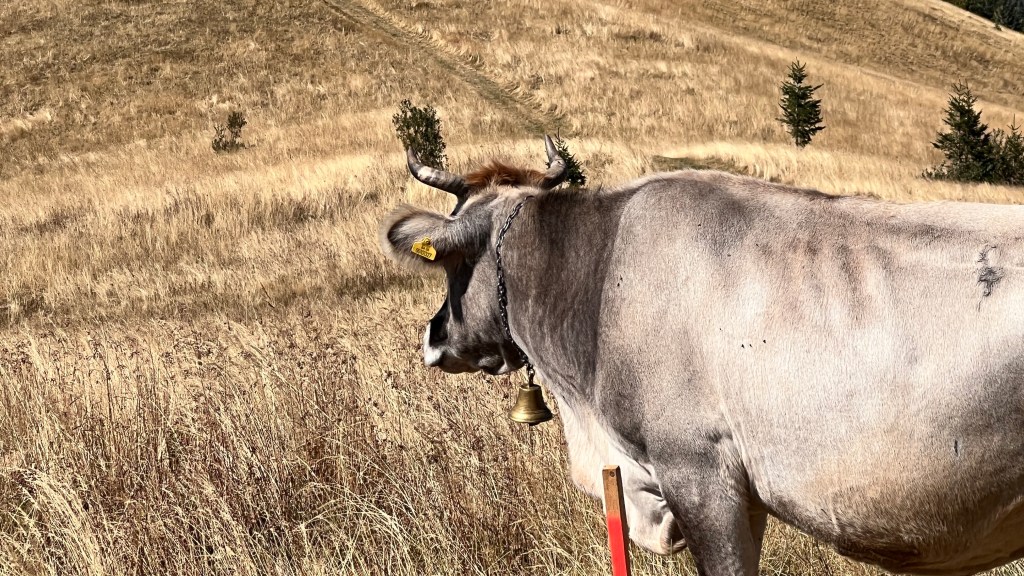
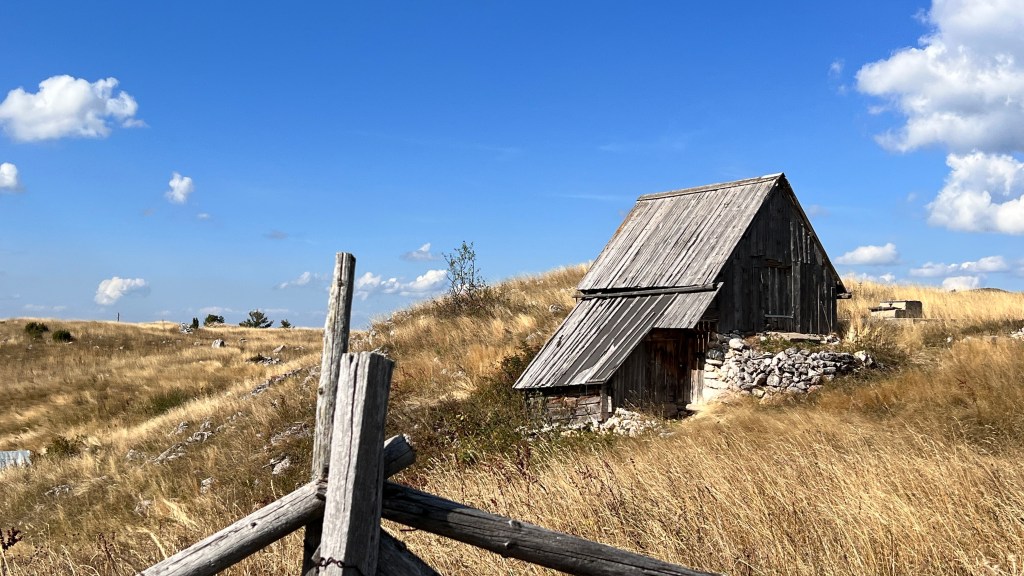
For the most part, life is pretty simple here. People are set in their cultural ways. The years of war show on the faces of the elders and a new hope shows in the younger generation. In some areas, it’s hand to mouth, growing their own food and keeping chickens, cows and goats. The houses are pretty simple and lack the lavashes of other European countries. It is set to enter into the EU in 2025 and then the infrastructure will be vastly improved when the tourists flock in to experience the vast amount of outdoor opportunities Montenegro has to offer.

Do you know?

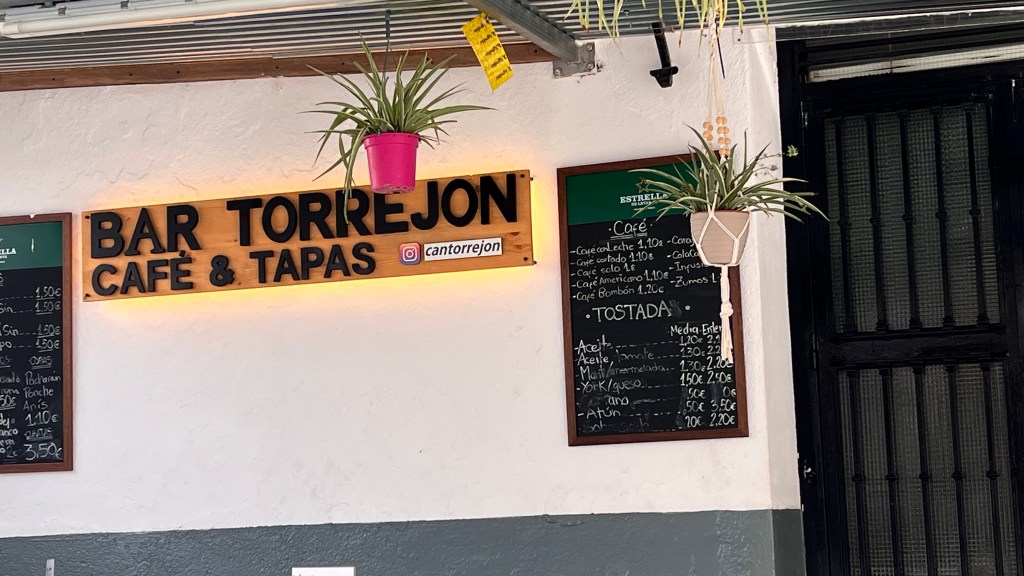
Since the 26th of July, Chris and I have been house and pet sitting in Yator, Granada, Spain. It’s a sleepy little town with only one tiny cafe on the main street. The town is in an area called Camino Montenegro.

We agreed to do a pet/house sit for a German expat who owns a little farm up on the mountain outside of Yator. It’s a tiered farm with several raised gardens of all the normal vegetables, fruit trees, including pomegranate, apple, cherry, lime and figs. There’s a patch of just tomato plants and a vine garden of peas, beans, assorted squash, melons and cucumbers. There is also 30 or more olive trees, heavy with fruit, and two large Spanish Almond trees full of nuts.

Each morning we water all the trees and gardens, by hand, plus the ornamental plants on all three levels. In the cool morning air, hangs the scent of honeysuckle from the numerous honeysuckle vines covering the red dirt. Growing wild throughout the property are the herbs, rosemary and oregano, and the raised gardens have basil, parsley and chives. Basically, we have all the food we could ever need or want from the land. Watering of all these delicacys is done by gravity fed hoses at several stations throughout the property and takes about and hour and a half with both of us watering.

The water we drink comes from a spring located even further up the hill and 3 times a week we must turn on the feed to fill the water tank with fresh spring water. The tank is about 14 feet square by 14 feet deep. With the watering, showers and daily consumption, we take the tank down about 2 feet a day. The water is cold and clear and tastes delicious without the chemical additives in normal tap water.

One thing that has always been hard for us, since we’ve been in the road, has been getting vegetables into our diet. They are bulky and took up a lot of room when we lived in the van, and traveling around Europe for the last 3+ months, we’ve been at the mercy of the restaurants to get our veggies. Mostly we get potatoes or something that resembles squash, always over cooked or fried, and never fresh.

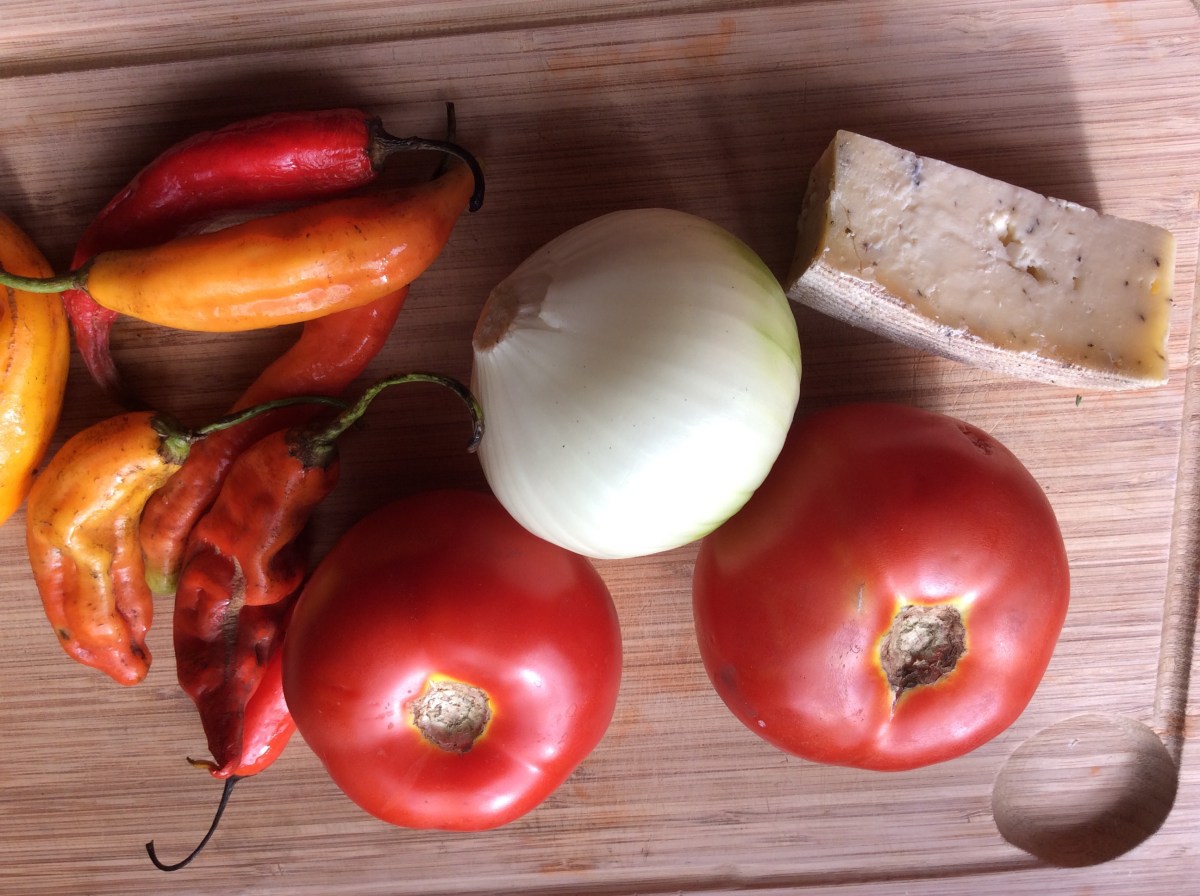
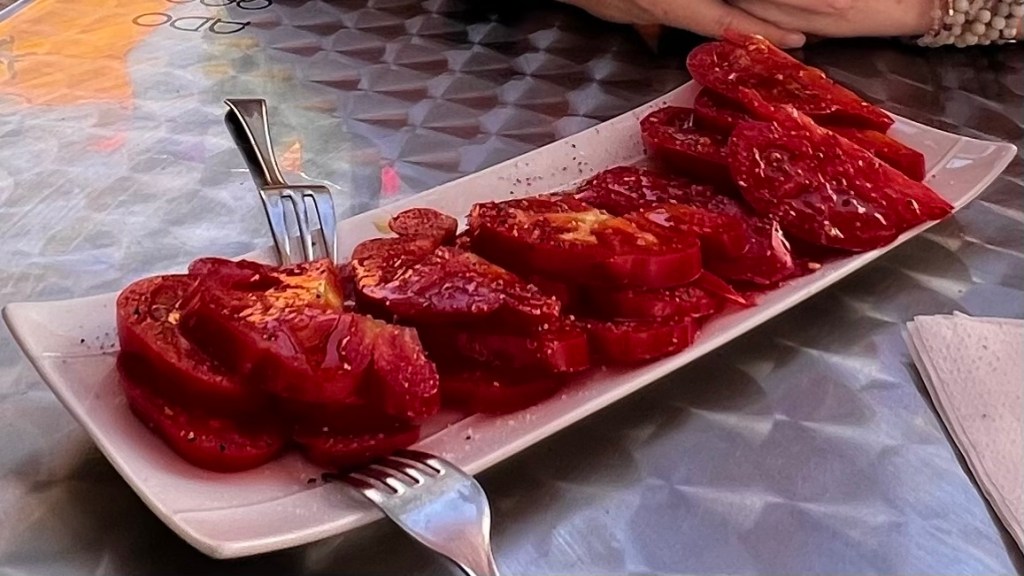
For the last 3 weeks, we have been eating fresh from the gardens, trying out new roasted veggies, beets, carrots and leeks. We’ve been making home-made salsa from the tomatoes we grow and the purchase of peppers and onions from women set up on street corners, selling the excess from their gardens, harvested that same day. Cooking meats with the herbs we grow and making delicious side dishes with the variety of squashes we grow. We’ve been making fresh salads with the lettuce, carrots and cucumbers we grow. It is very rewarding.

It is such a huge thing to know where our food is coming from, how fresh it is, that it is grown without chemicals and picked by our own hands. There’s something to be said for that, which never really crossed my mind until now.

Do you know where your food comes from? There are horrifying documentaries on how our food is grown, the process and effect of GMOs, fertilizers and other chemicals used to produce bigger yields and to keep the pests away. The impact we are having on the land, water and our bodies. I guess it took us slowing down here, putting in the effort and love it takes growing our own truly organic food, and being enlightened by these documentaries, to really understand and come to value this little humble farm.

Our next few months will be spent in Montenegro and perhaps Bosnia, both countries pride themselves on their clean food, clean air and clean water. I hope that we have learned a lesson and will begin to appreciate locally sourced food, grown with love, sweat and clean practices. Perhaps our carbon footprint will get even smaller which for us, is something we are proud of.