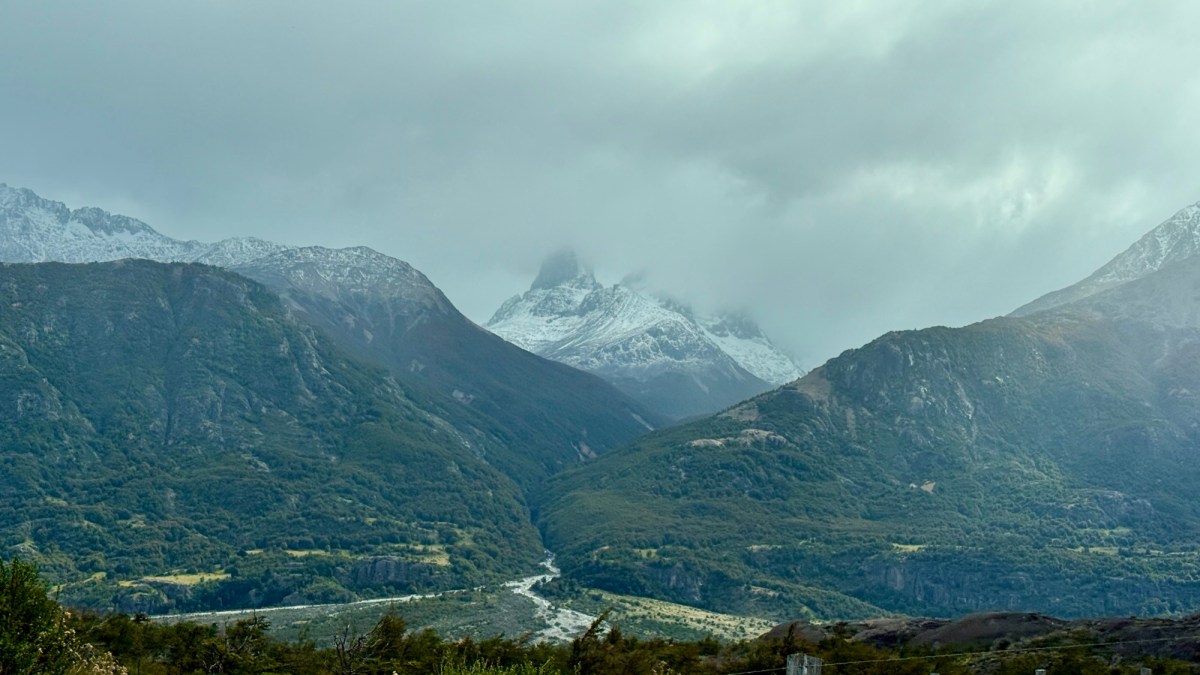
We didn’t just arrive here—we earned it.
Our southward push along the Carretera Austral has finally brought us to the edge of how far we were willing to go. Not because the road ends, but because something in us said: this is enough… for now. Mile by mile, the signs had been stacking up—subtle at first, then undeniable—whispering that Puerto Río Tranquilo would be our turning point.
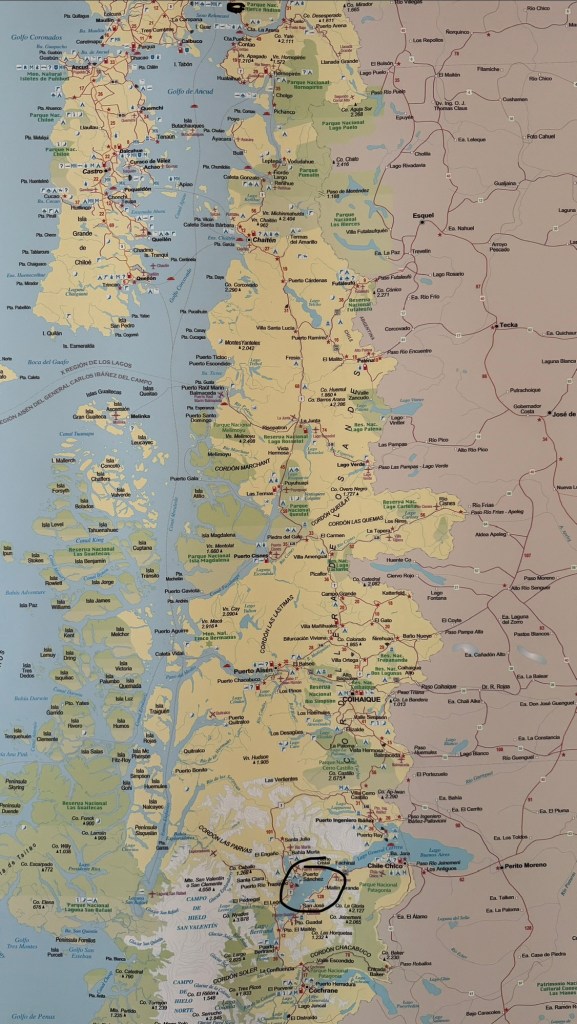
And then came yesterday’s drive.
Six hours that didn’t just pass—they pressed into us.
The kind of hours where you feel small in the most humbling, awe-struck way. We are nothing more than passing specks in a landscape that feels eternal—mountains rising like walls of time, valleys carved by glaciers that were here long before us, rivers born from snowmelt rushing with quiet authority toward the sea.
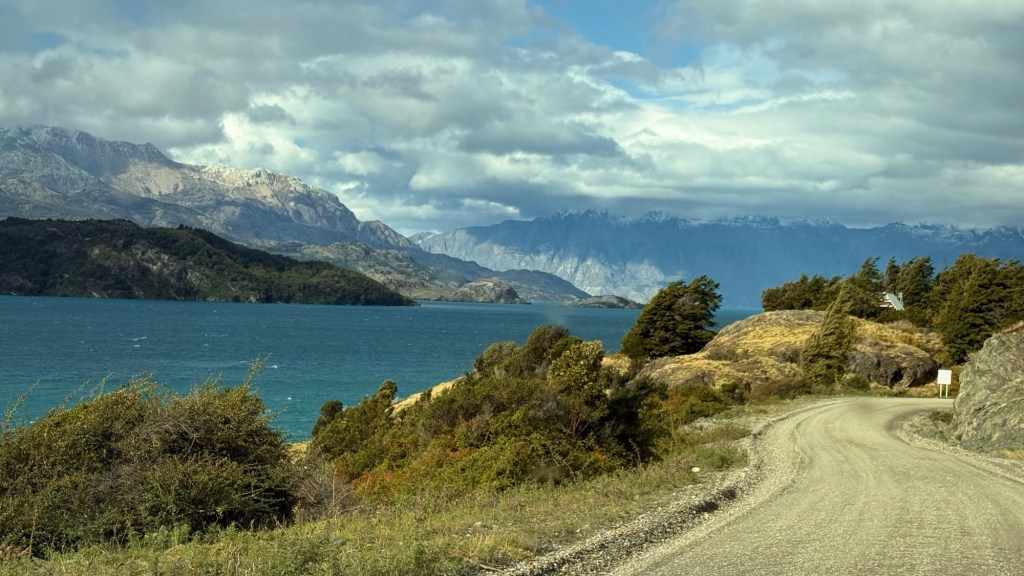
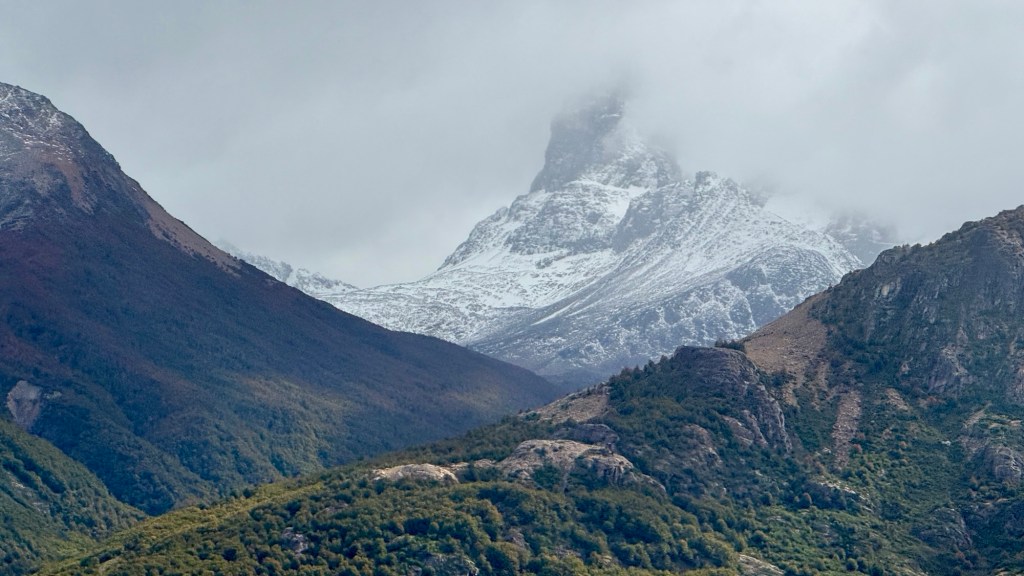
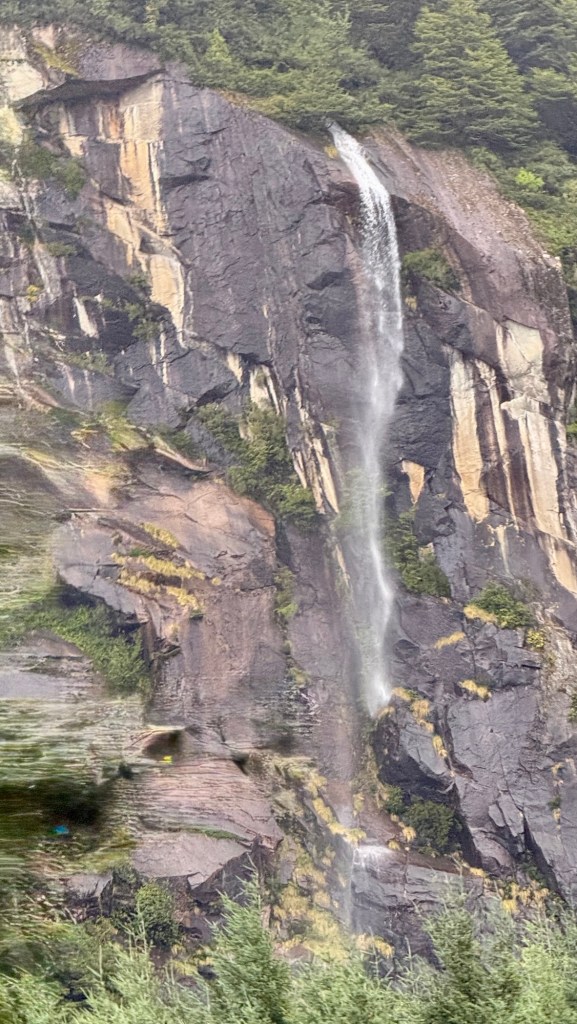
Everywhere you look, something is falling—water spilling from impossible heights, cascading down cliffs as if the mountains themselves are unraveling. Around each blind curve, another scene steals your breath: trees clinging to landslide scars, their fallen kin scattered below like bones in the valley.
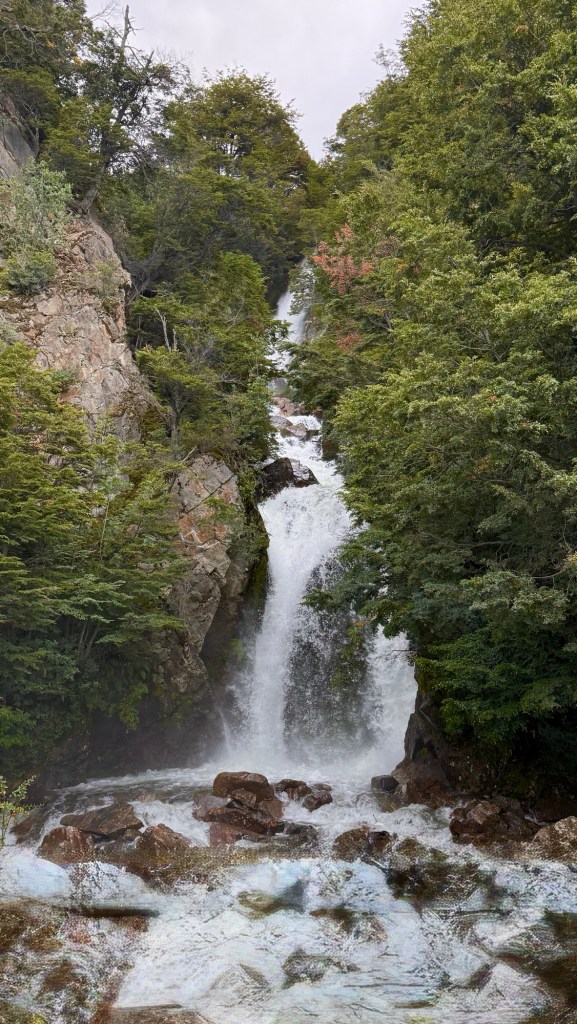
The rivers are unreal—turquoise, pale blue, glowing as if lit from within. They surge and twist, hurling themselves over edges, dissolving into mist that catches the light and becomes fleeting rainbows. Above it all, jagged spires of granite pierce the sky—entire cities of stone reaching upward, their snow-dusted peaks vanishing into thick, wandering clouds.
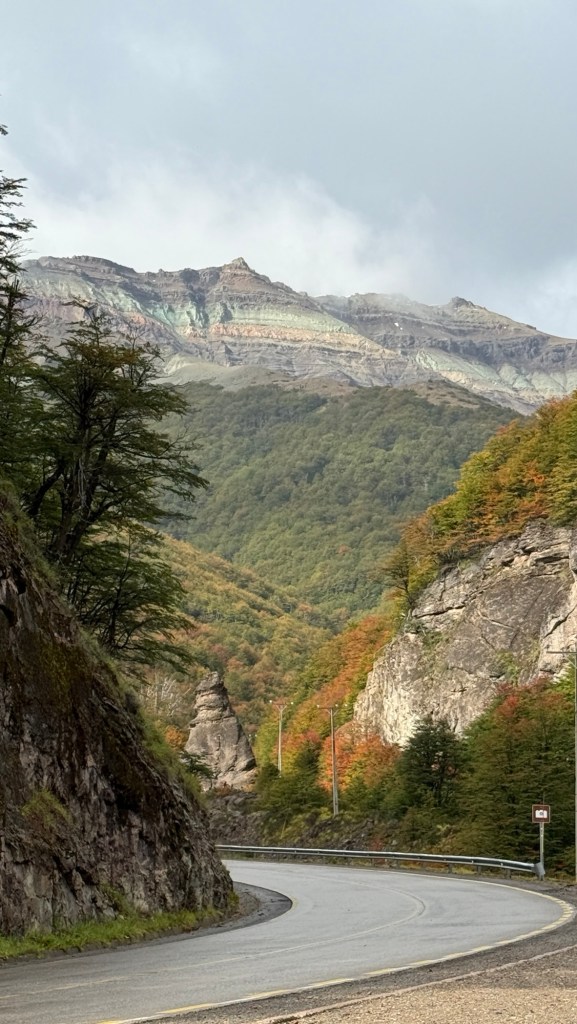
And then—just when you think the palette couldn’t deepen—autumn arrives. Reds. Golds. Entire hillsides set quietly on fire against the endless green of the forest. Open fields stretch out like a breath between heartbeats… only to be interrupted by mountains that shoot straight into the blue, unapologetic and immense.
And the road?
It doesn’t guide you—it tests you.
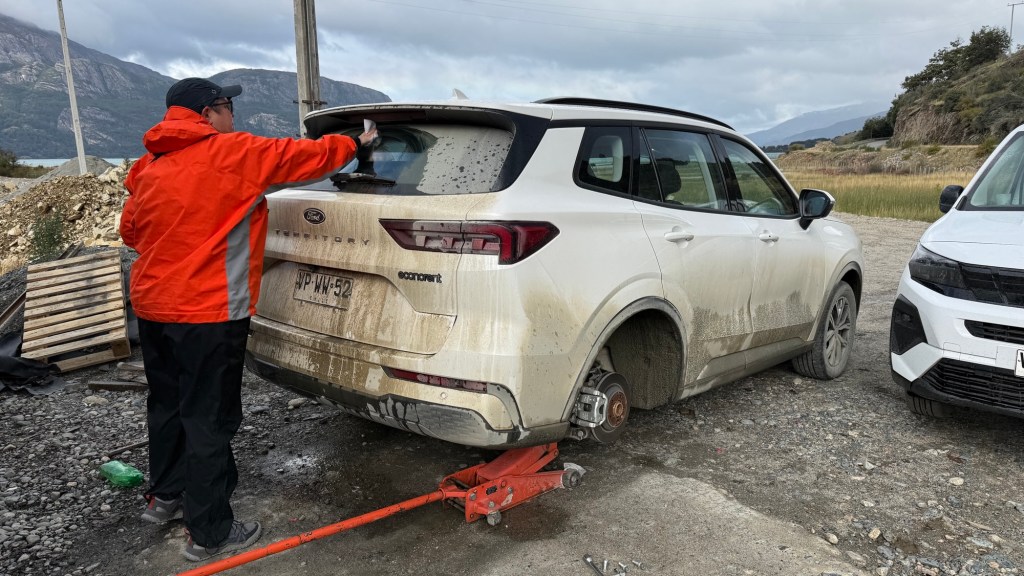
Sometimes smooth, often not, it coils through the land like a living thing. One moment you’re gliding, the next you’re gripping the wheel through mud thick enough to swallow tires. Hairpin turns come without warning. Massive trucks and buses take up more than their share of the road, forcing you to trust instinct over sight. And somehow, others fly past at impossible speeds, spraying mud and indifference in every direction.
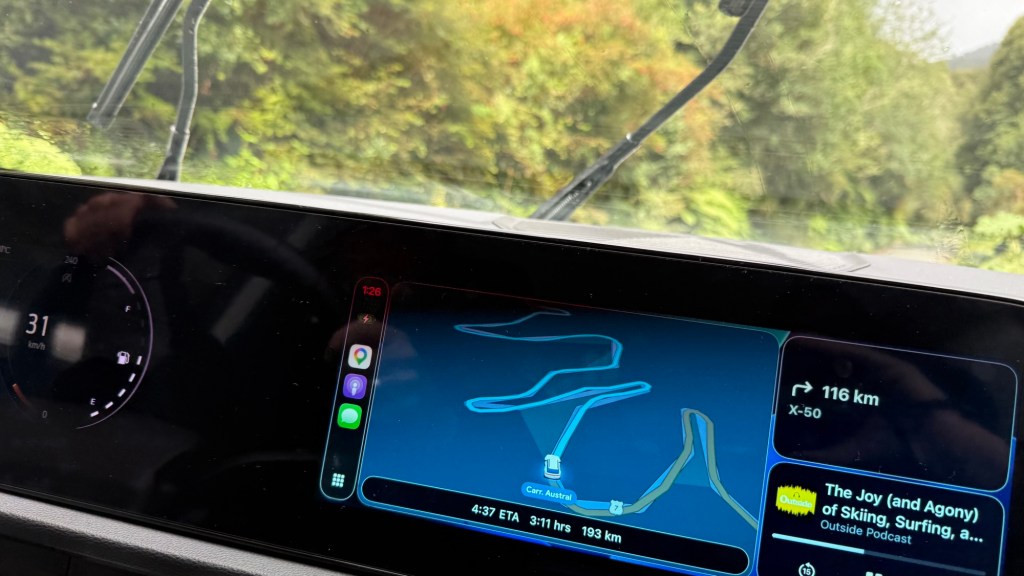
So yes… this is where we stop.
Not because we can’t go further—but because we’ve seen enough to understand what this place is asking of us.
And still, we’ll turn around and do it all again.
Because that’s the thing about this journey—there’s one way in and out–it gets under your skin.
Along the way, it isn’t just the land that leaves a mark. It’s the people.
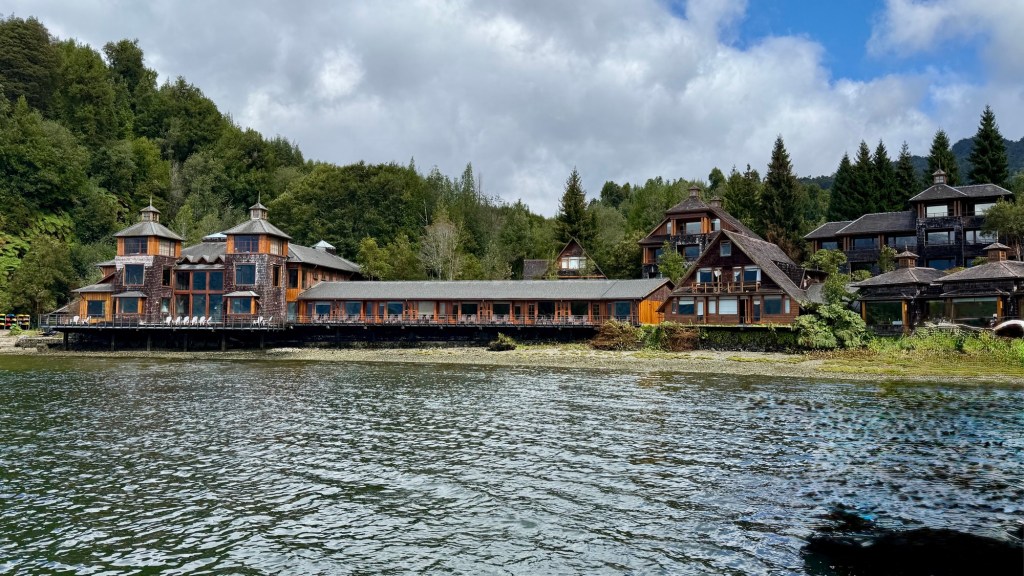
Like William and Anna, from Argentina. We met them at a lodge tucked deep along a fjord lake—so remote the outside world simply… disappeared. No signal. No distractions. Just water, mountains, and whoever happened to be there with you.
Dinner wasn’t really a choice—either the formal restaurant or the quieter bar. We chose the bar. That’s where we met Sebastián, the bartender who softened the edges of the place, and where William and Anna waved us over.
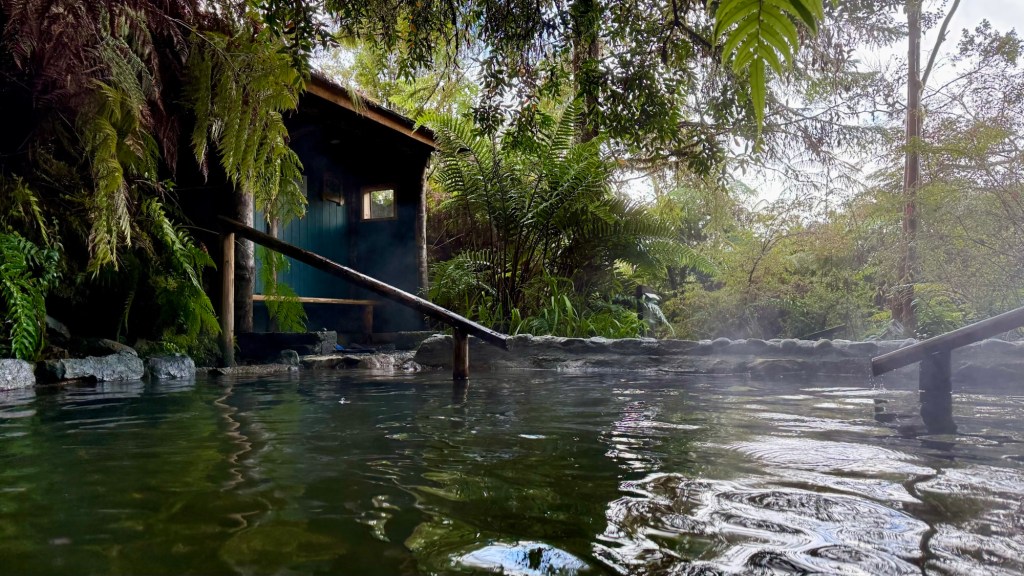
What started as shared space turned into shared stories—half English, half Spanish, all laughter. The kind of conversation that feels easy and rare at the same time. And just like that, by morning, they were gone. A fleeting connection, sealed in memory.
Patagonia has a way of doing that—giving you moments you can’t keep, only carry.
And then there’s the heat beneath all this ice.
Hot springs—unexpected, almost surreal in a land that feels carved from cold. The lodge itself existed because of them. Steam rising into crisp air, water pulled from deep within the earth, warmed by the same volcanic forces that shaped this entire region.
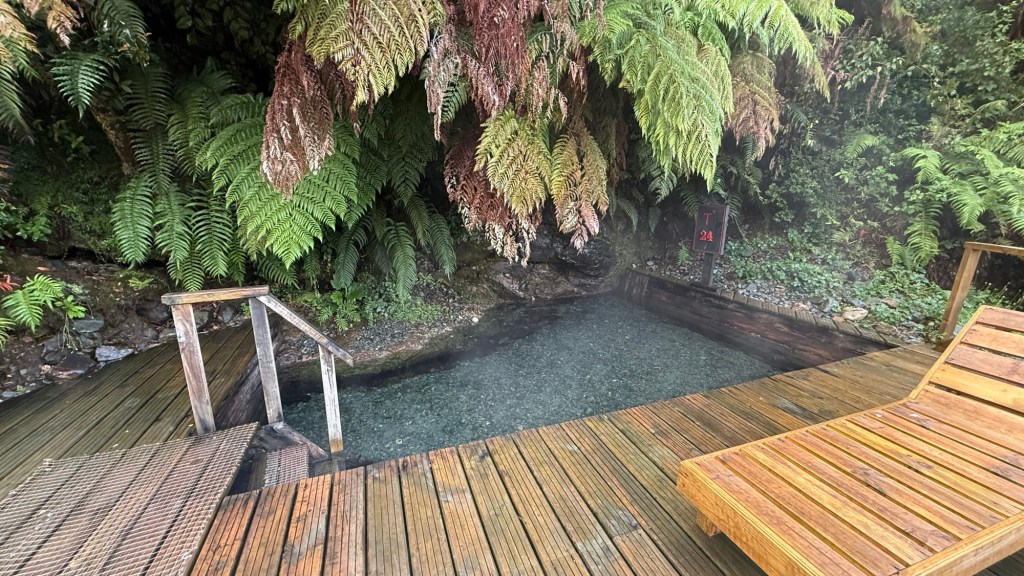
Some springs are nothing more than a hollow in the rocks, others feel like hidden sanctuaries—caves, pools, small cascades of warmth. You sink in, and for a moment, the cold, the road, the miles… they all dissolve.
It’s nature’s quiet kindness.
And all along this journey, we keep catching glimpses of other places we’ve known. A waterfall that feels like Iceland. Peaks that echo the Dolomites. Glaciers that pull us back to Alaska. Then suddenly, a stretch of land that could be the American Southwest, or a valley straight out of the Rockies.
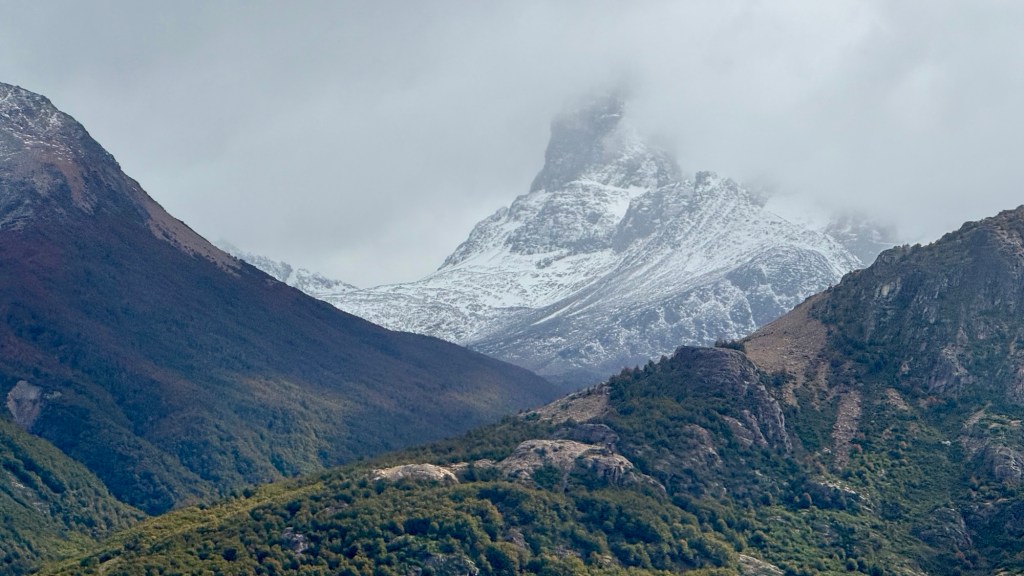
It’s as if Patagonia holds fragments of the world—but refuses to be compared to any of it.
Eight hundred seventy-five kilometers. Roads that challenge you. Ferries that carry you. Landscapes that stay with you long after you’ve passed through them.
And now, we pause.
We exhale.
We loosen our grip on the wheel, uncurl fingers that didn’t realize how tightly they were holding on.
And we turn around… to do it all again.
Insanity?
Maybe.
But it feels a lot more like adventure.