Is the Grass Really Greener?

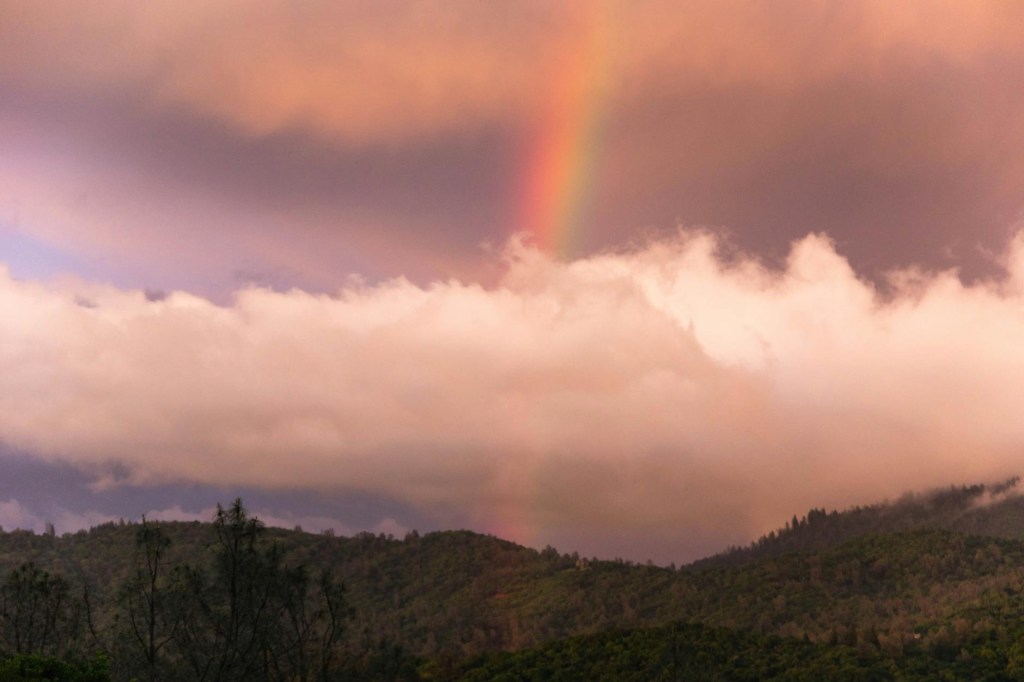
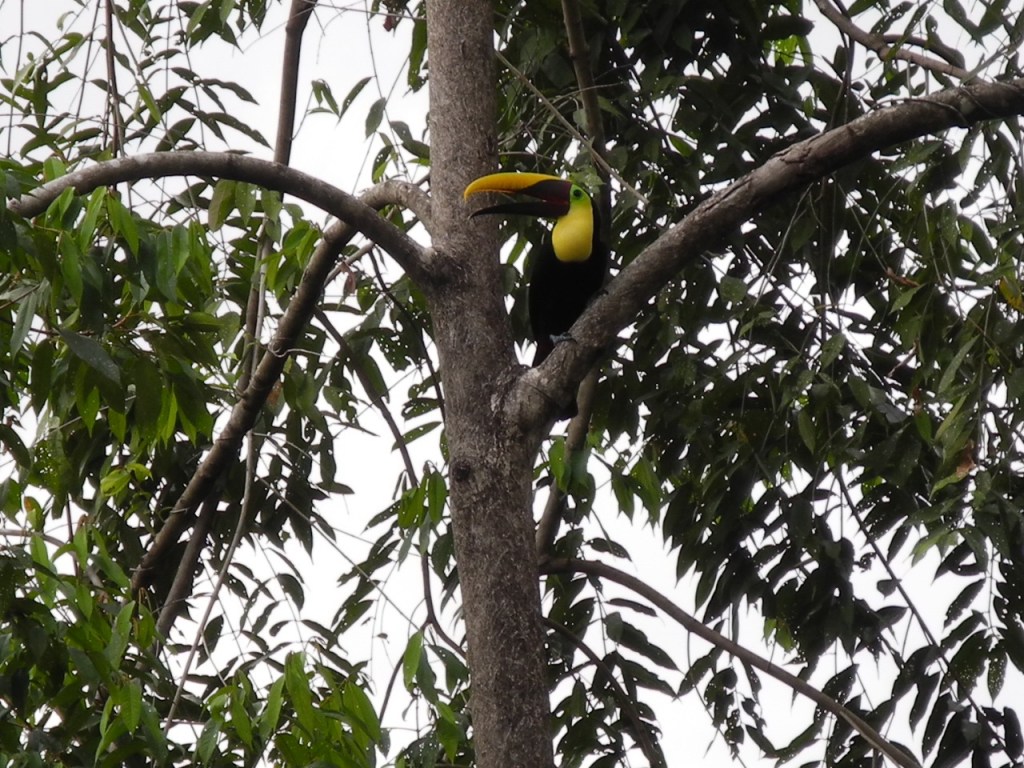
It’s an absolutely stunning morning. A week before Christmas. The sun has risen above the mountains, drying out any hint of dampness left behind by the night’s rain. A slight breeze kisses my cheek, inviting me to awaken to the promise of this day. The soulful cry of the toucans drifts through the cool air, igniting joy in my heart and bringing a smile to my face. The day’s activities have already begun.
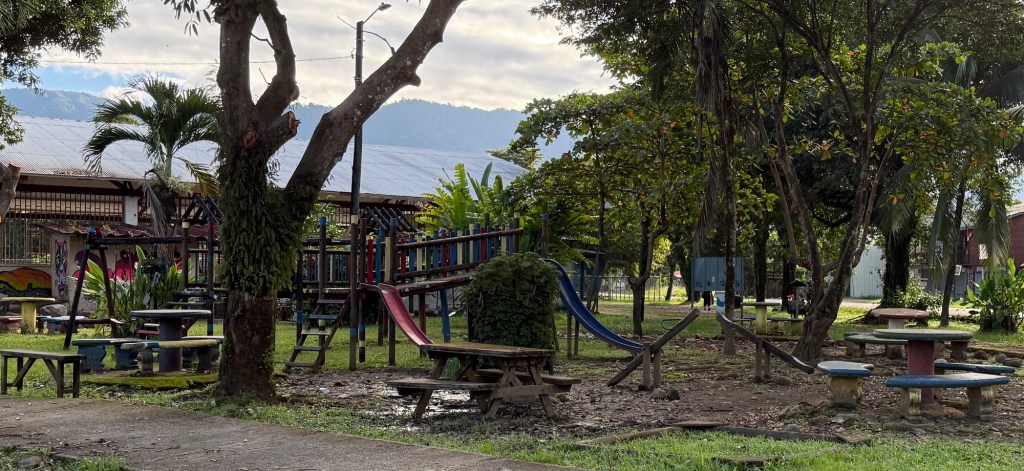
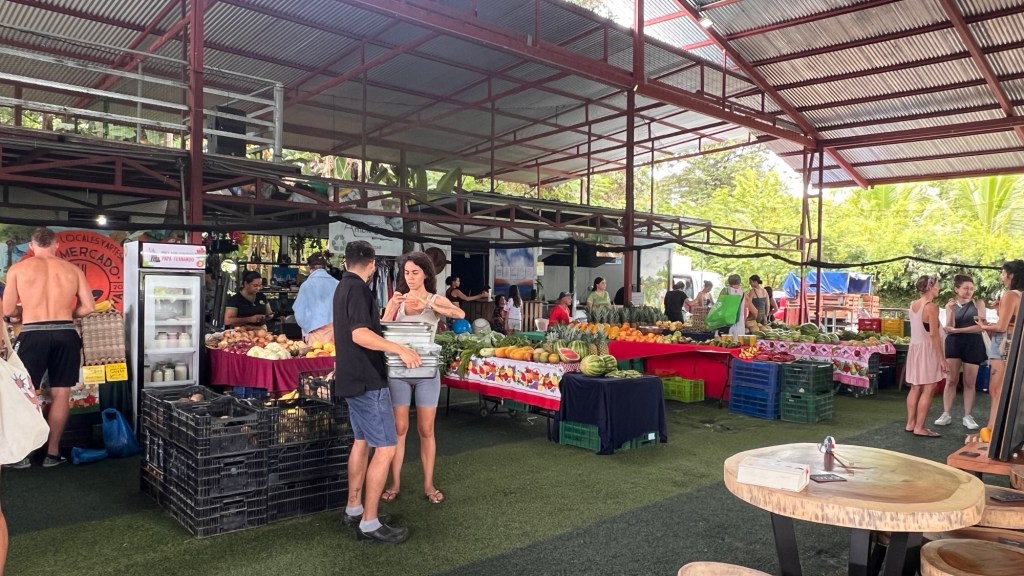
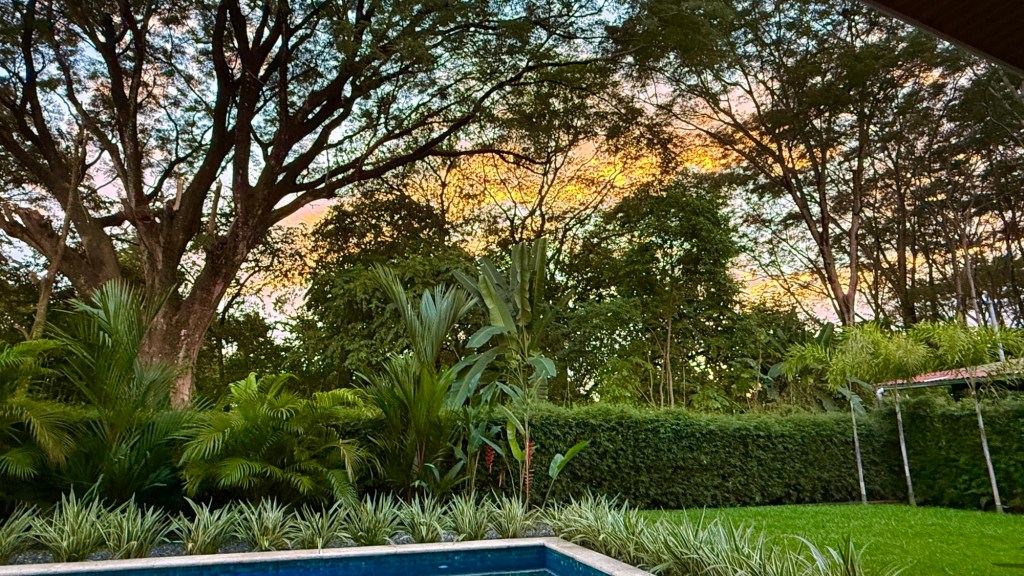
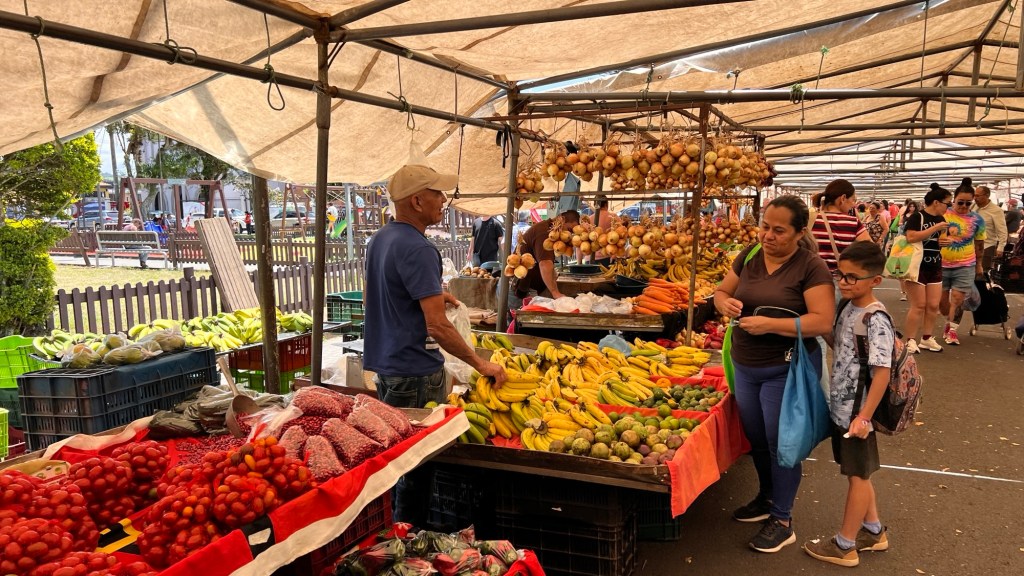
It’s been three months since we moved to Costa Rica. Every day brings something new – some good, some not so good – but everything offers a chance to learn. We are slowly settling in, and time slips away so easily here. Some days I sit quietly on the back patio, simply taking it all in. Other days are a flurry of activity – from Tai Chi and volunteering, to ferias and multiple shopping stops to gather what’s needed to prepare wonderful meals. And of course, there are beach days. It’s amazing how much time there is once you’ve stopped. Stopped working. Stopped traveling. Stopped worrying.
We move through phases of bliss and phases of WTF are we doing here?! 

This is a country of mixed messages. There are moments of total chill – when everything flows effortlessly, without a hitch. And then there are the moments marked by a lack of urgency or commitment to show up on time…if at all. The Tico people are wonderful; there is simply no rush. You can plan your entire day and watch as not one thing unfolds as expected. By day’s end, you may realize you’ve waited and waited, yet nothing has gotten done. It’s frustrating – mostly when we compare life here to life in the States. Every choice carries consequences, both good and bad. This choice was ours.

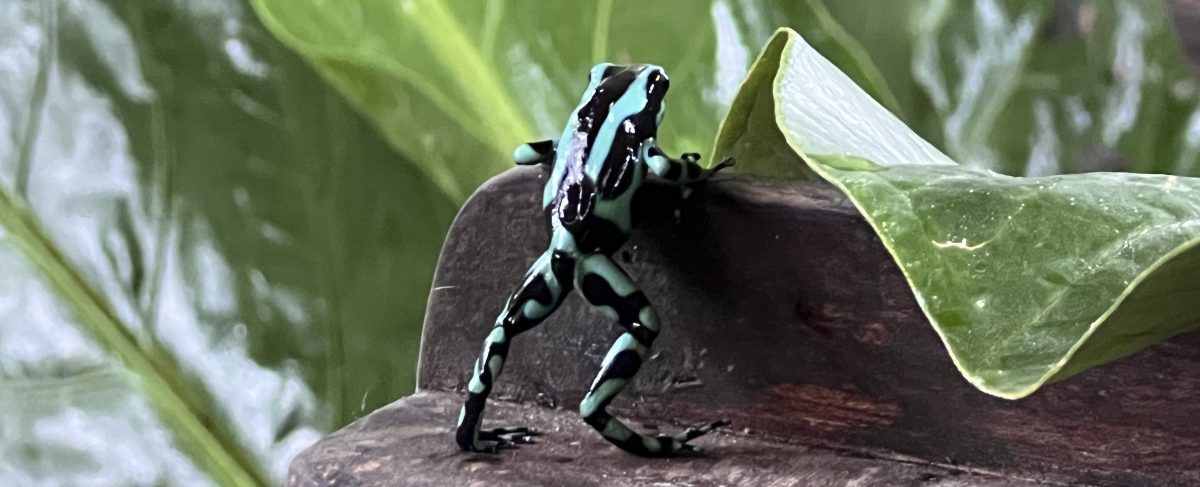
Then there are the funnies. It’s a bright, sunny day and the power blinks on and off several times within a couple of hours. It’s pouring rain – the power blinks again. This week there’s a leak in this water main line or that one, so sorry, the water will be off for a few hours – not for lack of water, mind you, there’s plenty of that. Huge green Iguanas choose our back deck for make-out sessions, then cool off in the pool afterward. Tiny spiders float endlessly from thing to thing, leaving us to walk through their strands face-first. Each morning I dust every piece of outdoor furniture, trying to stay ahead of yesterday’s web trails. Geckos poop all over everything leaving little mouse poos with white dots looking like an explanation point – guess they are making a statement. And of course, there’s the ongoing adventure of asking and answering in Spanish. 

The list goes on.

It’s the dry season now.

We shall see how green the grass stays.
Rain and Rejuvenation

I’m sitting here on my patio watching the rain come down—again. We’ve had a ton of rain since Hurricane Melissa first appeared as a blip in the Caribbean. It must be true that October is the rainiest month in Costa Rica. We’ve had over twenty inches of rain this week, and more is falling.

And let me tell you—it knows how to rain here. It’s never just a “passing shower.” Back in Utah, we’d call these “gully washers.” For example, our pool’s water level usually sits about six inches below the lip, but last night, after just two hours of rain, it reached the overflow drain. For the next four hours, the drain couldn’t keep up, so I had to pull the cover off to let the water escape before it spilled over. Our pool is about eighteen feet long and twelve feet wide. I’m no mathematician, but that’s a lot of water.

Why did I mention Melissa?

Part of learning to live in a new country is learning its weather. We don’t have regular TV here, so most of our information and alerts come through WhatsApp. I saw a question recently posed to a local meteorologist: “If the hurricane is in the Caribbean, why is the Pacific coast getting high tide surges and flooding—while it’s sunny on the Caribbean side?”

Here’s where it gets a little nerdy. A hurricane is a living, breathing, seething wonder of nature. It pulls energy from all around it—even thousands of miles away. Just off the Pacific coast of Central America sits the Intertropical Convergence Zone (ITCZ), which holds an immense amount of humidity—a marine layer of warm, moist air. The hurricane literally pulls that ITCZ over the nearby countries, where it becomes supercharged by local weather patterns. The result? Torrential rain that can last all day.

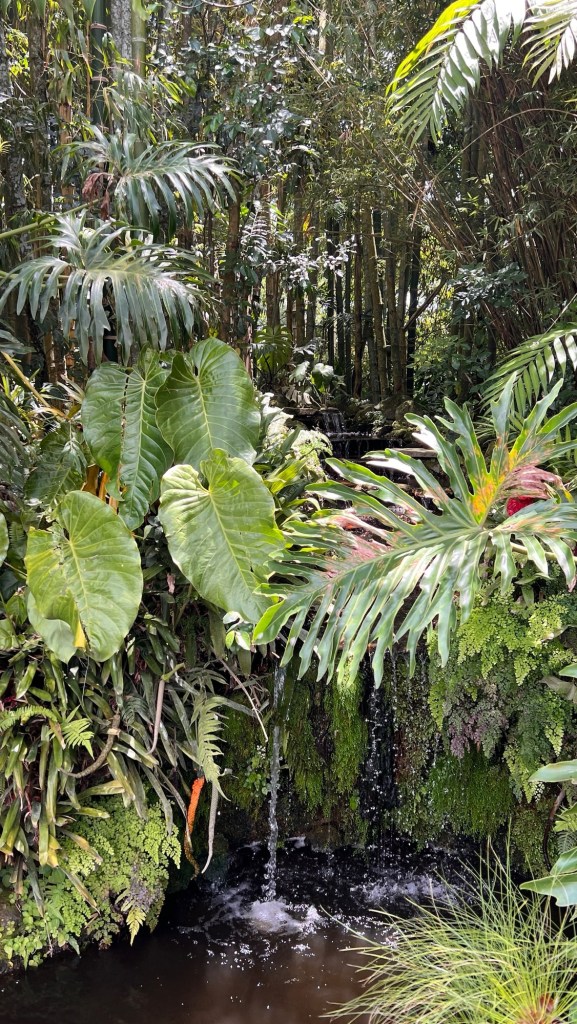
During a “normal” rain, you can feel the humidity rising. The air gets heavy and oppressive. It’s no wonder everything here grows so fast, so big, and so green.

This week, we’ve also begun a new path toward better health—a change in diet, shifting old habits, and replacing them with more holistic practices. We’ve started giving back to our small community by volunteering and joining in the local energy and vibe. We’ve taken up Tai Chi, sound healing, and slow forms of yoga and breathing.

Today, I attended a “Morning Melt: Cacao and Devotional Singing Ceremony” at a local shop here in Uvita. There’s always some class or workshop on wellness, spirituality, or healing happening here. It’s about getting well—not just treating symptoms.

We eat fresh produce from the farmers market, grass-fed meats, and organic everything. We know where our food comes from—nothing is trucked in from far away. If it’s in season, we get it fresh. It all adds up to our main reason for moving here.

Here, in Costa Rica, we just might become young and spry again.

Costa Rican Wild

Another early morning. The torrential rains last night have cut down the humidity, for now. The birds are crying out to the world, its time to get up, in a cacophony of squeaks, chirps, screeches and sweet songs. The sun is climbing steadily up the backside of the jungle covered mountain in the background and the clouds are parting for her like sentient soldiers spreading a veil. A few pockets of mist cling to the verdant trees, adding eerie apparitions floating through the trees like water flowing around rocks in a river. There’s a hint of jasmine in the air. 

The days are filled with a flurry of activity early, as the humans try to beat the heat and humidity of the coming day. We scurry about, doing chores, getting those last staples at the stores, running off to work, cleaning up whatever the rains brought down from the trees last night. 

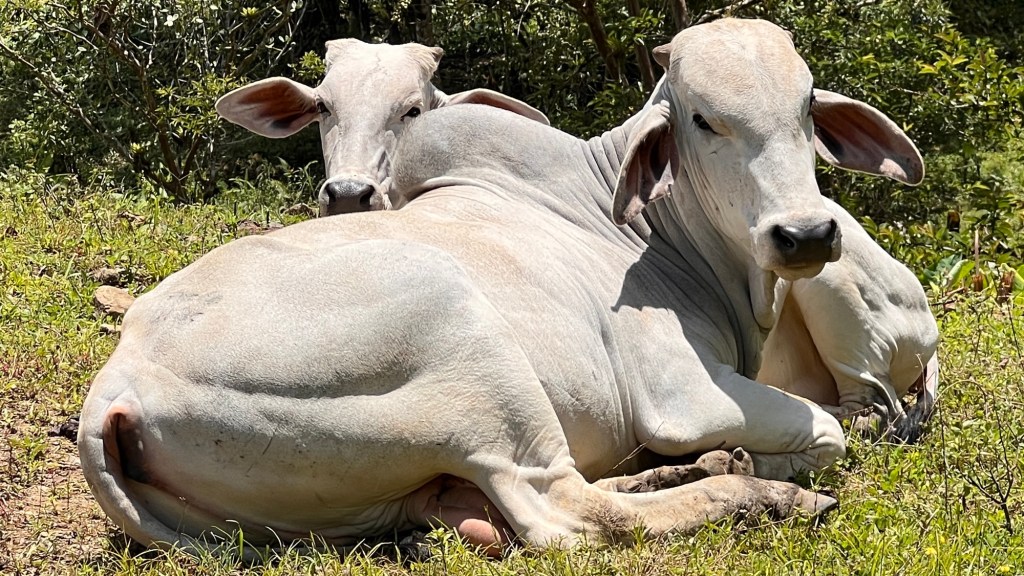
It’s a symbiotic relationship one develops with nature when living in Costa Rica. The fertile ground will grow anything and the jungle throws down a lot of things. Even we humans add to the growth with a seed tossed out while on a walk, an upset garbage can can be full of seeds from the copious amount of fruits and veggies we eat. Fresh and organic. There’s not much concern about spots and imperfections on our fruits, no dyes added to the fish or poultry. Beef is not a big thing here nor is cheese. Cheese, in all forms is a delicacy. Beef can run from tough to sublime depending on the region. 

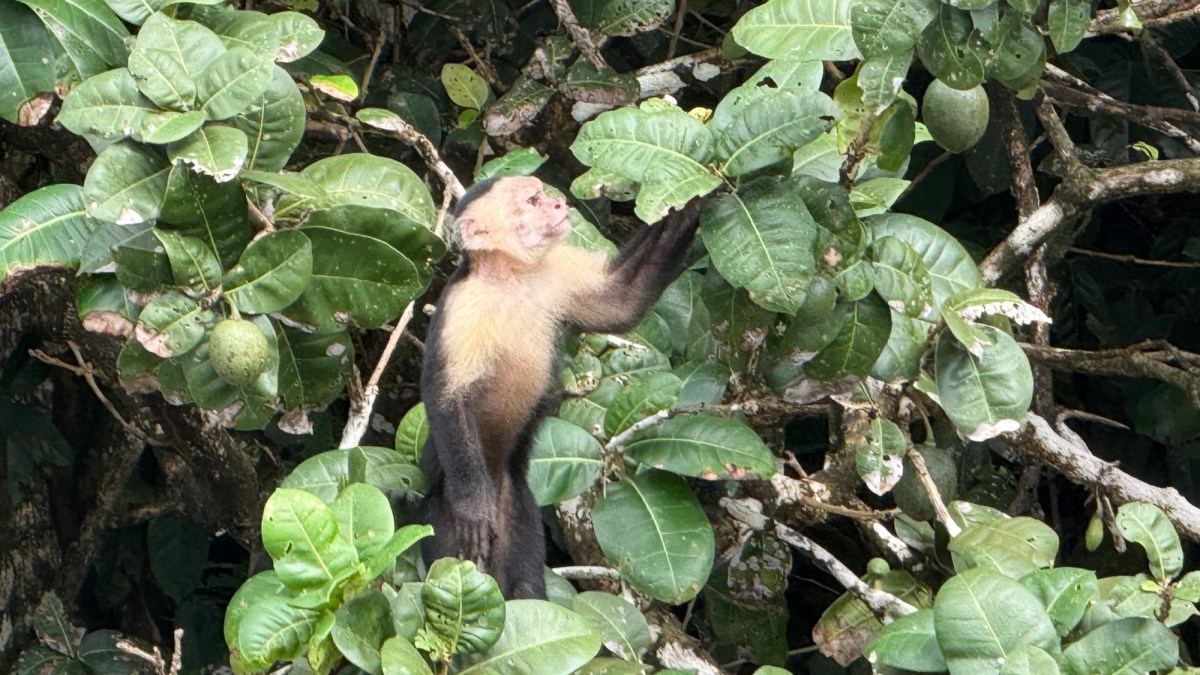
Fruits and veggies grow like weeds here. It’s not uncommon to find squash plants growing on the side of the road or in a vacant field that has become a natural compost. Fruit trees are ‘fruitful’ and multiply if left unchecked. Most of these accidental plants become food for the vast variety of wildlife here. Birds, amphibians, mammals small and large, and the insects, all enjoy the bounty. 

Costa Rica is wild and wonderful. It’s harsh and gentle. It’s teaming with life. The vibe is one of calmness and a natural rhythm, a stasis between man and nature. A constant battle between water and land, plants and the tiny space one carves out to call home. A hidden world in the lush tropical forests and a world of wonderment. Someplace that we feel alive, small, and acknowledge the heavy weight of being a steward in a country with so much untamed beauty. 

A fast paced life? Not for me

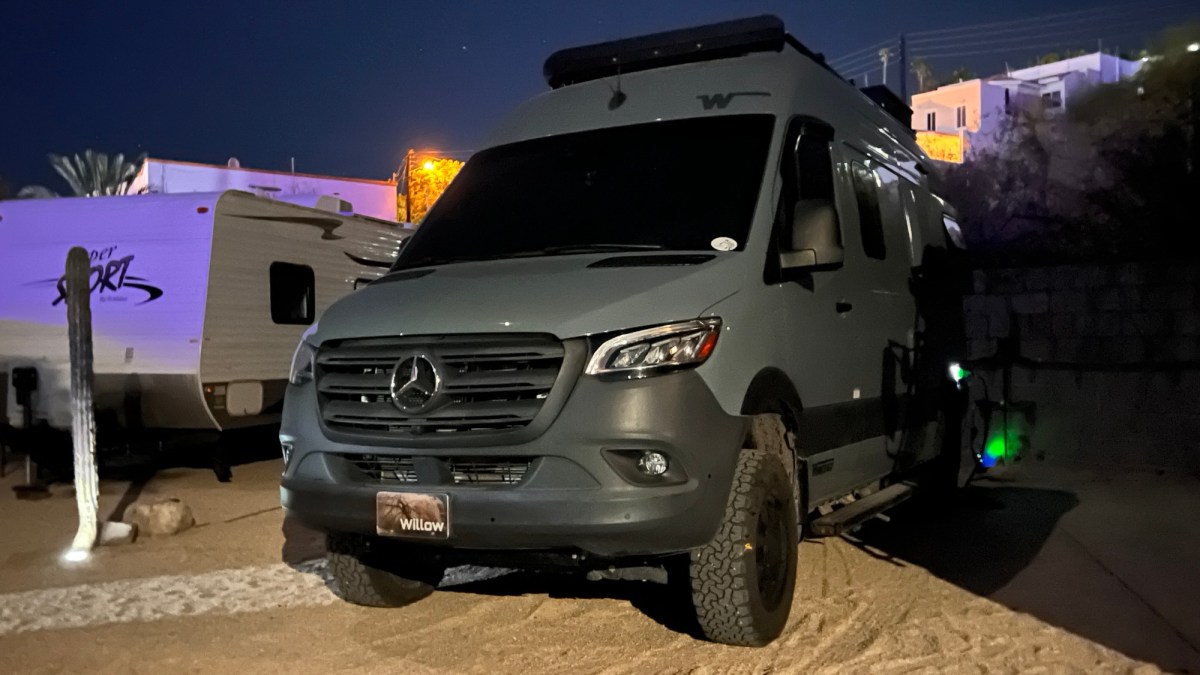
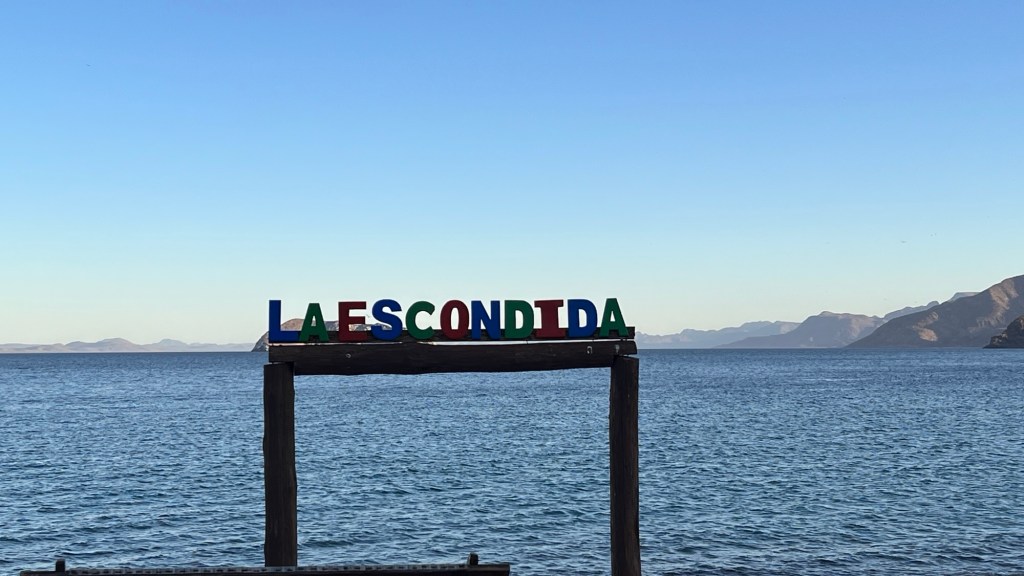
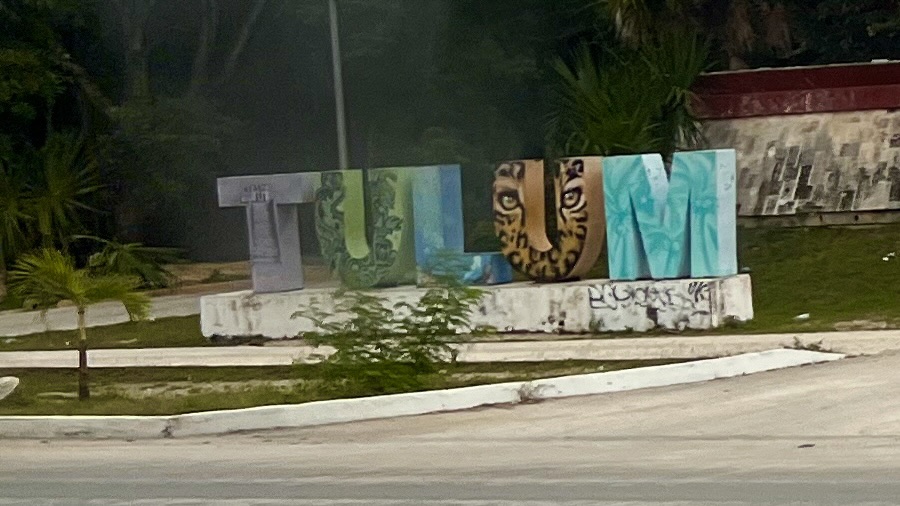
In the last 75 days, we’ve traveled the entire length of Baja Mexico exploring both the Pacific Coast and the East side of the Sea of Cortez to the South and East of Cabo San Lucas by Van. We also flew to the Yucatan Peninsula   to visit Tulum and the far southeast of mainland Mexico to explore Oaxaca. That’s almost 3500 miles. Every mile has been worth it. The culture, the people, the sights, sounds, art, architecture, history and food, all have played an integral part in the experience. A lifetime of memories packed into a measured amount of time. Amazing comes to mind. 

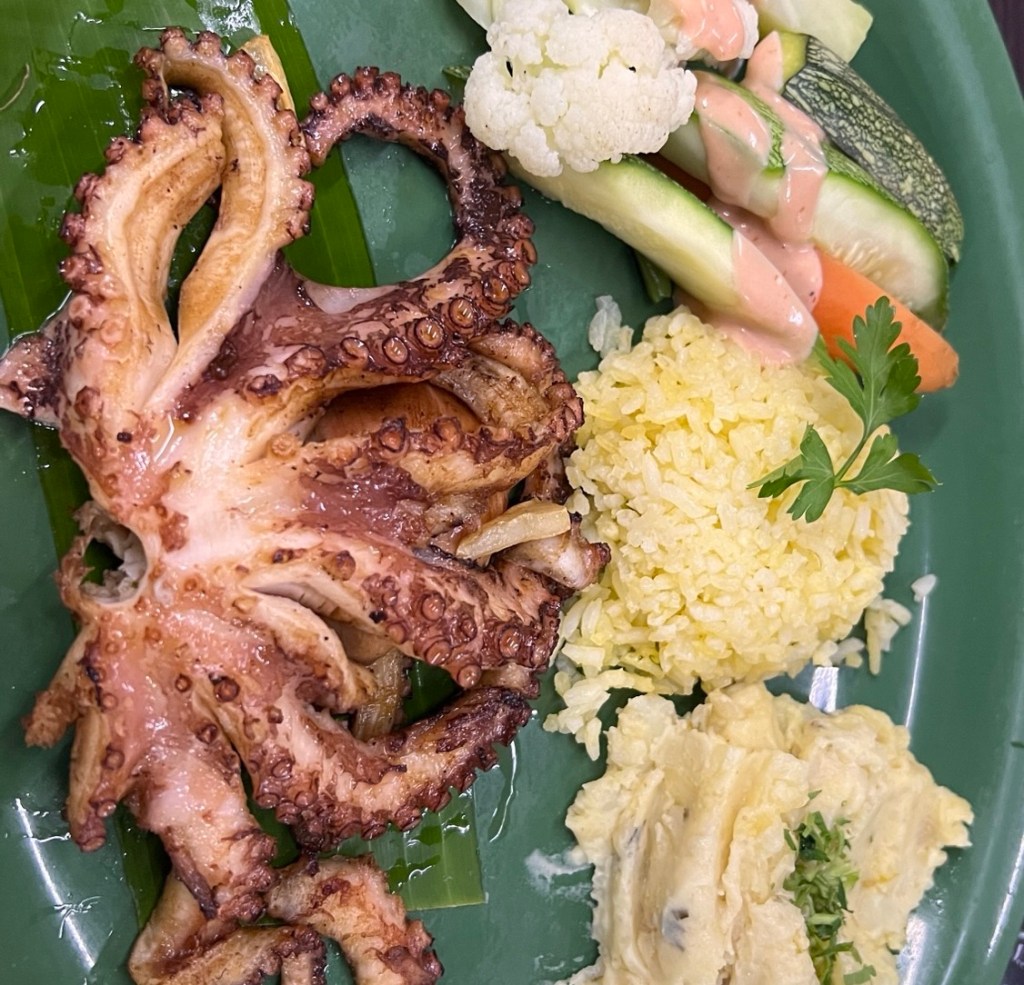
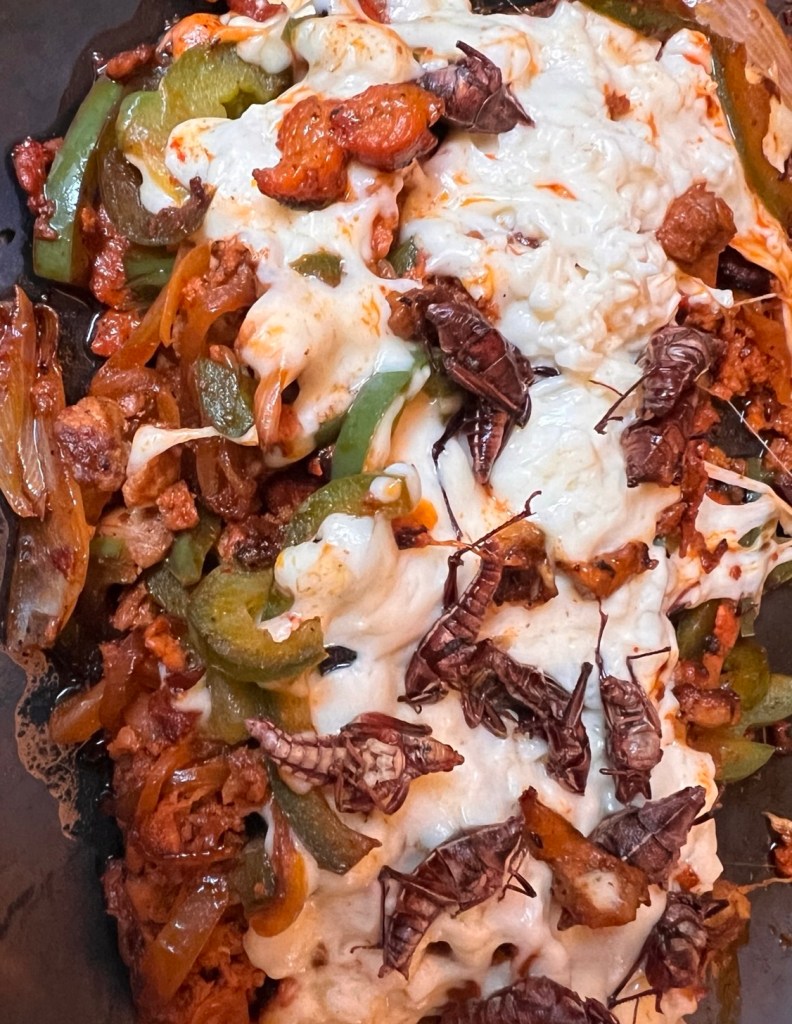
We have tasted new flavors, textures and savored the aroma of the local foods. Fresh, full of flavors I don’t think I’ve ever tasted before. A cacophony of zings and sweetness, fiery hot and creamy smooth, crunchy, chewy, stringy and saucy. I’ve tried things I couldn’t quite identify and the translation from the menu, just made you laugh. We’ve aimed our phones at so many menus, attempting to decipher the dishes. Often times the pictures spoke volumes, although the color has often times faded from the strong Mexican sun. Just sit back…giggle and breathe…it’s all part of the adventure. 

Walking around as much as we do in these cities, is also an experience. First rule, never step on a manhole cover or other covers in the sidewalk or the telephone and fiber cable boxes, water meter boxes and water tank fill boxes. Often these boxes no longer have intact lids, making for some perilous walking. Why should the sidewalks be any different than the roads? Crosswalks…well no, not really, more of a suggestion as are the 4 way stop signs on every block. It’s like a read my mind game. Which drivers are gonna stop and is it safe to cross? It’s kinda a cat and mouse game, no maybe more like chicken. The drivers are usually kind and if not in a hurry, will wave you on or flash the lights. As this happens the entire street full of cars at the intersection, blow off the stop signs and continue in a stream of metal, until…a driver inches his way out enough to stop the flow and take his turn. Impatient horns are a thing here too. Not the lay on the horn of the American culture, there is no road rage, just an impatient honk honk and a friendly acknowledgment from the other driver. 

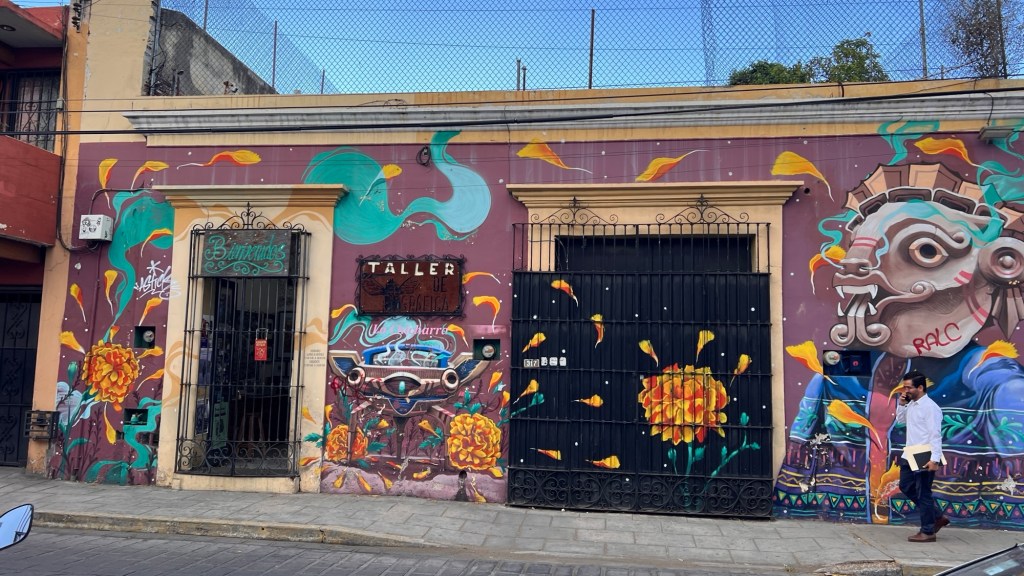
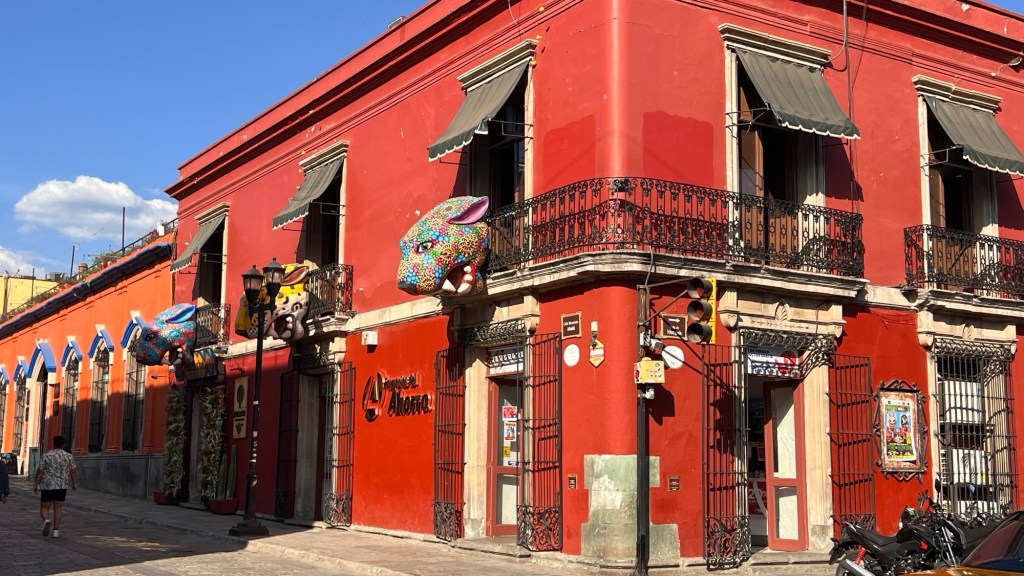
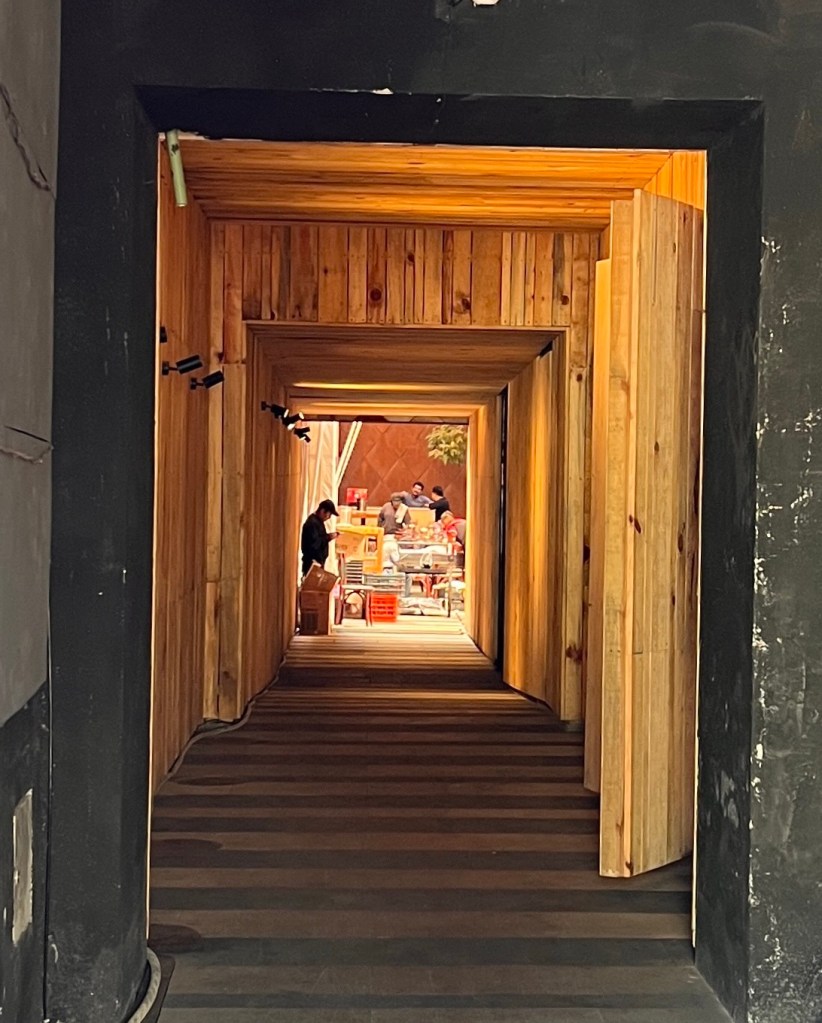
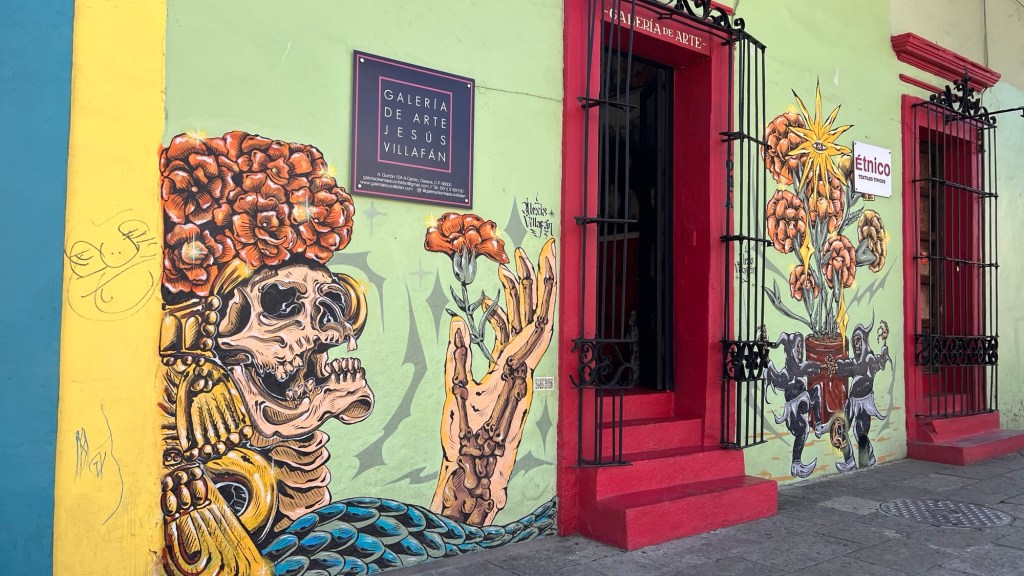
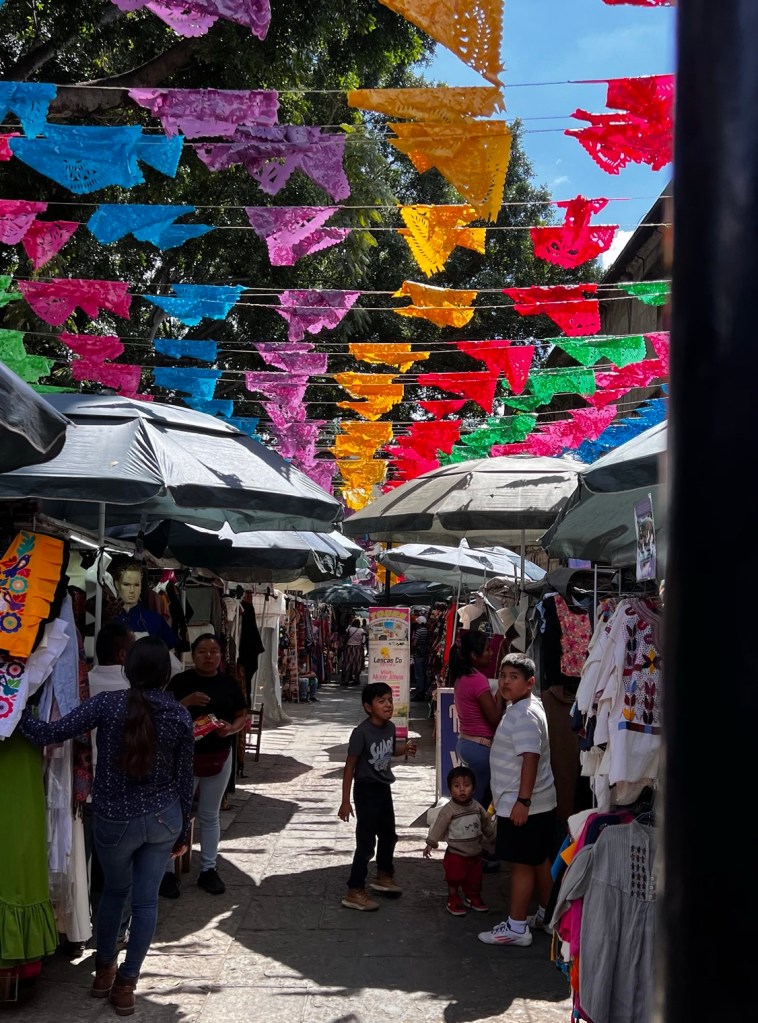
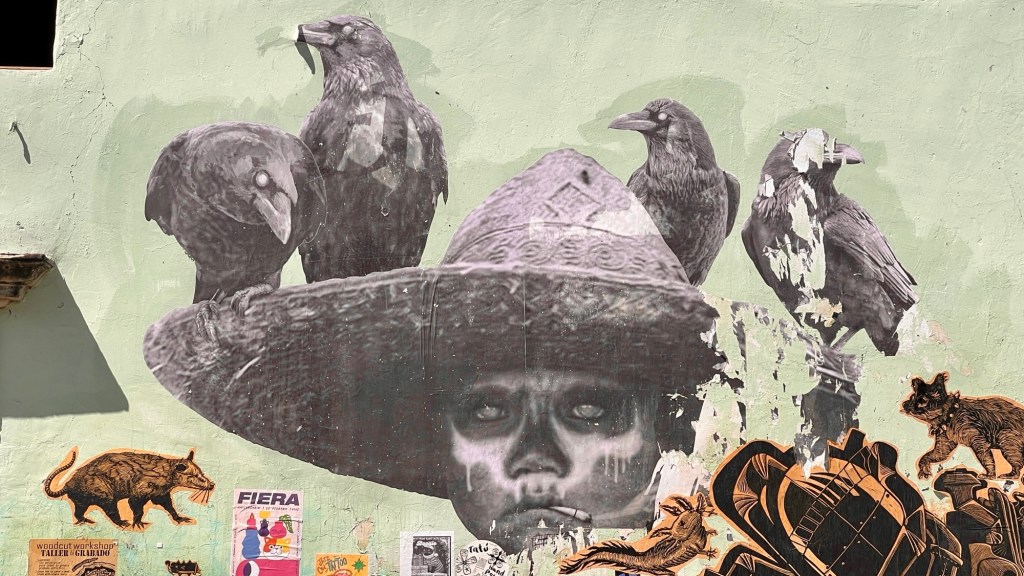
One could liken walking around in these small Mexican towns to Christmas. Behind every wall is a prize. Brightly colored rooms lit in soft lighting, families gathered around tables sharing a meal, artisan shops and galleries all hide behind these walls. Everyone surrounds their homes with tall walls, often imbedded broken glass or spikes line the tops, warding off any intruders. There are often elaborate gates and a gang of rescued street dogs warning you to not enter. The walls, as in Loreto and Oaxaca, are often embellished with creative designs, incredible artisan images of life, history, nature or cultural themes fill entire sides of buildings. Some tell stories of the hardships of life in Mexico, the kindness of the people, the industriousness of Mexico. Others are underwater worlds depicted in large murals. 

To be able to experience this and so much more requires us to slow down. To really take a look around. To watch our step and smell the air for what is on the menu. To really stop and admire the painting, carving, saying, design, posters and even the graffiti. There is no hurry, life is too short to not live it fully, here and now. We’re so lucky to have the leisure time we do and the means to travel…and the guts to step outside our comfort zone to try something new. 

Oaxaca: First Impressions

I don’t always know what it is that will catch my eye, tickle my nose with a new scent or ring out in my ears as I walk through this city. There is a rhythm to life in Oaxaca. 

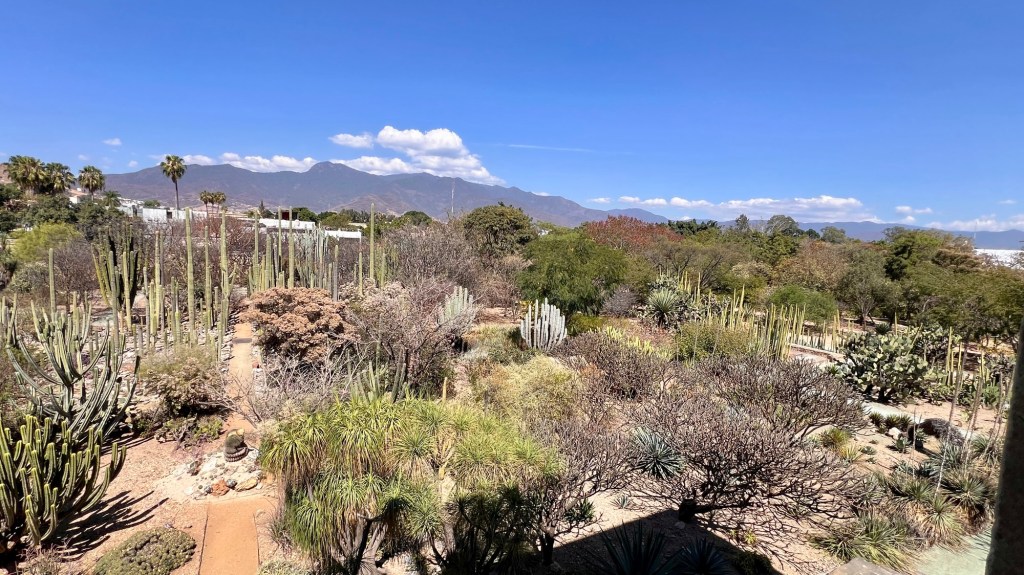
The air is fresh here, with the exception of the occasional stopped traffic and the fumes from the vehicles. The sky is a deep azure intensified by the altitude of just over 5,000 feet or about 1,500 meters. The city is surrounded by mountains that can only be viewed from a rooftop terrace as found in almost every building. The foliage is a tossup between tropical and desert yet the air feels hot and dry with the sun’s intensity making it feel even hotter. 

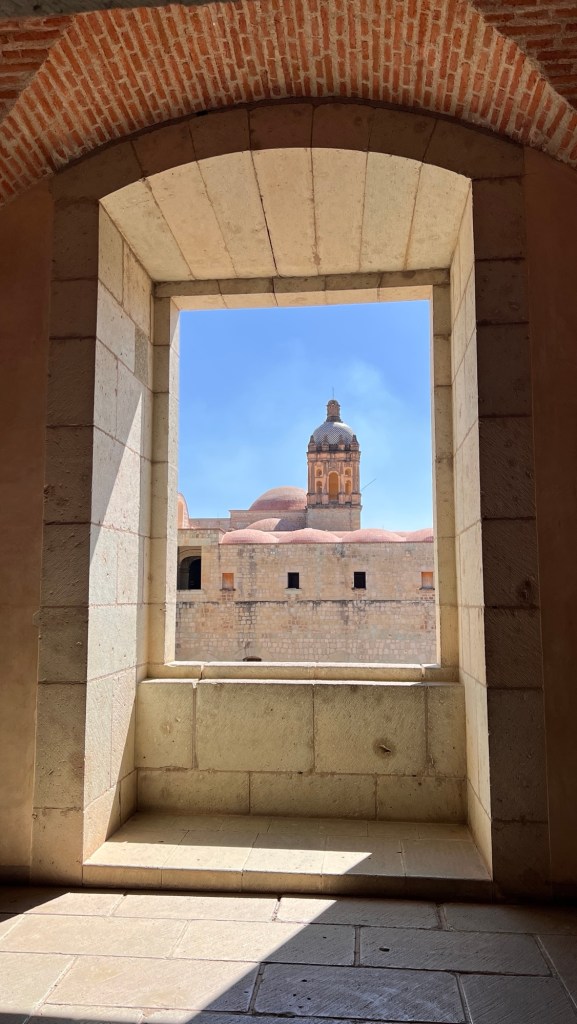
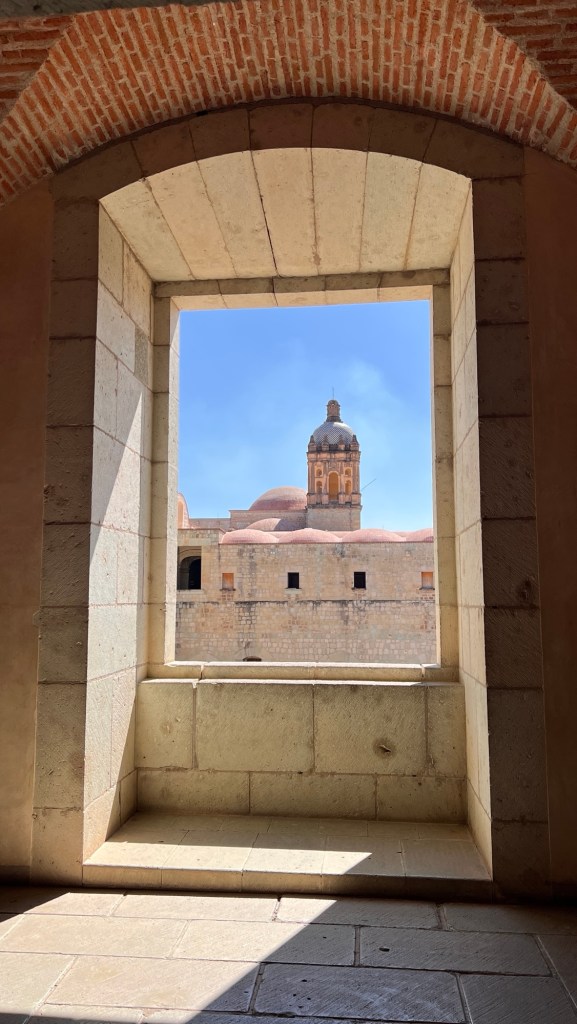
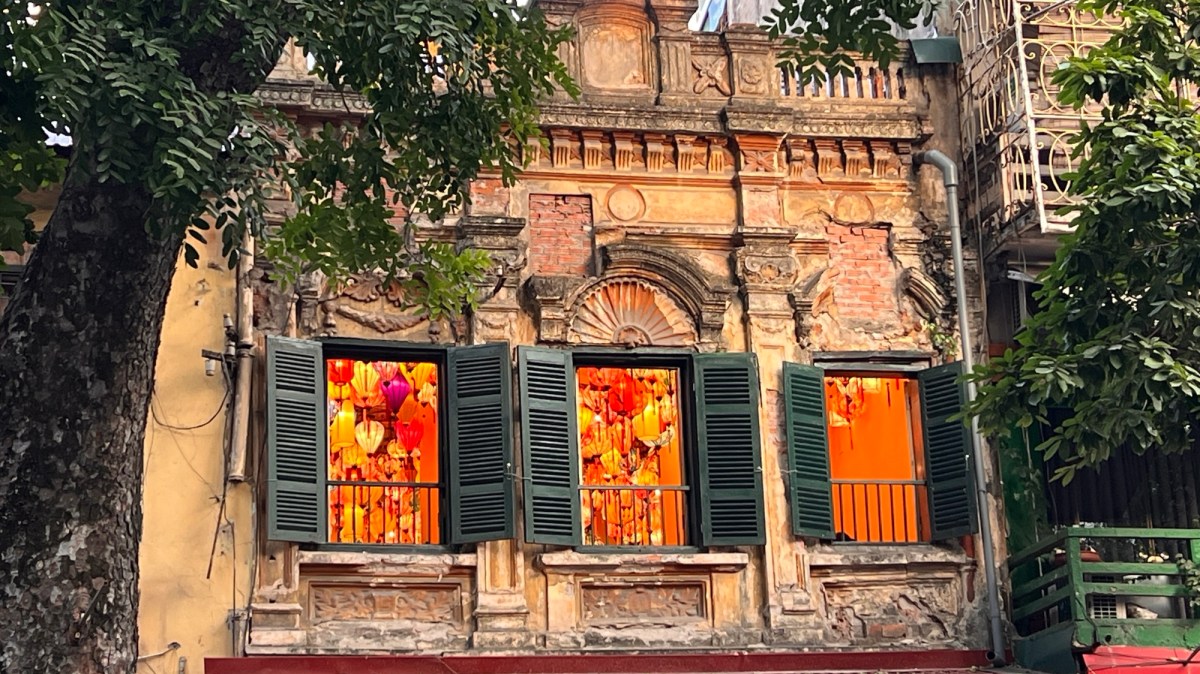
The rows and rows of solid walls with a doorway leading into the very heart of the building. The courtyard. Most of the city is Spanish colonial. With often times three generations living in one home, the configuration of these lovely, colorful buildings makes total sense. Each interior is different with only one common theme, the courtyard with rooms off to kitchens, bathrooms, offices, indoor gathering areas, and a rooftop terrace. The special touches added by generational influences, cultural appreciation, artisanal likes and tastes. Colors vary greatly but tend to lean more tropical, bright oranges, blues, yellow and greens. There are often bars on the windows to the outside which after a fashion becomes part of the architecture and less about crime. 

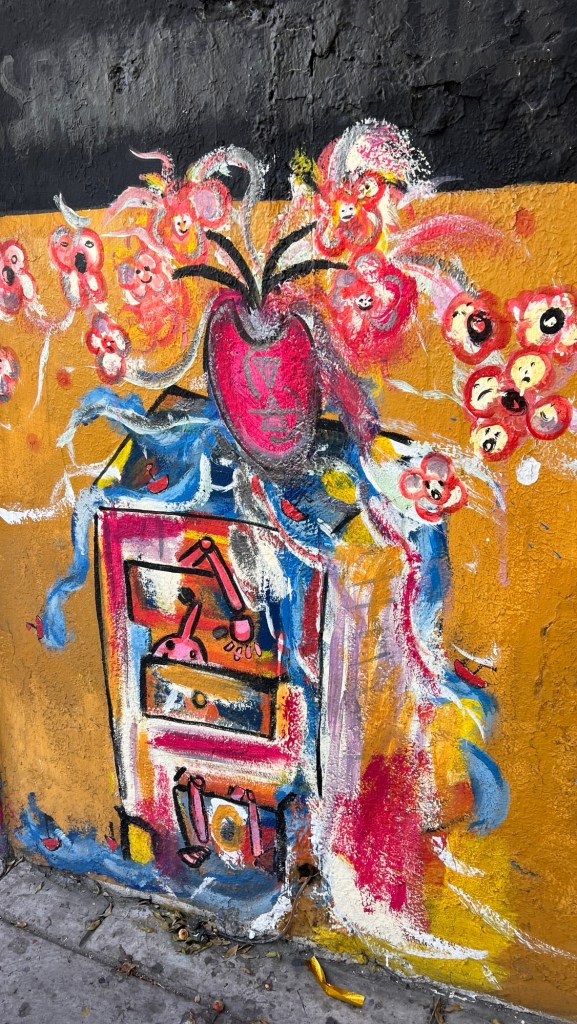
The streets are clean and tidy and mostly made of blocks of rock or cement, each hand laid and leveled. The pride of the people shines through in most all areas, though there is a free “artistic” expression found on most every wall. Someone’s personal stamp on the world, be it graffiti or actual pictorial design. Each says something about the trials, tribulations and triumphs of life here. To say “hey I’m here.” To convey a thought, political statement or just to advertise. 

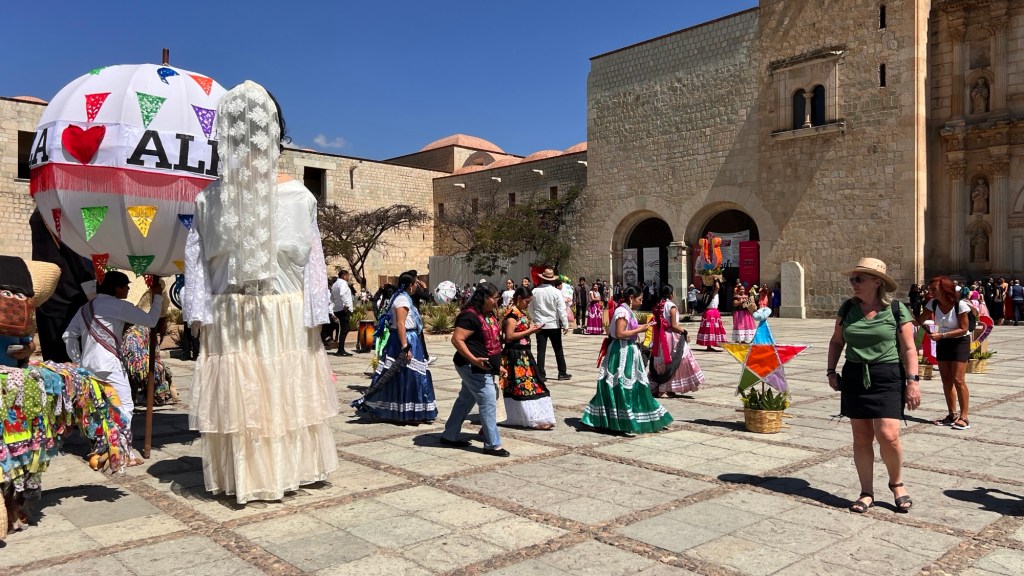
The Catholic Church is the center of each small neighborhood. There are over 25 churches and 125 parishes in Oaxaca Centro, the main being Templo de Santo Domingo. Every Saturday, weddings are performed at this enormous church. A precision sets up outside the church, consisting of papermache edifices of the bride and groom that twirl and sway while a marching band plays. Women and men in typical Mixtec and Zapotec costume of bright colors with embroidery depicting the cultural symbolism of their heritage. It is quite the fan fare and each wedding is held on the hour and the revelry commences as the newly weds exit the church. 
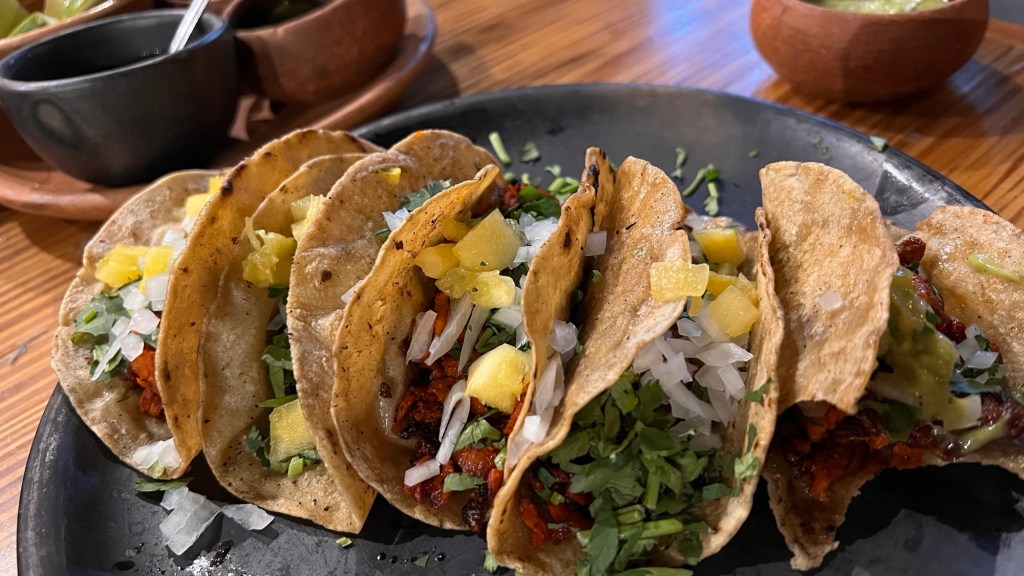
The food here is amazing. It is freshly made to order, be it a restaurant or street vendor. The smells waft on the breezes through the walled streets, making one’s mouth salivate. The ingredients are not always known to us but we are adventurous and step out of our comfort zone to try new things. Oaxaca is best known for two culinary items…Mole and Mezcal. There are so many variations of Mezcal that can be found in the place of whiskey or regular tequila in many drinks. Each Mole is also crafted by hand in an arduous process and it seems the variety of Moles are endless.

We’ve only begun to scratch the surface and we’ve got another week to experience Oaxaca. A foodie heaven and cultural center, with hundreds of maze like streets to explore. Best done on foot so not to miss anything hidden inside a doorway. 

Hopes, Dreams and a New Year

And again, it is time to move along to our next destination, Singapore.

The last 10 days have been spent recovering from a 43 day tour of SE Asia, including Thailand, Vietnam, Laos and Cambodia. The things we have seen, heard and experienced, will be indelibly etched into our psyches forever.

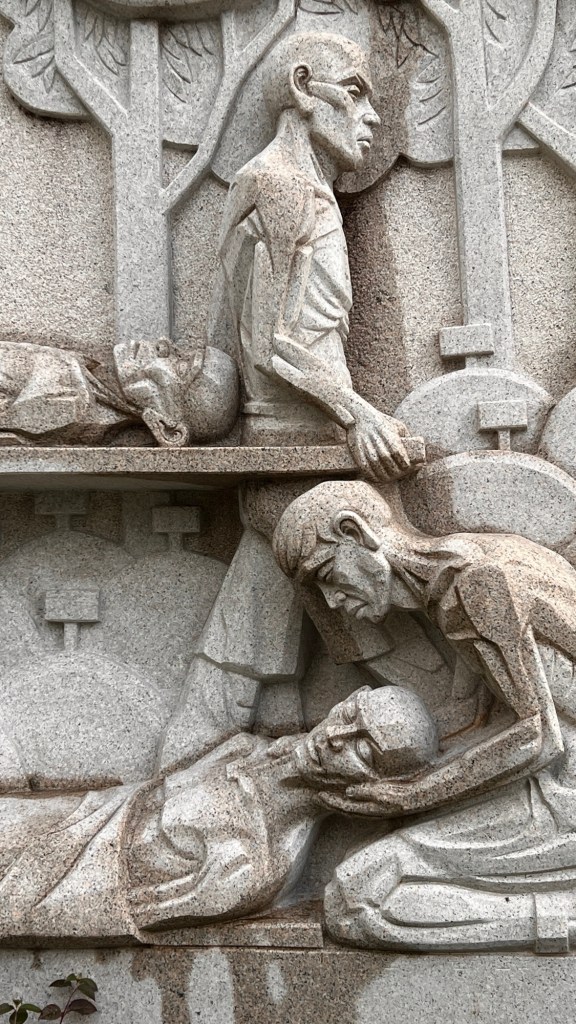
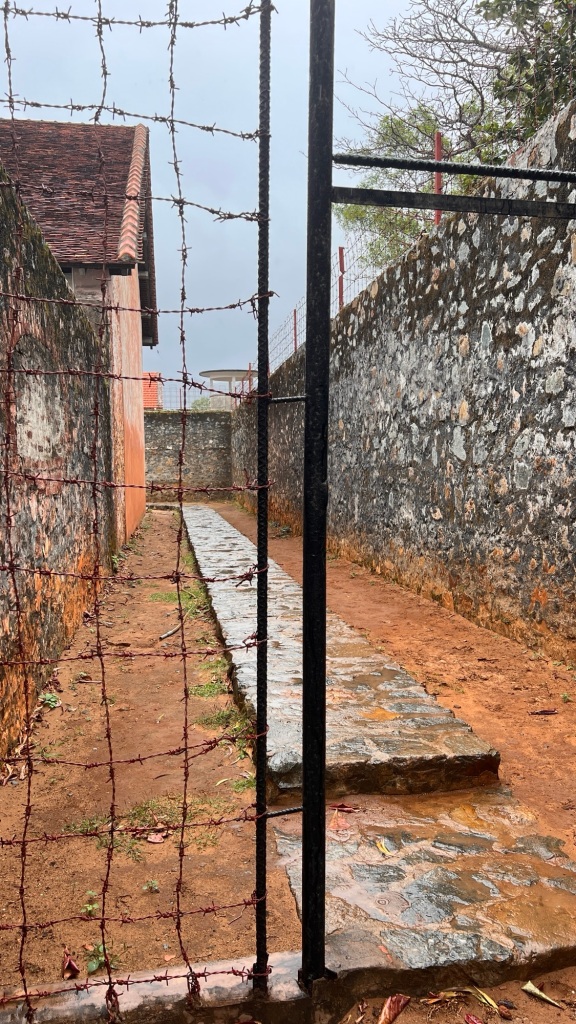
The kindness of the locals, the stories told by our many guides, the sights and sounds of countless prisons, war museums and mass grave sites.

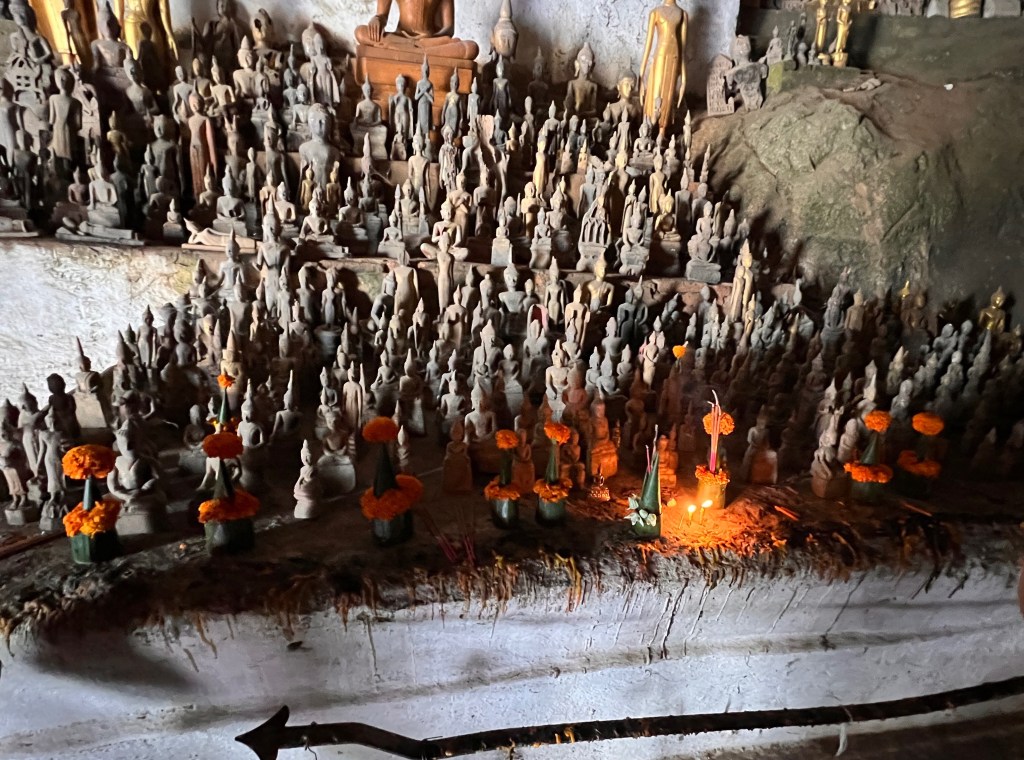
The opulence of beautiful temples. The immense grandeur of karst mountains jutting up from azure blue waters. Tiny, brightly painted long boats and giant wooden boats gliding down the Mekong and bobbing in silent, protected coves.

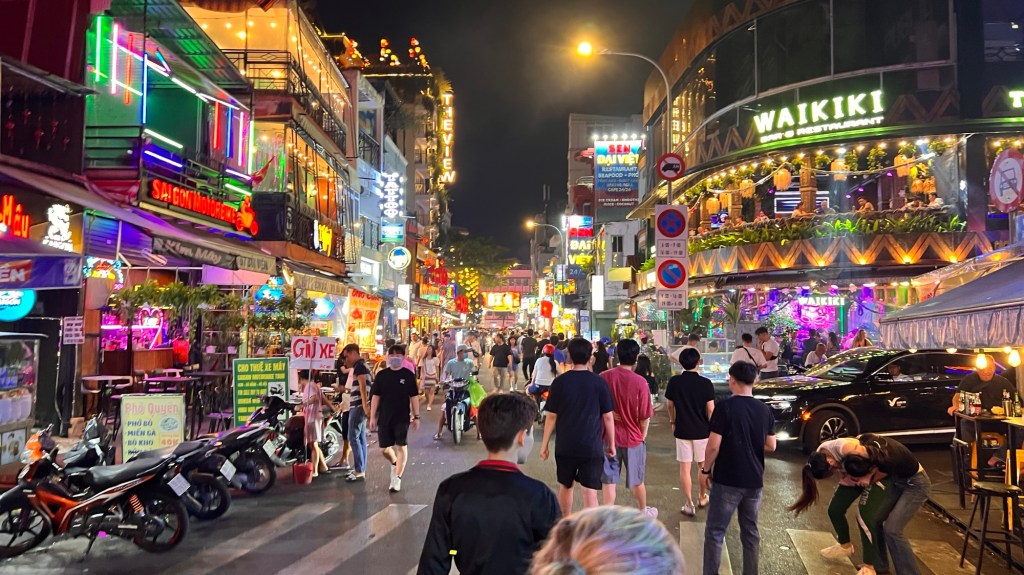
Stunning, powdery white sand beaches, towering skyscrapers in bustling cities, the sensory overload of horns and music blaring from establishments, to the gentle crashing of waves.

All these things paint a picture in our minds eye of life in these countries. We hunger for more as our thirst for travel and new experiences hasn’t waned in the 9 months we’ve been traveling.

What have we learned? Well, how to live in the moment, how to sit in silence, how to take life as it comes with no preconceived notions of what the next destination will bring. We’ve learned to accept that which we cannot change and make the best of it. Mostly, I’d say we’ve learned to slow down. We aren’t just living a dream but also have responsibilities. We have time to pick and choose our battles and how we will approach them. As a teacher of mine always says, we have the luxury of leisure.

It warms my heart to know that sometimes, just the words I write, can transport some of you outside of your haste and allow you 10 or 15 minutes to dream and escape reality. Perhaps they stir a deep longing inside of you to travel outside of your comfort zone.

The life of a traveler is constantly stepping into the unknown and overcoming any trepidation that may arise from traveling to a new destination, one we’ve never been to before. Learning new languages, customs and new currencies. We are traveling to find a place to settle in and become a landing spot, after all, we can’t continue this pace forever and the urge to stop sometimes looms large. But in the mean time, we plan a few weeks to a month and do it again and again. I hope you will continue to follow us and join in our exploration.

Christmas in SE Asia

Back on a bus headed for Hoi An, Vietnam. It’s Christmas Day. The weather has taken a turn from hot and muggy to a pesky misty rain and much cooler temps. We have hit many cities so far in Vietnam and again we hear, from our local guides, about the horrors of war and the way of the communist rule here in SE Asia. I’m reminded of the famous line from Apocalypse Now…”the horror.” It’s only been since 2000 that westerners have been welcomed back into these countries, and unless you are hearing an account, such as the Tet Offensive, you’d never know how ravaged the people have been. As travelers, we now are bolstering the economy and making a better life for the Vietnamese, Laotians, and Cambodians. They’ve opened up to share their culture, their very kind souls.

As we’ve been traveling about in these countries, I can’t help but feel that slight embarrassment of being from a country that gave up after engaging in such horrorable acts. Our guide said it quite perfectly yesterday, the people choose to live in the present moment. Harboring hate and anger only eats at the lively hood they are enjoying. They are a proud, hard working and very considerate people.

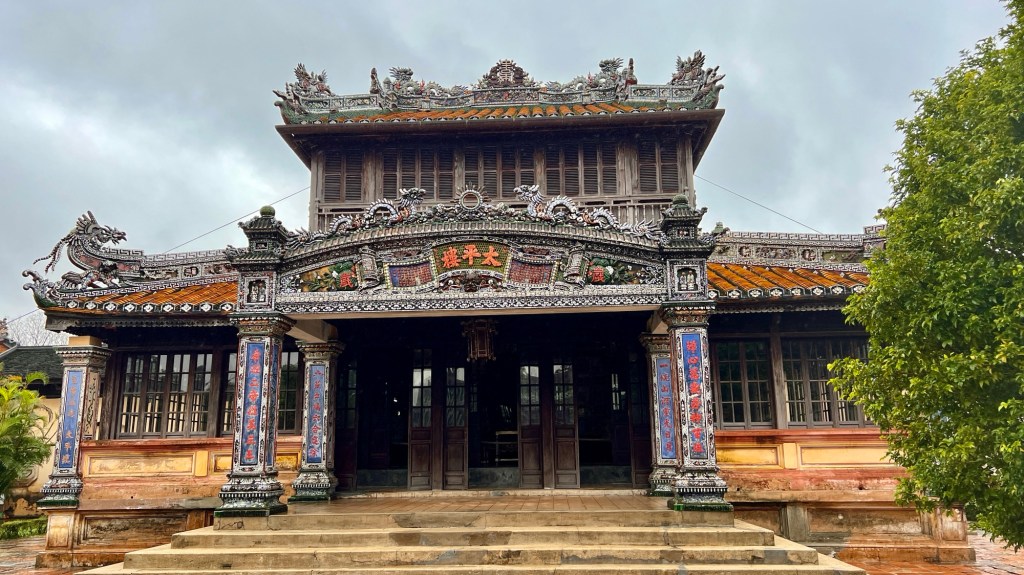
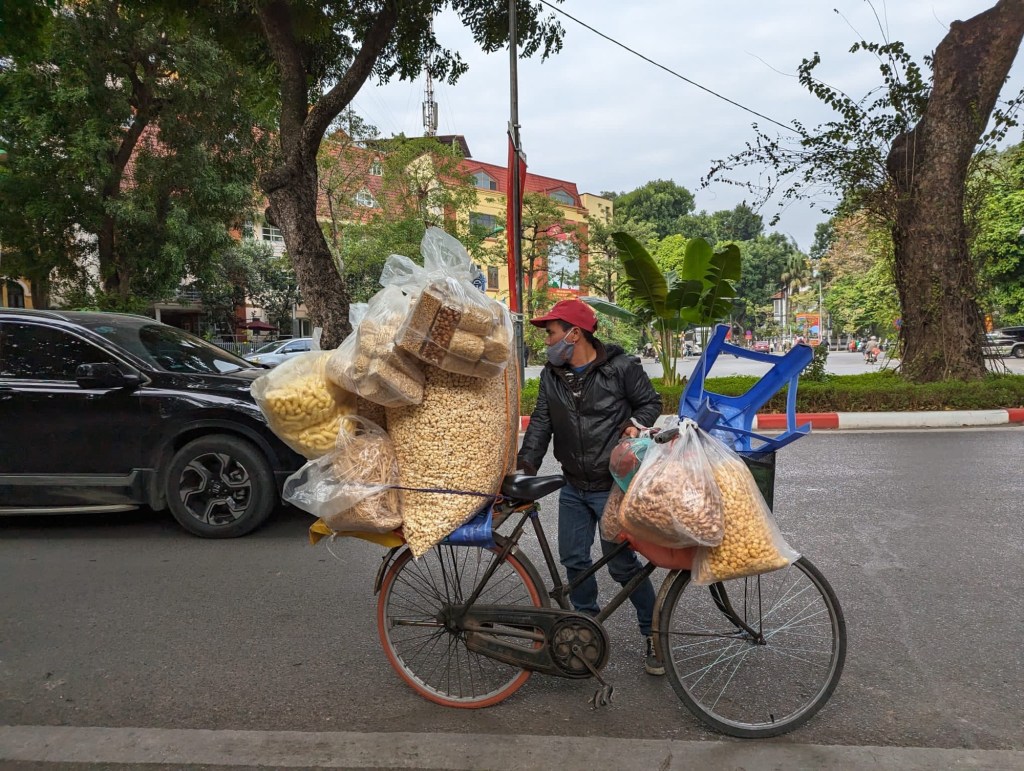
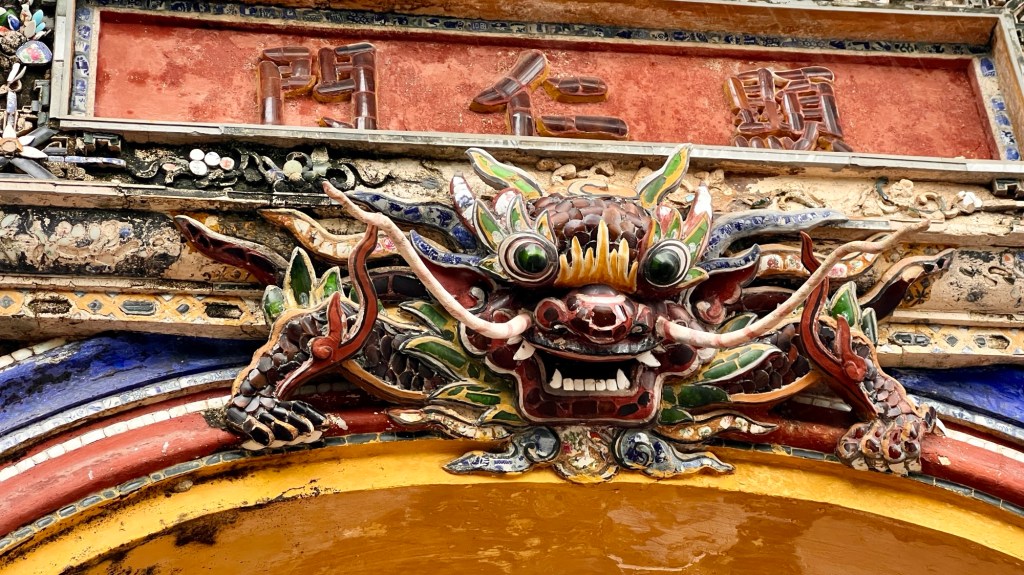
Throughout Vietnam, we’ve seen Buddhist Temples, King’s Tombs, Pagodas, museums and memorials. A culture dating back before anything I can imagine. The streets are lined with markets and food stands, restaurants and hotels that welcome the traveler in. The flurry of motor bikes, cars and buses, vying for a little piece of the road, and even the sidewalks. Two, three, even four people stacked onto a small motor bike. Huge piles of textiles, packaged goods, food and even other motor bikes and animals, all carefully balanced on these small motor bikes. Who needs a van…

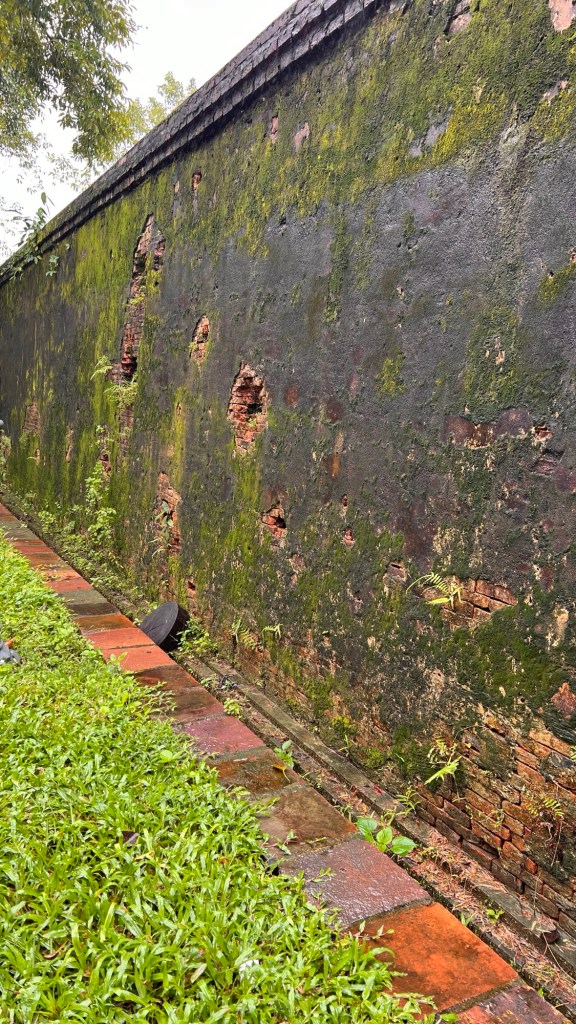
Then there’s the thick jungles, farms and cemeteries, stretching as far as the eye can see, when traveling by bus or train from destination to destination. Buddhist Temple and Monasteries stitch together communities, both in the cities and countrysides. The buildings and houses are covered in thick moss and mildew creating a patina only Mother Nature and time can create. The hard working farmers, often are seen plowing muddy fields with water buffalo. Villagers in conical hats, stray, skinny dogs laze around waiting for some kind soul to drop a tasty morsel, perhaps the only food they will get. Ancestor houses at the entrance of every home, carefully decorated in flowers and incense. Huge rivers meander silently, providing transportation and food, through these countries. Mystical and beautiful in its own way.

The rain pitter patters on the window, breaking my stare and bringing me back to the bus, as I watch the bumpy black ribbon of tar take us away from Hue to Hoi An and another city to discover its secrets and stories.

A Slow-boat Down the Mekong

It’s been a few weeks, it seems, since I’ve taken time to gather my thoughts…to recap our adventures…so here we go. Forgive me if I pass those by for now to bring you to this current moment.

Today I find myself sitting on a “slow boat”, cruising down the Mekong River in Laos. My company on board is that of 8 other individuals from around the globe and two guides. In Laos, we are required to have a local Laotian to escort us to the wonderful temples and small riverside villages of the local hill tribes. Sang, our guide, is of small stature, as are many of the Laotians. His voice is calm and soothing and full of pride for his country. Moh, pronounced ma, is our tour guide for GAdventures through Thailand, Laos and Vietnam. Moh is full of a good life force and spreads the joy of her job and her country’s treasures with us as we go along.

As we have been exploring Thailand and Laos, I find myself troubled at times. Moh will be telling of the history of war in these countries and I almost feel ashamed, as if I, myself, had done something to hurt these people. To hear of the horrors of war, one people killing and controlling another, and for what…land grab, slavery, political turmoil, religious differences…again, I am saddened deeply, that human beings can be so cruel. Perhaps my kind spirit feels tarnished in some way, perhaps in another life, I was here or suffered as these people. Sorry for the rant.

Take away the people and you’re left with the scenery, the raw nature, the dense jungle, muddy water and blazing hot sun. The smell of jasmine and wild ginger, sweet basil fill the air. The occasional herd of cattle, goats or water buffalo, and we even encountered two elephants playing in the shallows of this mighty river. What a gift that was.

The Mekong is a mighty river with powerful flows and jagged rocks and vast sandy beaches, holding it in place. The Mekong flows from Tibet 4,500 miles to the sea. It is the border of many countries throughout SE Asia, and has been fought over by more than one. The dark brown water bubbles and churns, almost bringing the boat to a standstill. It seems chaotic in its flows. In the monsoon season, it rises almost 40’, laughing at the rocks and sand as it consumes them as if in a great flood. Each dry season, a new riverbank is introduced, as the power of water transforms it. Waterfalls come out of the jungles, carving deep gorges in the sand, cascading over well worn rocks, finding their way back into the mighty Mekong River. In the mornings, the clouds blanket the hillsides as the sun attempts to burn through, one giving way to the other in the natural progression of things.

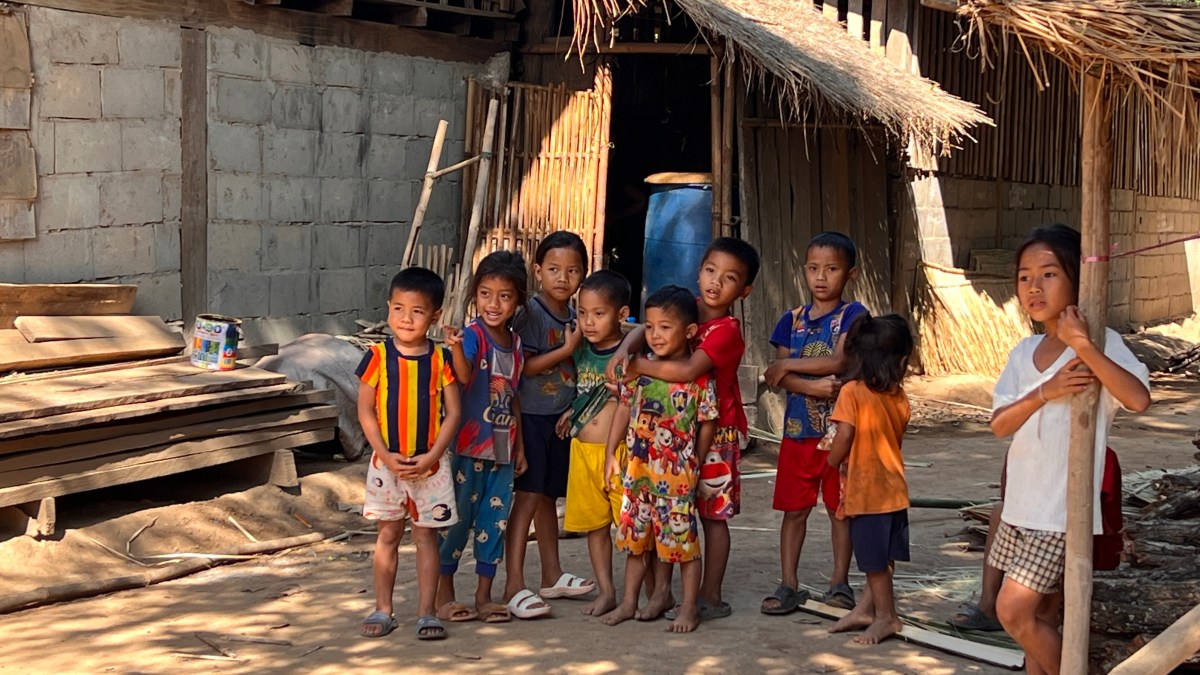
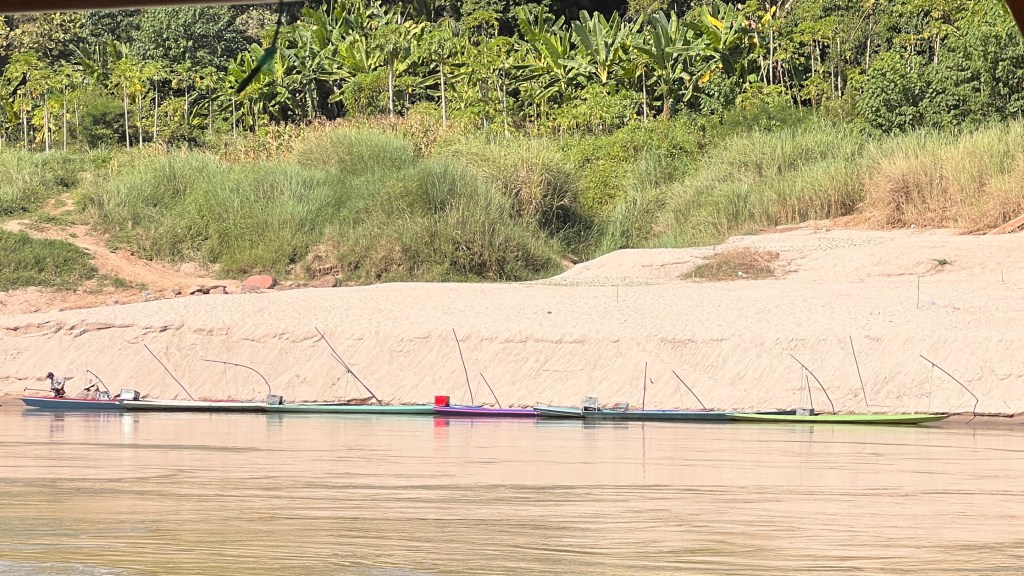
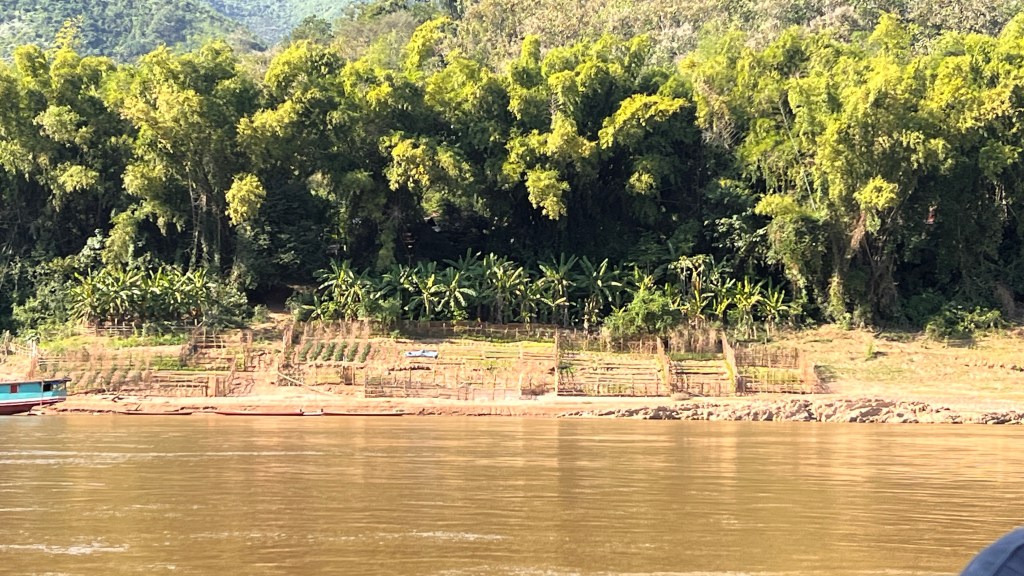
The limestone and granite display along the banks are often incredibly showy. If you look long enough, you will see a complete myriad colors, from purples, pinks, shades of whites, blacks and yellows. They pose an impenetrable barrier, often times hidden under the water. The local hill tribes use the cracks and crevices to secure bamboo poles strung with fishing nets or lines. Small flat bottom boats transport families and supplies, some using motors and others paddles and bamboo push poles. An occasional farm house, perched high on stilts with a crop of corn, rice or potatoes surrounding it, often planted on the rich sand banks deposited by the river during flood stage. You’re left wondering how they can live in, what seems to us, such harsh conditions. We are so privileged and spoiled.

Riverside gardens
Riverside Hill Tribe Village
Local fisherman

The sun has finally broken through and the cool breezes will soon be welcomed to all on board. The green foliage comes to life, some reflecting the brilliant sunlight and others creating dark shadows. The dark brown muddy water lightens up as it refracts the light as it pierces the surface. The sand glistens along the banks. It’s all so powerful and humbling.

Black Sand Beaches and Reality: North Cyprus

Here I am again, sitting here turning my wildest dreams into a reality on a black sand beach on the Mediterranean Sea. The warm waters and calm surf are perfect for bobbing and swimming. This island is so MUCH better than anyplace we’ve been so far this year.

The people are genuinely friendly. English is commonly spoken as well as Turkish and Greek. Americans are few and far between maybe because so many of us live in the bubble of propaganda and have never taken a chance to travel. Like really travel. We were afraid too.

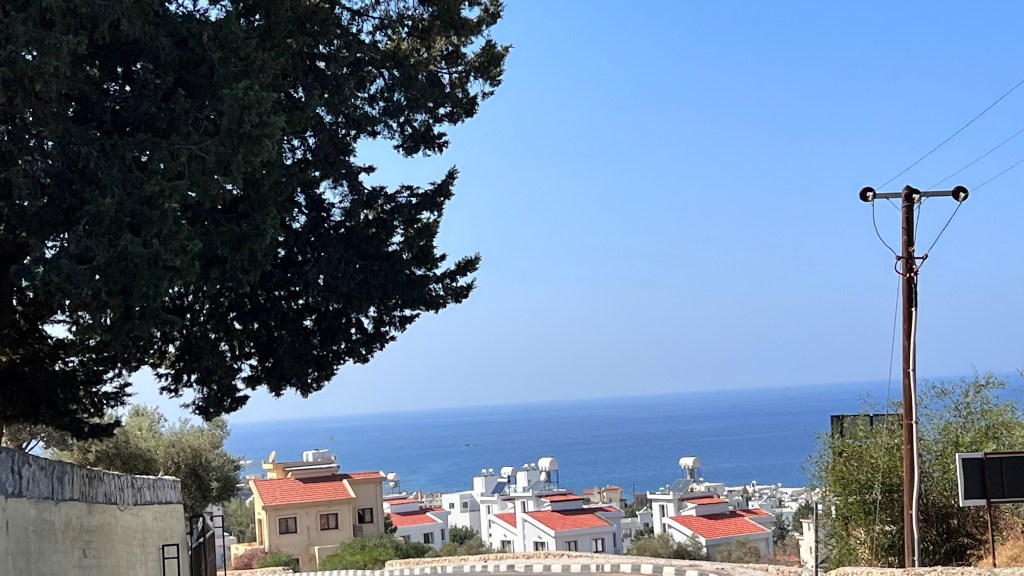
Up until a month ago, while visiting Montenegro, I had never considered Cyprus, but more proper, The Turkish Republic of Northern Cyprus or TRNC. Now we’ve bought a garden apartment with a walk-out pool in a complex that will terrace its way up the hill in typical domino stacks of bright white buildings spilling into the sea.

It’s somewhat like Portugal’s Algarve coast, Croatia or Montenegro’s coastline but without the crowds. It’s a beautiful vista backset against the verdant green slopes of the mountains rising up from the sea. Albeit with much less of a dramatic gain in heights and angle.

This is a burgeoning area bringing itself and its people together to make a future. It’s easy going and pretty laid back. Food is incredible, even though french fries is a food group here. There is a good solid infrastructure and new hospitals. There’s an International University here, at least one I know of. We have actually used the medical system here twice this month.

Gas, food and lodging are pretty low priced and of excellent quality. Wine and beer are cheaper than a bottle of water here. Even the WiFi is incredibly fast. Cost of living is cheap and the Island checks off most of our boxes for a possible home base or investment for the future. One other plus, compared to the EU, people here tend to smoke less.

So back to the beach…the one thing the US has on every beach in the world we’ve been to is the desire to keep the country clean. Beaches, parking lots, natural environments. I love to look for beach glass, stones and trinkets. Seems no matter where I go I can pick up a half melted price of hard plastic waste that looks like a stone. There’s bits and pieces of various plastics and cans and a mountain of cigarette butts. And still, it’s too bad that this is “not too bad.”

The sun is warm today, we’ve had two days of rain, wind and heavy surf and the sea is calm and inviting. The warm water surrounds you in a warm watery blanket. Bobbing up and down like a bottle on the sea with a secret letter inside. Cares just drift away as the rhythm of the waves take over all sound. You melt into the calm.

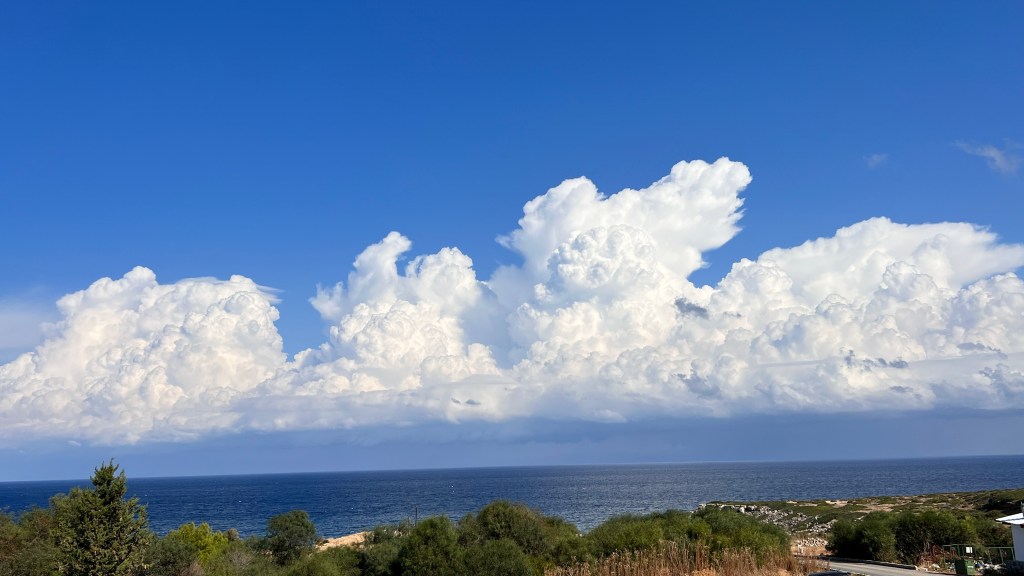
The definitive line between horizon and sky is more like the edge of a mirror, reflecting sea onto sky. A few ghostly clouds from the storms, hang far-off on the horizon. The sea claps again breaking my stare.

It’s a Wrap…Montenegro

The weather is beginning to cool down quite a bit now. The leaves are beginning to change colors. The tourists are starting to disappear. The days are growing shorter. It’s now fall in Montenegro. Our time here is drawing to a close.

We have really covered a good portion of this beautiful country, from the Adriatic sea to the lakes and rivers in the Dinaric Alps. We spent days walking around the Kotor and Budva Old City Walls, toured around the Bay of Kotor, hiked up and around Sveti Stefan, relaxed on Red Beach in Bar, fished for days on the Tara in Mokjavic, and finally explored the National Park Durmitor in Zabljak. Each of these places has its own secret charm, history, and culture. Each has its own attraction for us.

I find it funny to think that I can’t understand a word of what most people are saying. Most people speak Serbian. None of their words remotely resemble English and the farther north we went the less people spoke any English including grocery stores, or pharmacies.

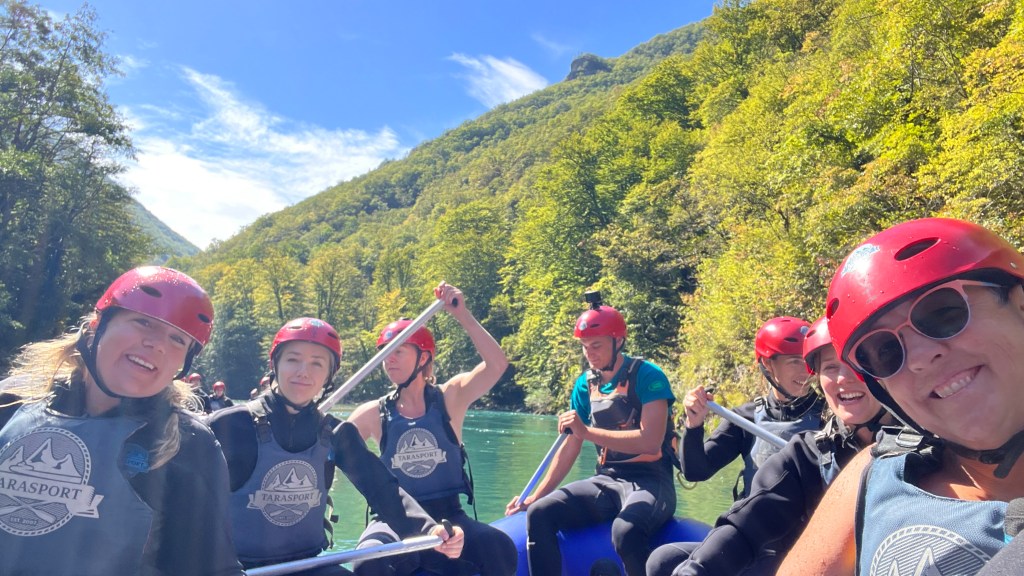
A couple days ago, we went on a white water rafting trip on the Tara River with 11 women from the Netherlands. They all could speak English but they were more comfortable speaking to each other in Dutch. We could pick up on many things they were saying. They were laughing and telling stories but we couldn’t engage with them. Laughing is universal though, so we laughed along with them.

Our cleaning lady, here at the apartment, comes in everyday and has a whole conversation with us in Serbian, full of expression and totally genuine feelings, but we can’t understand a word. Google translate is our best friend.

In all its beauty though, there are a few things that really upset me. Number one is the inability to get away from cigarette smoke. It’s hard to enjoy a meal when someone is sitting at the table next to you and lights up without a second thought. The apartment we have rented here in Zabljak has a strict no smoking policy that is not being enforced. We have moved to three different apartments before we found one that had not been smoked in. Sad.

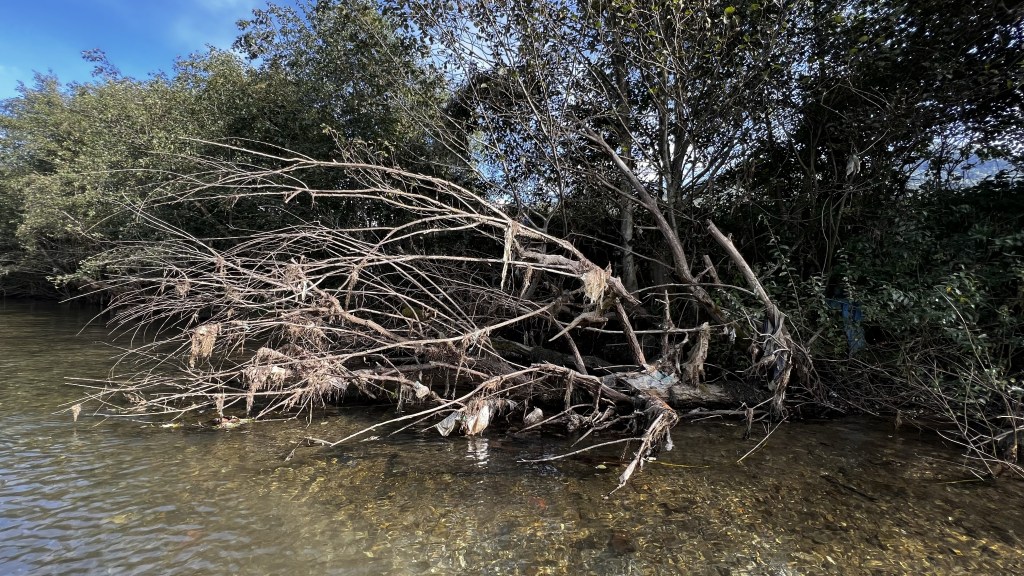
Secondly, Montenegro has a trash problem. Some towns are better than others. Zabljak was relatively clean but Mokjavic, for an example, had piles of garbage along the sides of the roads and at every fishing pull out. The rivers were so polluted with garbage it was hard to enjoy fishing them. It’s as if no one really cares. We mentioned it to our guide and he tried to blame tourists. Also sad.

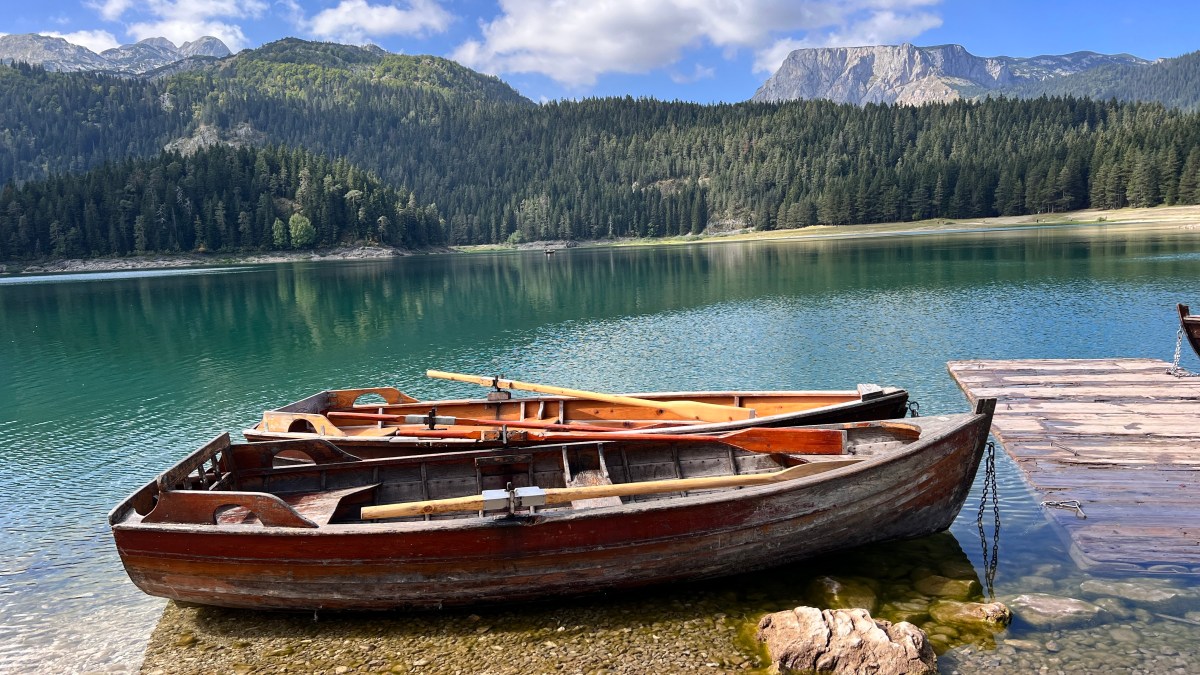
We are in Zabljak now, the city with the highest elevation in Montenegro. It is surrounded by a National Park called Durmitor, one of five in the country. The stunning vistas are to die for. Not only does it have fifteen glorious mountains, there is a plethora of alpine lakes and one of the last endemic forests in Europe with 122 species of trees in all, some exist nowhere else on earth. Some are in excess of 400 years old and reach a height of 150 feet.

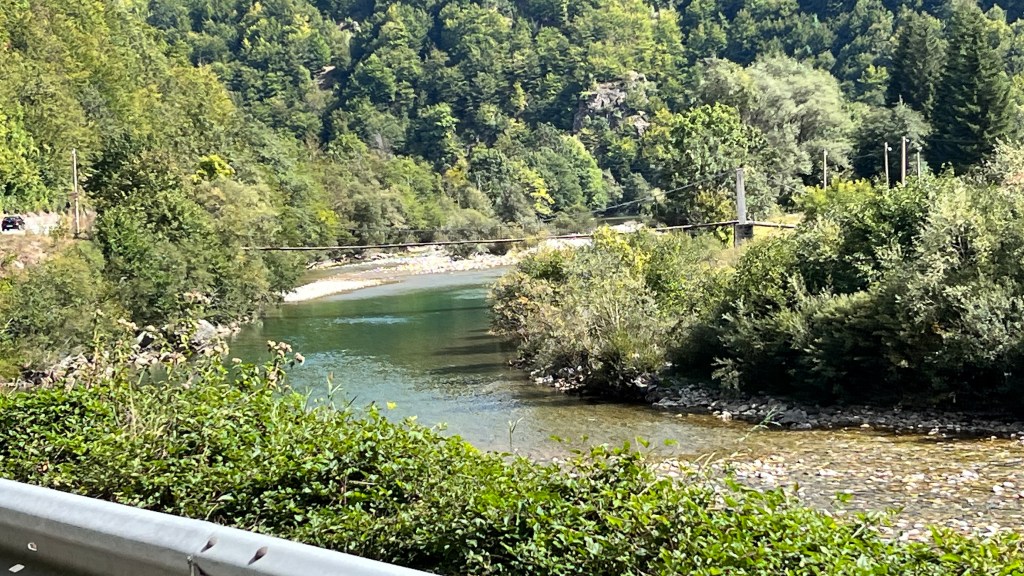
The Tara Canyon is the deepest and longest in Europe and second deepest in the world at 1300m deep. The Tara River is currently free flowing with no dams in its 78km path spanning from Mokjavic across to Zabljak, and along the border of Montenegro and Bosnia & Herzegovina. The water is a beautiful turquoise blue and only 7-10 degrees celsius.

For the most part, life is pretty simple here. People are set in their cultural ways. The years of war show on the faces of the elders and a new hope shows in the younger generation. In some areas, it’s hand to mouth, growing their own food and keeping chickens, cows and goats. The houses are pretty simple and lack the lavashes of other European countries. It is set to enter into the EU in 2025 and then the infrastructure will be vastly improved when the tourists flock in to experience the vast amount of outdoor opportunities Montenegro has to offer.