Black Sand Beaches and Reality: North Cyprus

Here I am again, sitting here turning my wildest dreams into a reality on a black sand beach on the Mediterranean Sea. The warm waters and calm surf are perfect for bobbing and swimming. This island is so MUCH better than anyplace we’ve been so far this year.

The people are genuinely friendly. English is commonly spoken as well as Turkish and Greek. Americans are few and far between maybe because so many of us live in the bubble of propaganda and have never taken a chance to travel. Like really travel. We were afraid too.

Up until a month ago, while visiting Montenegro, I had never considered Cyprus, but more proper, The Turkish Republic of Northern Cyprus or TRNC. Now we’ve bought a garden apartment with a walk-out pool in a complex that will terrace its way up the hill in typical domino stacks of bright white buildings spilling into the sea.
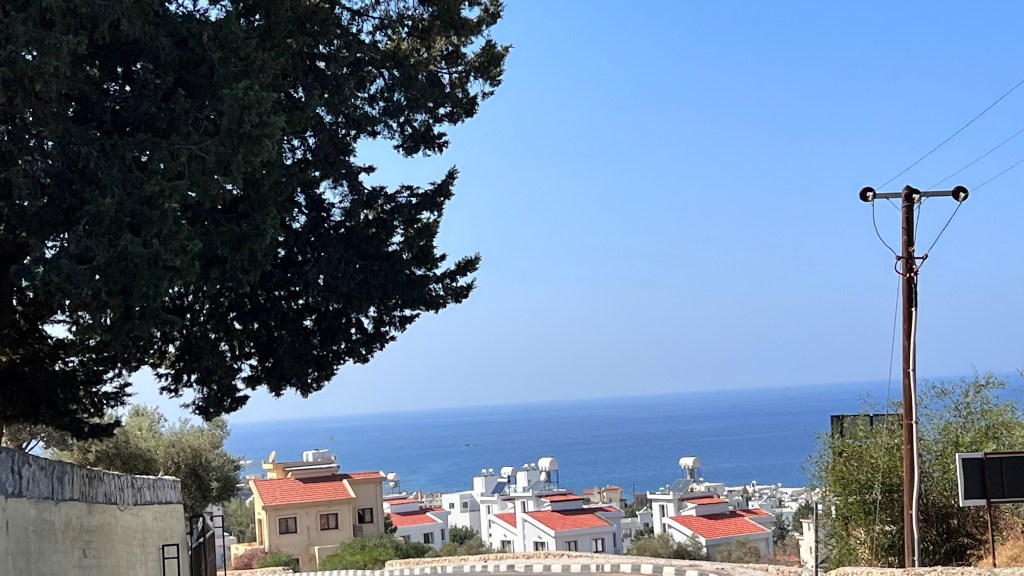
It’s somewhat like Portugal’s Algarve coast, Croatia or Montenegro’s coastline but without the crowds. It’s a beautiful vista backset against the verdant green slopes of the mountains rising up from the sea. Albeit with much less of a dramatic gain in heights and angle.

This is a burgeoning area bringing itself and its people together to make a future. It’s easy going and pretty laid back. Food is incredible, even though french fries is a food group here. There is a good solid infrastructure and new hospitals. There’s an International University here, at least one I know of. We have actually used the medical system here twice this month.

Gas, food and lodging are pretty low priced and of excellent quality. Wine and beer are cheaper than a bottle of water here. Even the WiFi is incredibly fast. Cost of living is cheap and the Island checks off most of our boxes for a possible home base or investment for the future. One other plus, compared to the EU, people here tend to smoke less.

So back to the beach…the one thing the US has on every beach in the world we’ve been to is the desire to keep the country clean. Beaches, parking lots, natural environments. I love to look for beach glass, stones and trinkets. Seems no matter where I go I can pick up a half melted price of hard plastic waste that looks like a stone. There’s bits and pieces of various plastics and cans and a mountain of cigarette butts. And still, it’s too bad that this is “not too bad.”

The sun is warm today, we’ve had two days of rain, wind and heavy surf and the sea is calm and inviting. The warm water surrounds you in a warm watery blanket. Bobbing up and down like a bottle on the sea with a secret letter inside. Cares just drift away as the rhythm of the waves take over all sound. You melt into the calm.
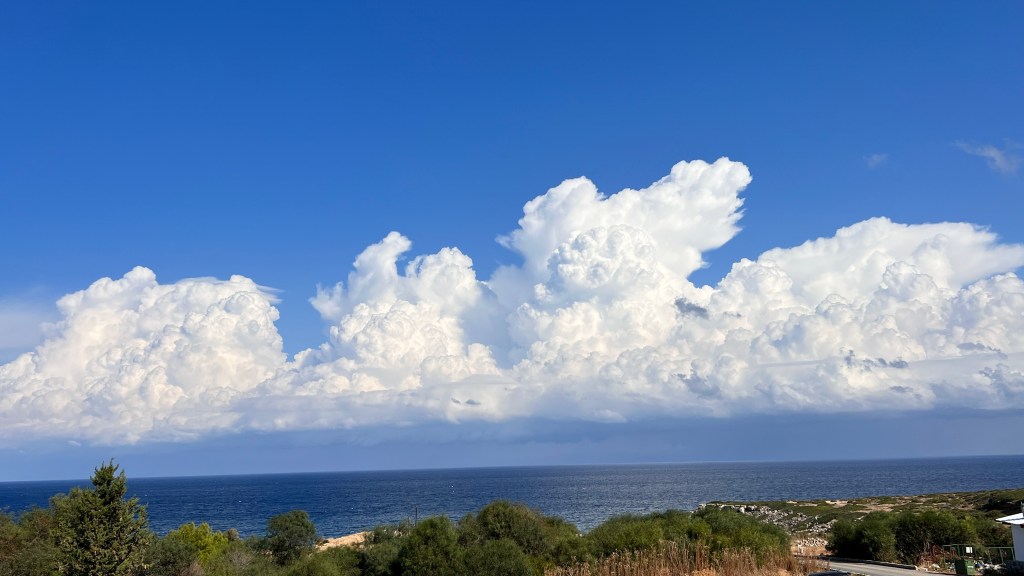
The definitive line between horizon and sky is more like the edge of a mirror, reflecting sea onto sky. A few ghostly clouds from the storms, hang far-off on the horizon. The sea claps again breaking my stare.

It’s a Wrap…Montenegro

The weather is beginning to cool down quite a bit now. The leaves are beginning to change colors. The tourists are starting to disappear. The days are growing shorter. It’s now fall in Montenegro. Our time here is drawing to a close.

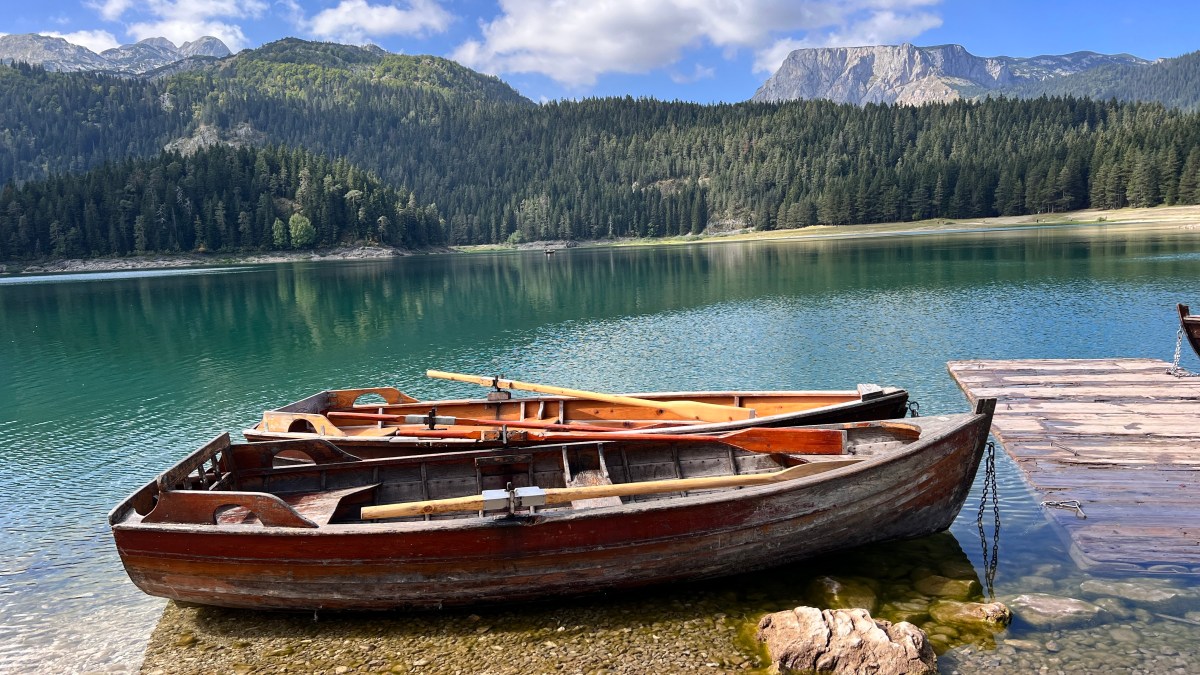
We have really covered a good portion of this beautiful country, from the Adriatic sea to the lakes and rivers in the Dinaric Alps. We spent days walking around the Kotor and Budva Old City Walls, toured around the Bay of Kotor, hiked up and around Sveti Stefan, relaxed on Red Beach in Bar, fished for days on the Tara in Mokjavic, and finally explored the National Park Durmitor in Zabljak. Each of these places has its own secret charm, history, and culture. Each has its own attraction for us.

I find it funny to think that I can’t understand a word of what most people are saying. Most people speak Serbian. None of their words remotely resemble English and the farther north we went the less people spoke any English including grocery stores, or pharmacies.

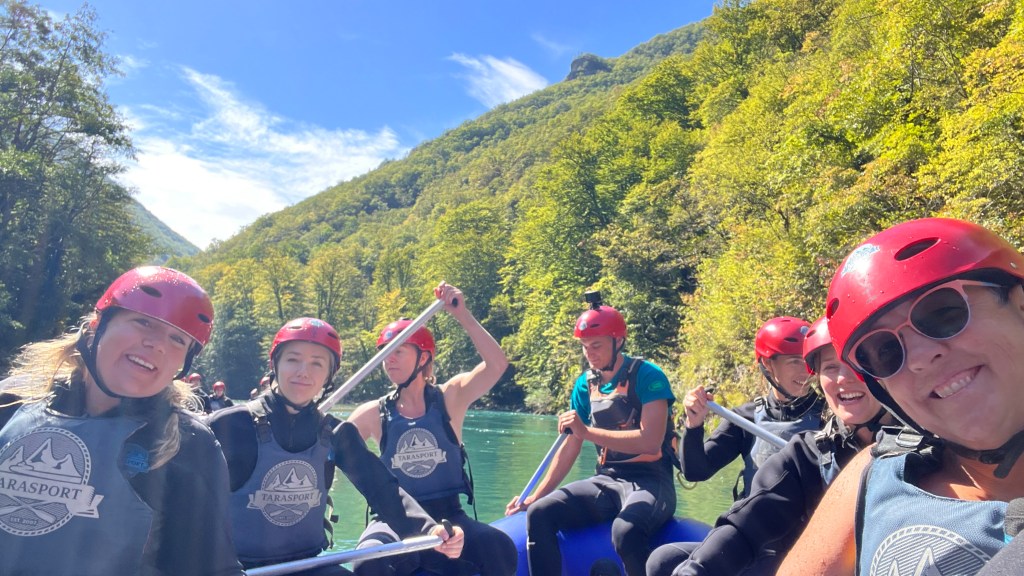
A couple days ago, we went on a white water rafting trip on the Tara River with 11 women from the Netherlands. They all could speak English but they were more comfortable speaking to each other in Dutch. We could pick up on many things they were saying. They were laughing and telling stories but we couldn’t engage with them. Laughing is universal though, so we laughed along with them.

Our cleaning lady, here at the apartment, comes in everyday and has a whole conversation with us in Serbian, full of expression and totally genuine feelings, but we can’t understand a word. Google translate is our best friend.

In all its beauty though, there are a few things that really upset me. Number one is the inability to get away from cigarette smoke. It’s hard to enjoy a meal when someone is sitting at the table next to you and lights up without a second thought. The apartment we have rented here in Zabljak has a strict no smoking policy that is not being enforced. We have moved to three different apartments before we found one that had not been smoked in. Sad.

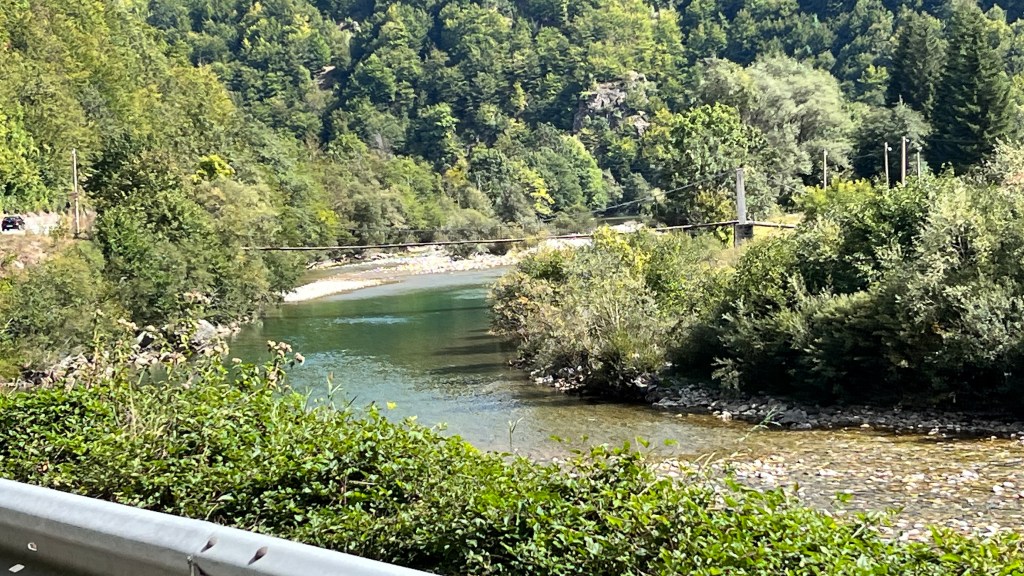
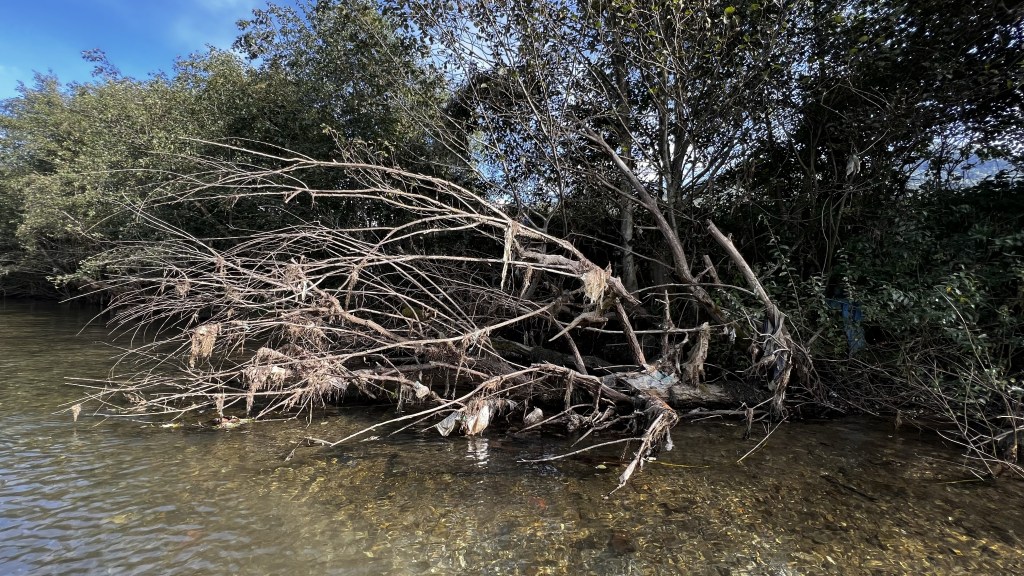
Secondly, Montenegro has a trash problem. Some towns are better than others. Zabljak was relatively clean but Mokjavic, for an example, had piles of garbage along the sides of the roads and at every fishing pull out. The rivers were so polluted with garbage it was hard to enjoy fishing them. It’s as if no one really cares. We mentioned it to our guide and he tried to blame tourists. Also sad.

We are in Zabljak now, the city with the highest elevation in Montenegro. It is surrounded by a National Park called Durmitor, one of five in the country. The stunning vistas are to die for. Not only does it have fifteen glorious mountains, there is a plethora of alpine lakes and one of the last endemic forests in Europe with 122 species of trees in all, some exist nowhere else on earth. Some are in excess of 400 years old and reach a height of 150 feet.

The Tara Canyon is the deepest and longest in Europe and second deepest in the world at 1300m deep. The Tara River is currently free flowing with no dams in its 78km path spanning from Mokjavic across to Zabljak, and along the border of Montenegro and Bosnia & Herzegovina. The water is a beautiful turquoise blue and only 7-10 degrees celsius.

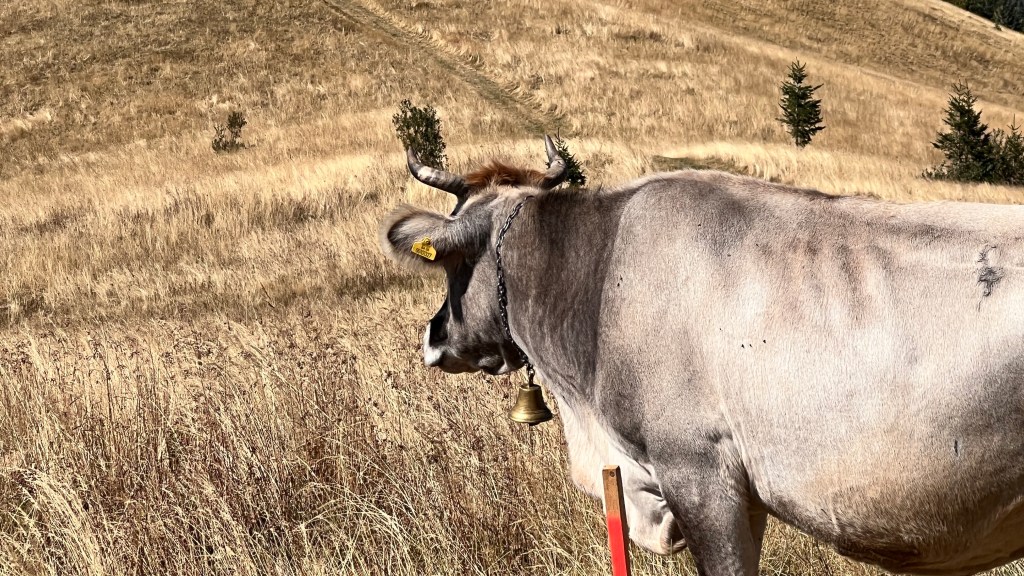
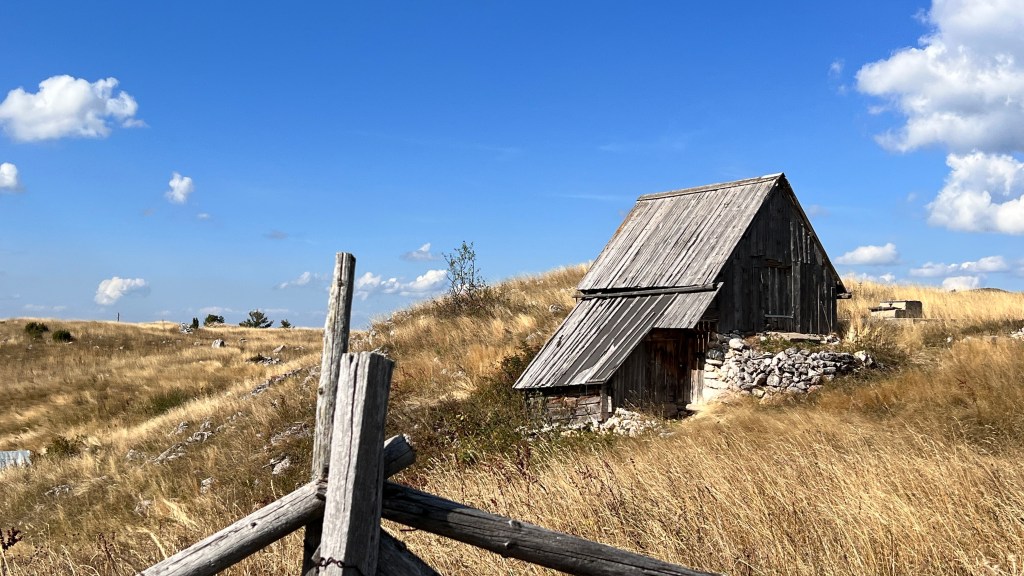
For the most part, life is pretty simple here. People are set in their cultural ways. The years of war show on the faces of the elders and a new hope shows in the younger generation. In some areas, it’s hand to mouth, growing their own food and keeping chickens, cows and goats. The houses are pretty simple and lack the lavashes of other European countries. It is set to enter into the EU in 2025 and then the infrastructure will be vastly improved when the tourists flock in to experience the vast amount of outdoor opportunities Montenegro has to offer.