Our 2023 Tally of Planes Trains and Stays
Where we slept on 2023116 nights Apartments or B&Bs
89 nights Hotels
46 nights House Sits
36 nights Pet Sits
32 nights Camping in Vans US, Europe
12 nights Cabins or Lodge
8 nights Friends or Family
8 nights Boats
2 nights Planes
2 nights Trains
1 night Hostel
1 night Home Stay in CambodiaOther Stats
27 Individual flights taken
11 Long Distance Train Travel Days
19 Long Distance Bus Rides
11 Days traveling by Boat
16 Countries Visited in Order
3 IslandsUnited States
Bahamas
Ireland
Scotland
Portugal
Maderia (Island)
Azores (Island)
Germany
Austria
Spain
Croatia
Montenegro
Bosnia & Herzegovina
Cyprus
Vietnam
Con Dao Islands
Cambodia
Thailand
Koh Ngai (Island)
Koh Lanta (Island)
Laos
Tag: vagabonding



2,000 + Years of History: Kotor and Budva
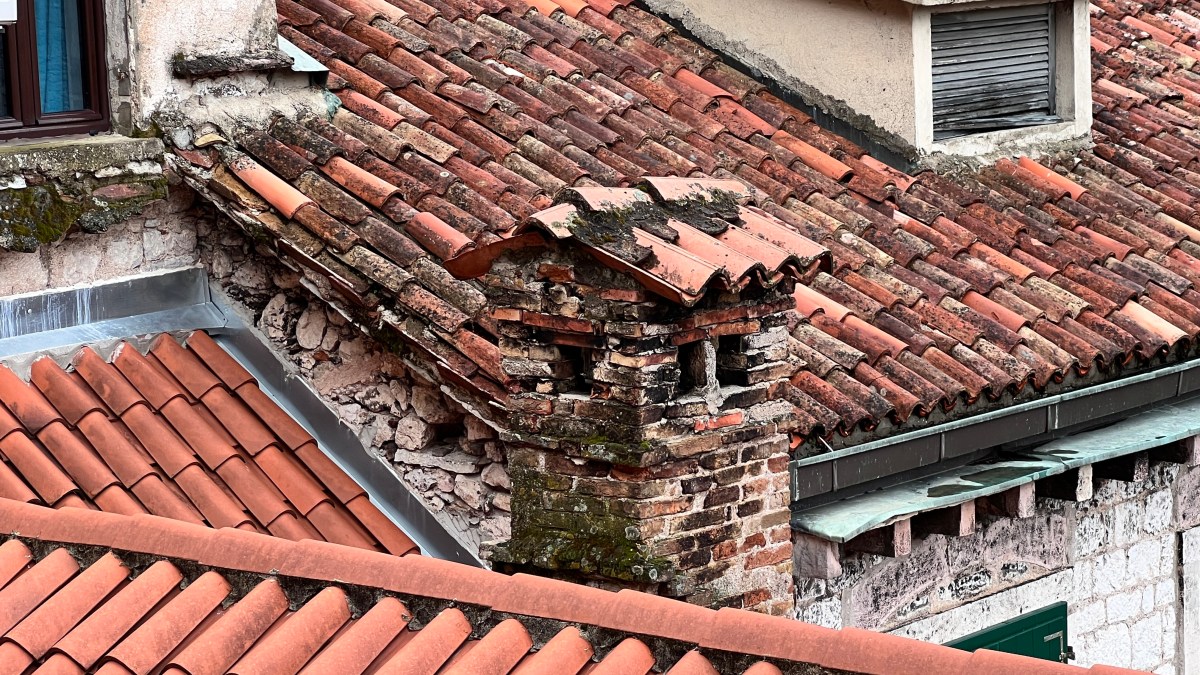
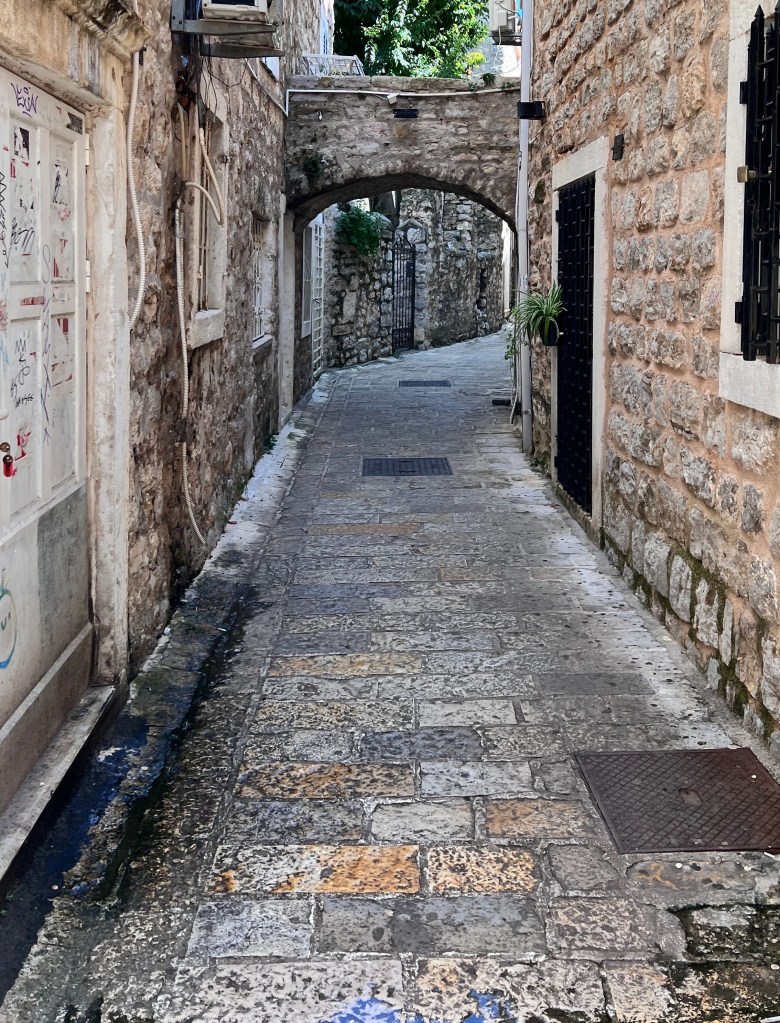
We just left Kotor Old City for Budva Old City, Montenegro. It’s like stepping way back in time. Being from the United States, my mind is blown and mesmerized as I walk inside the stone walls and tiny alleyways. There are mazes of a stone, rising up to steep narrow halls and well worn steps climbing up and up to unseen passageways. There are layers upon layers of historic old buildings


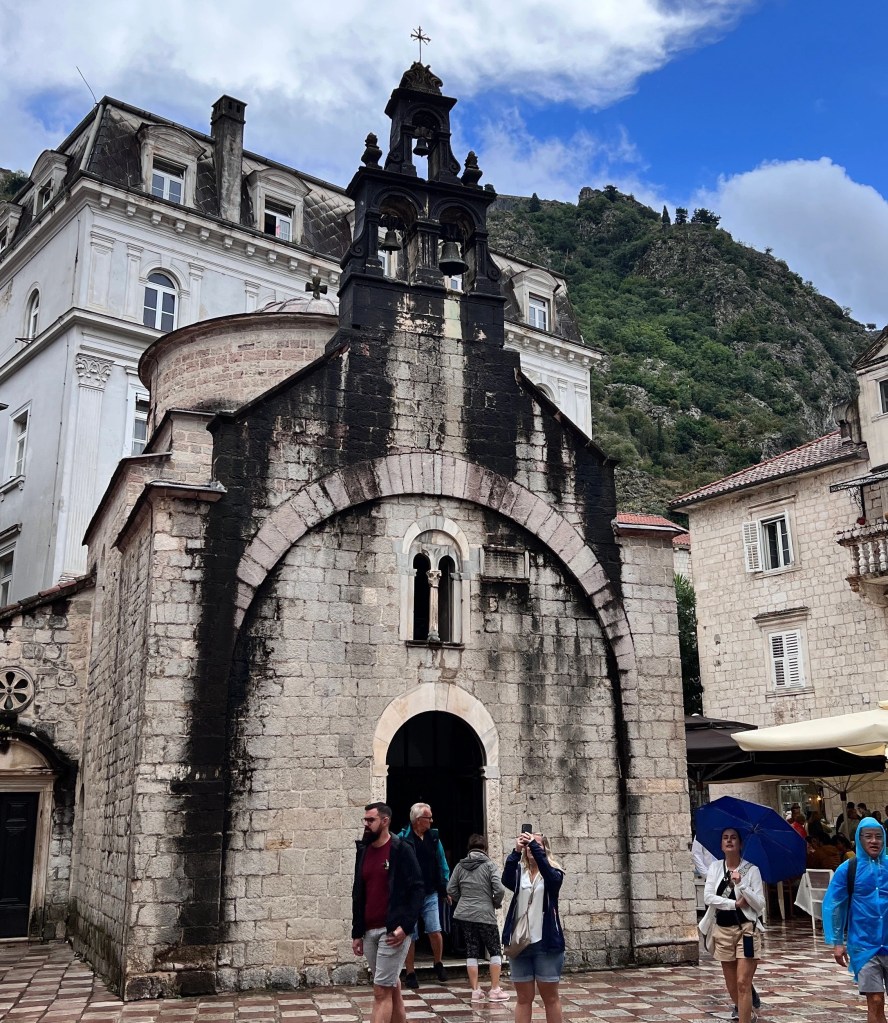

Both of these cities were built as fortresses as far back as 600 BC. Romans, Illyrians, Byzantiums, Italians, Hungarians, French, Austrians, Russians, Germans, Kings and Queens all laid claim to these Adriatic cities at one time or another. They have survived fires, wars, plagues and earthquakes. Kotor was know by many names through the centuries as was Budva. The Serbian Dynasty played a hand in making Kotor a port city linking it to the west. The Nazis took over from 1941-1944 during WWII.
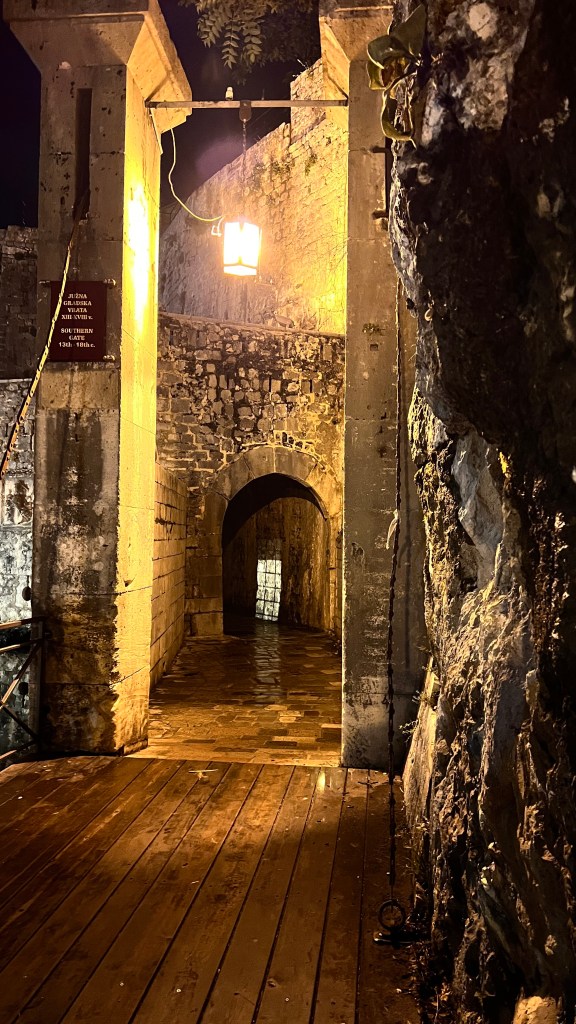
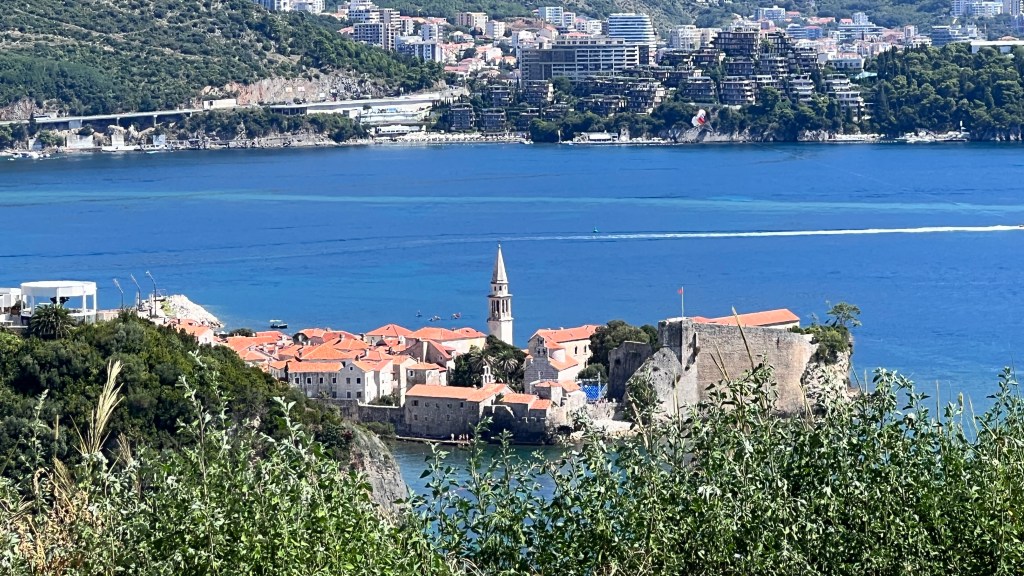

Budva was founded by the Greek King and Queen of Thebe in the 5th century BC, King Kadmo and Queen Harmonia. Sharing much of the same historical occupations, wars and catastrophic earthquakes as Kotor, it remains a city steeped in rich history and pride.
In the 2nd century BC the Romans ruled until the fall of the Empire. The city fought occupation of all the same ruling countries as Kotor. As a well developed sea port, commodities of olives and grapes, made it a city worth occupying. It’s history is steeped in rich myth and folklore which the generations have kept alive.


Both Kotor and Budva were decimated most recently by a magnitude 7 earthquake in 1979. Over a thousand buildings and structures were damaged and 100,000 inhabitants were displaced. UNESCO stepped in and over the next 4 years both cities were restored to their historical original dispositions.

We would encourage anyone looking to immerse themselves in an ancient city, culture and the ghosts of the past, to visit and stay inside the walls of these two Adriatic Sea-towns. To wander through and get lost in the labyrinth of passageways during the day and then to encounter the city nights as well. To listen to the peal of the church bells, to adore the many beloved street cats, to climb the old worn stairs to the upper cities and hidden doorways leading to fascinating bars, restaurants and guesthouses. You can just feel the energy.


And the trip goes on…
It’s our last day in Lisbon and we are hanging out at the Home Lisbon Hostel. It’s a beautiful place to hang for sure. Great people, great staff, bathrooms, a kitchen and good WiFi. We had a marvelous night listening to Fado. Fado is a traditional music in Portugal and other Latino countries. It’s a song that tells a story, similar to opera or country/folk music. Last night we had a male and female singer accompanied by two guitarist, one 6 sting traditional guitar and one 10 string round body guitar. The expressiveness of the singers and the guitarist was very dramatic and understanding the words didn’t really matter, they were transmitted through the operatic voice giving me the chills and bringing tears to my eyes.

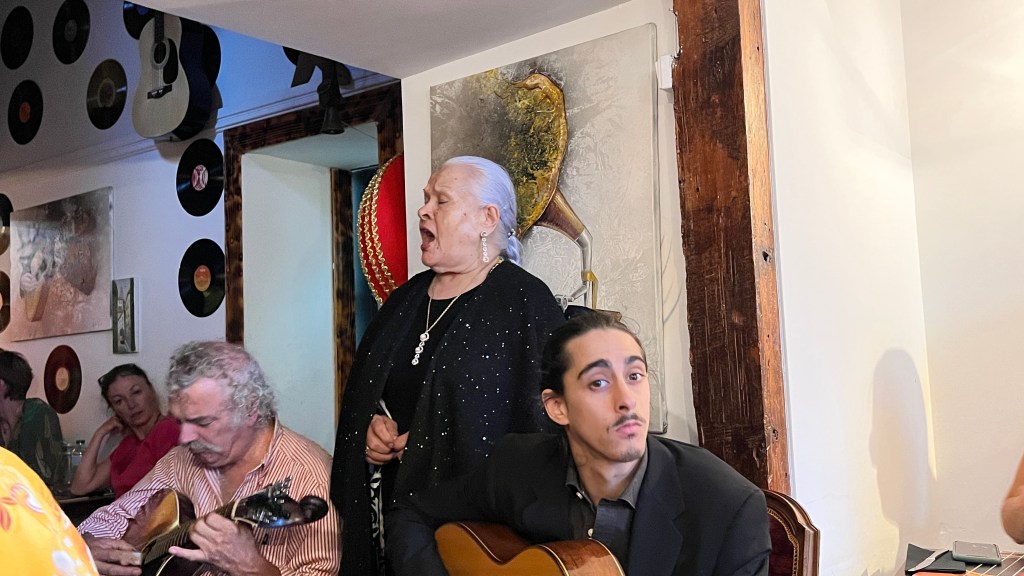
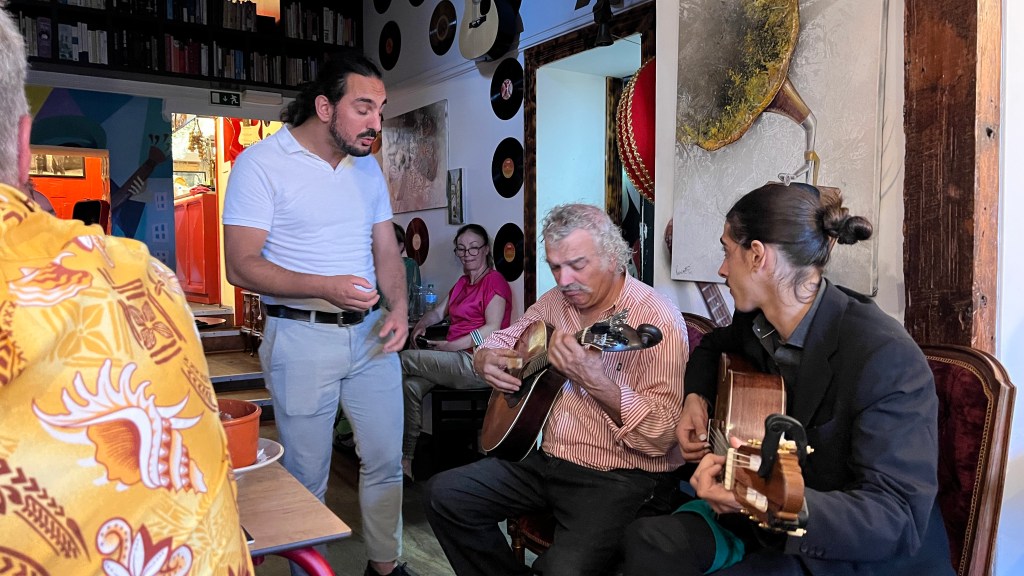
After an exquisite meal at Tasquinha Restaurant, located on a street atop “the elevator”, an escalator in the middle of nowhere on the way up to the Lisbon Castle, Sao George Castle. We happened upon it at lunchtime and found out, from the owner, all about Fado, so we made a booking for dinner.

All of June is a festival of the saints. Every night there is live music and partying revelers flood the streets outside cafes and bars/pubs. Because Portugal is a safe place, many people from Ukraine come here to escape the war, swelling the population, making bookings in advance a must.

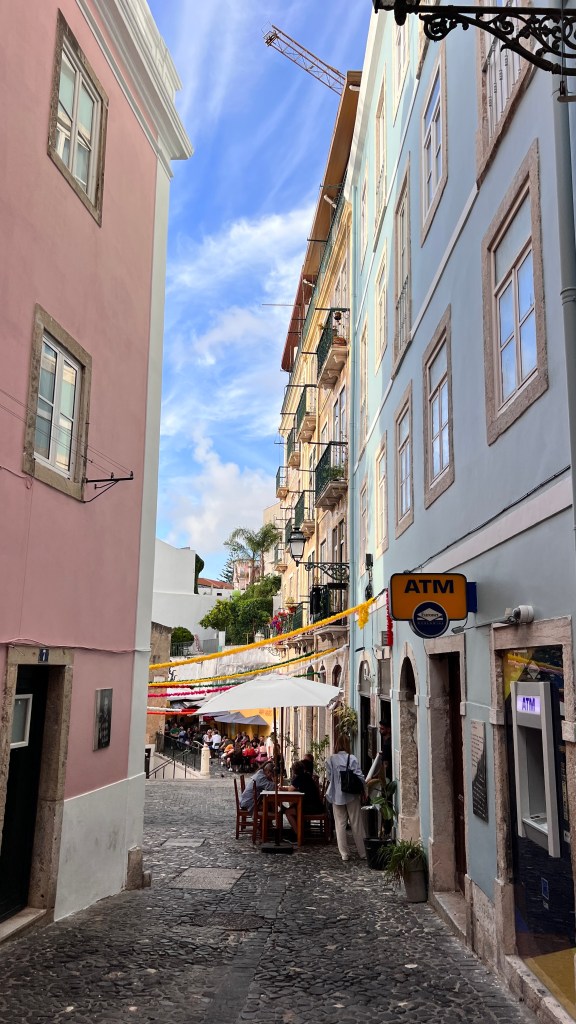
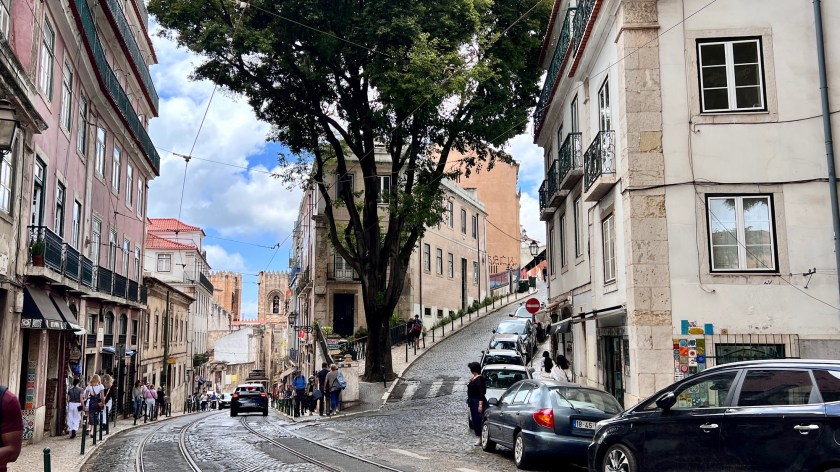
Everything slows down here except the traffic. While moving from our guesthouse, Archi-Pelagro, our Bolt driver (similar to Uber), was faced head on by an electric trolley driver who would not let us and the 3 cars behind us pass. Our driver got out of his car after a horn blowing contest, and reasoned with the driver of the trolley to backup about 10 feet so the three cars could narrowly pass beside him, driving over the curb. Driving in old town Lisbon is difficult at best. On the hills, the electric trolleys rule the streets.

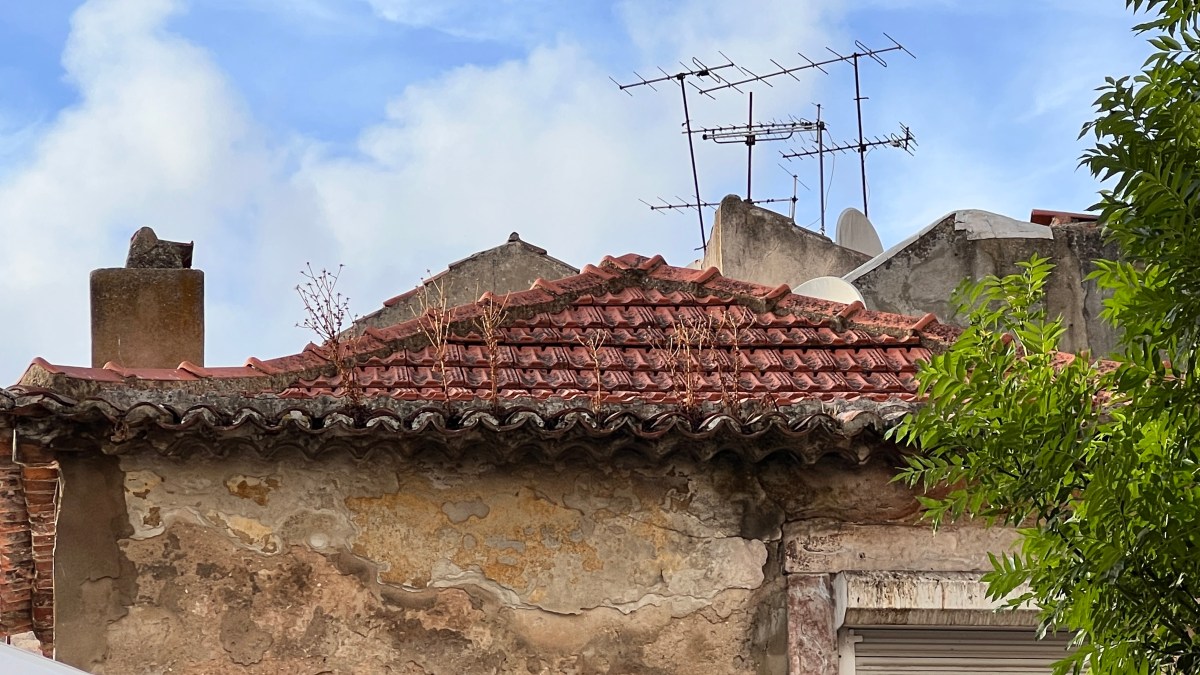
We’ve walked, or rather climbed over 40 miles this 5 days. That may not sound like much, but with all streets at a 12-15% grade, it’s quite an achievement. Liken to climbing the Eiffel Tower and back down. Most streets have narrow cobbled stone travertine walkways and other pedestrian walkways through what we would consider scary or unsafe back in the states, but here they are old alleyways, brimming with history. One of the streets/alleyways last night contained a sign and photos of the elderly residents of the street and recognition of how they’ve become iconic influencers during their lives. So cool!


We have been planning our adventure as we go along. Last night we sat beside an Austrian couple on holiday, driving from their home in Austria to Portugal and back. I asked them if they had a week in Austria, what would they do? Non-touristy stuff. Francesca started going in about the Danube River from Passau, Germany all the way to Venice via a self-guided electric bike tour. Now how totally cool is that?! An e-bike here is more like a moped, and a Pedelc, is an electronic assist bike. We spent the morning looking into these trips and planning our trip after the Azores.

Our next stop is Madeira and The Azores. The Algarve coast is the beginning of the Mediterranean Sea. We found the perfect town to visit about 50 miles west of Faro, Portugal, Carvoeiro, Portugal. There is just about anything you could want from sea kayaking, to hiking cliffs and dunes. Stay tuned for a post.
One Door Closes…Another Opens

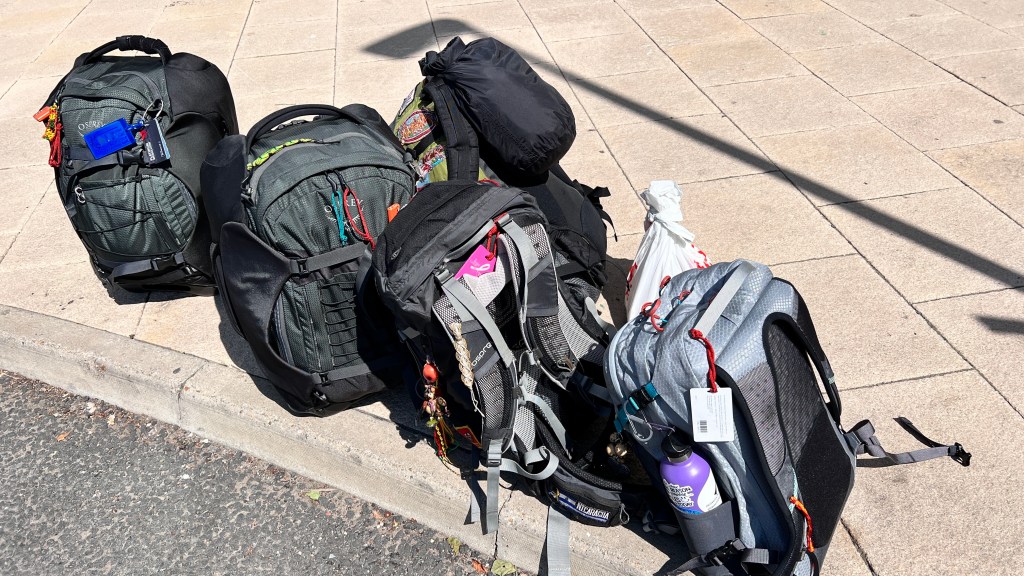
We set out from Utah over a month ago. We said our farewells and hopped on a plane, one carry-on sized roller bag each, one shared large backpack, and a small carry-on pack each. All our worldly possessions in those bags. It was a bittersweet parting, but the world has become our oyster, and we plan to explore it for a few years. Our goal is to find somewhere we can settle down for a while, but never long enough for the grass to grow under our feet.


Our first stop was Ireland, an incredibly enchanting isle, full of wonderful food, drink, music and genuinely kind people. The scenery was jaw dropping gorgeous, the roads narrow and windy. We rented a camper van from Indie Campers out of Dublin…once a van lifer it’s so hard to break away from the freedom it affords. Our challenge…driving on the left side of the road, in a right hand drive stick shift.

I, being the navigator, was also reminding Chris to turn left stay left and turn right stay left as well. I’d say that after 5 days, she developed the muscle memory it takes to take on manning the controls on her own. For the next few weeks I still had my place not only getting us were we needed to be safely, I gradually returned the turn signals to her. She did splendidly, even coming to complete stops when a large truck or bus was barreling down on us. Next came the round-about or traffic circle. There were normally 3 to 5 exists out of each one it was just picking what one would take you where you needed to go. Mostly we had GPS to tell us where to go. I would sit with my arm out like a compass needle pointing our way through each and operating the turn signal as Chris shifted. What a team we made!


I think what I loved the most about this fine country, was the architecture and the accompanying tales of the families over hundreds of years. Some buildings were built as far back as 1200. Tales of Vikings, Norse, Kings, and many other European invaders and religious conquests.

Political and religious history all incredibly fascinating, and standing in front of you was the building that saw all this history and still stood tall. Generations upon generations of land ownership and the hard work it took to eek out a living. Stories of whole villages wiped out by famine, war or plague. The flight of millions across uncharted waters to the New World of America. Strong and proud people.

Scotland was our next stop. We had made no plans except to rent another van and see where it took us. After the first few days in Ireland, we were in a bit of a panic about driving for another two weeks. Our initial plan was to drive the 515 +/- miles around the North Coast 500. It is a windy, mostly single track, paved road that hugged the north west coast all the way to the most northern tip of Scotland and back down the north east coast. We had seen pictures of the roads, but it was the scenery that was the biggest pull.

When we picked up the van we were thoroughly convinced that we didn’t have the driving skills, or perhaps courage, to take it on, so we began to make other plans. We made our way to Inverness, the start of the NC500 and booked a pitch at a wonderful campground. It was here that an older British man in a camper asked us if we were going to drive the NC500? I stood there as he explained the beauty and the chance to see huge cliffs and mountains. He was so convincing that we could do it, we had to give it a go.

The North Coast 500 started out as a big 4 lane road that meandered through bright yellow fields of grape seed farms, shaggy cows and fields of sheep grazing on the intensely green fields. The first real choice is whether to drive clockwise or anti-clockwise. We chose to do it clockwise so we could get a little more time driving under our belt before we tackled the 12-15% grades on the most northern end. This proved to be a wise move since most do it anti-clockwise. The roads quickly became narrow with a soft side, if at all. We were happy that the Scots weren’t as rock wall happy as the Irish and we didn’t feel that we’d take out the side of the van.
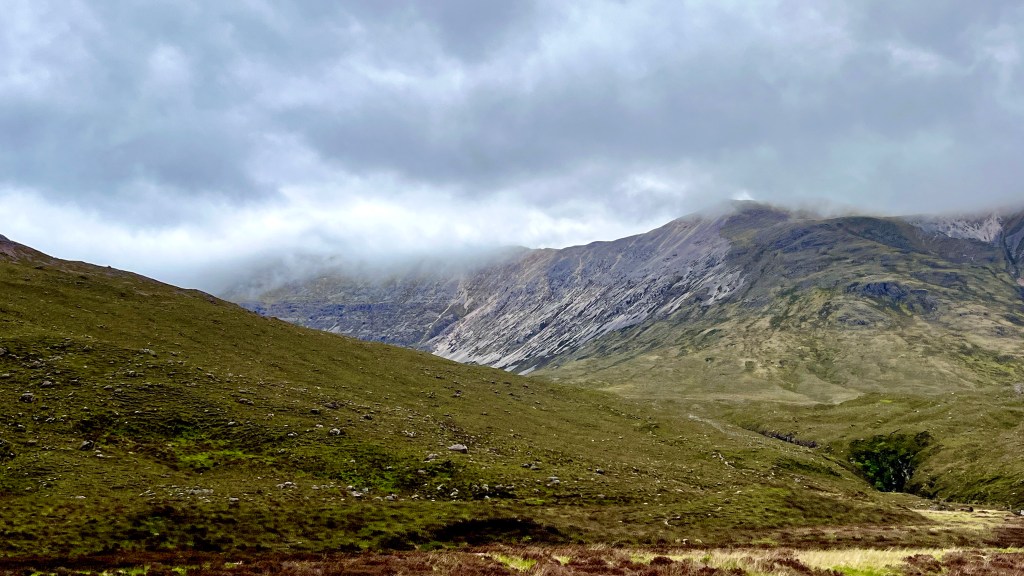
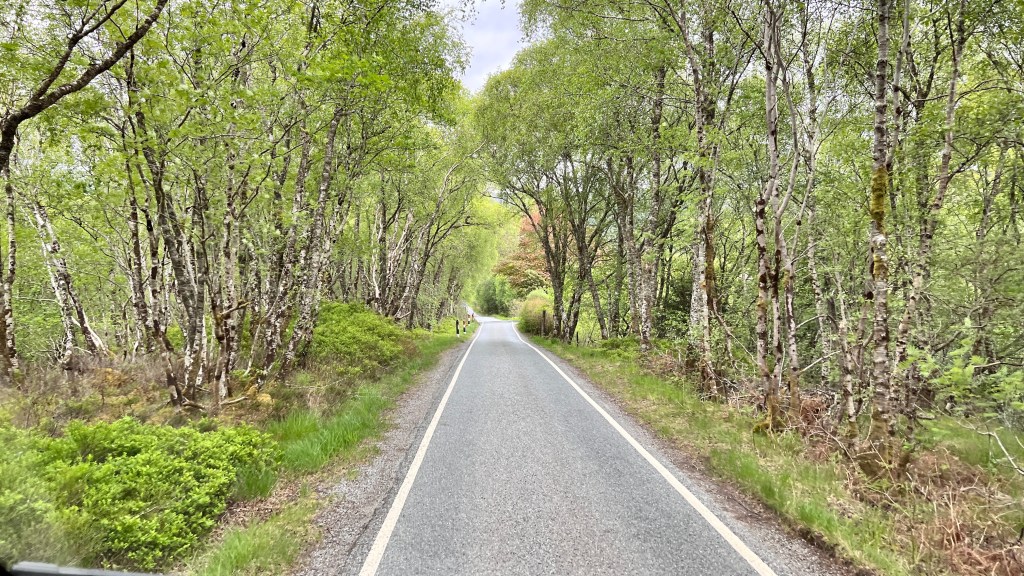
Passing became a common occurrence. It was quite simple really. One vehicle coming would pull off in a ‘passing place’ and flash their lights signaling to the oncoming driver to pass as they waited. This meant that you not only needed to pay attention to the road, but also look further ahead, sometimes a mile. The worst was the big truck, of which we didn’t pass many the first few days. They owned the roads and would rarely even slow down when passing and hardly ever stopped for you to pass. The tour buses as well would take their half out of the middle and some. We found both quite rude. There was one road right off that cautioned campers not to use it and an alternate route, 17 miles out of the way, was recommended. We sided on caution and the drive was spectacular. At the end of everyday of driving tho, Chris was spent. A cold beer was always waiting in the fridge.


Wild camping is allowed in Scotland. There are only a few rules. Don’t block and entrance or road, don’t park in a passing place and mind private property. We didn’t make any reservations hoping we could access some of these wild camping areas. We passed by several lovely pull offs that other campers had chosen but never did wild camp. Mainly because we didn’t want to use the toilet in the van to do anything but pee. The second reason was the fridge in the van ran off the batteries if not plugged in. Our van we built had solar so wild camping for weeks was not an issue. Here tho, if the fridge drew down the battery, there was no AAA or roadside assistance that could bail you out. Established campgrounds cost between €\£ 24-38 a night and all had running water and electric hook ups. This gave us peace-of-mind but also an added expense we didn’t plan on. So be it…from that first night on we made reservations.

We gave ourselves 9 days to do the whole route. By the time we reached Ullapool on the middle west coast however, the roads were getting steeper and the traffic heavier. We chose to head an hour and a half, which really meant 2-3 hours and set out across the middle to Golspie. From there we headed up to the north anti-clockwise, to John O’Groats and Dunnet Bay for a 2 night stay. The huge cliffs were a rookery for seabirds and wind swept green grasses grew right up to the tops, creating an incredibly stark contrast. We camped at Dunnet Bay right at the edge of the sea and nestled in the grass covered dunes. The next morning we set off for the Northern most part of Scotland for an obligatory photo shoot by the John ‘O Groats pole, then headed back down to Inverness and back across to Edinburgh.


The next morning we turned in the van for good. After driving in Ireland and Scotland for a month, it is time to move on to our next stop. Portugal!
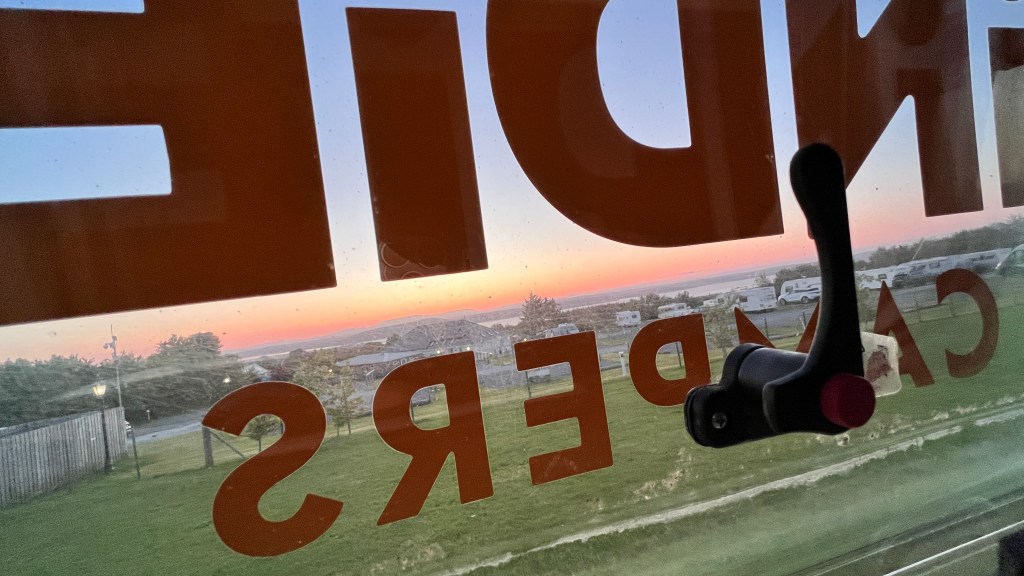
NC 500 First Half: Inverness to Ullapool

The NC 500 is a ring road around the North east to North west coast of Scotland. We bagan in Inverness and decided to go clock-wise. The roads are quite varied from single track to double lane, some with curbs, some rock walls, some guard rails, all narrow.
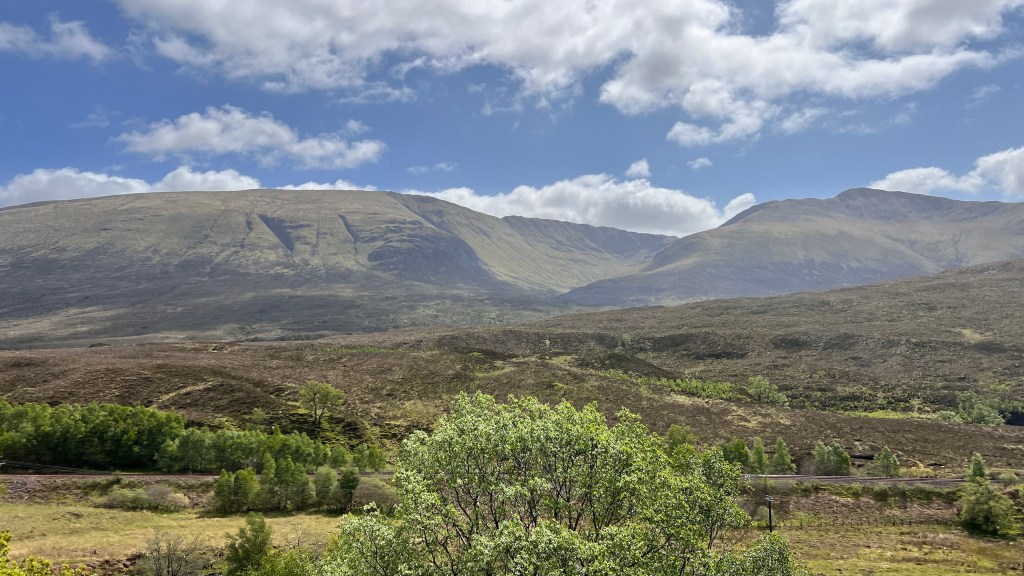
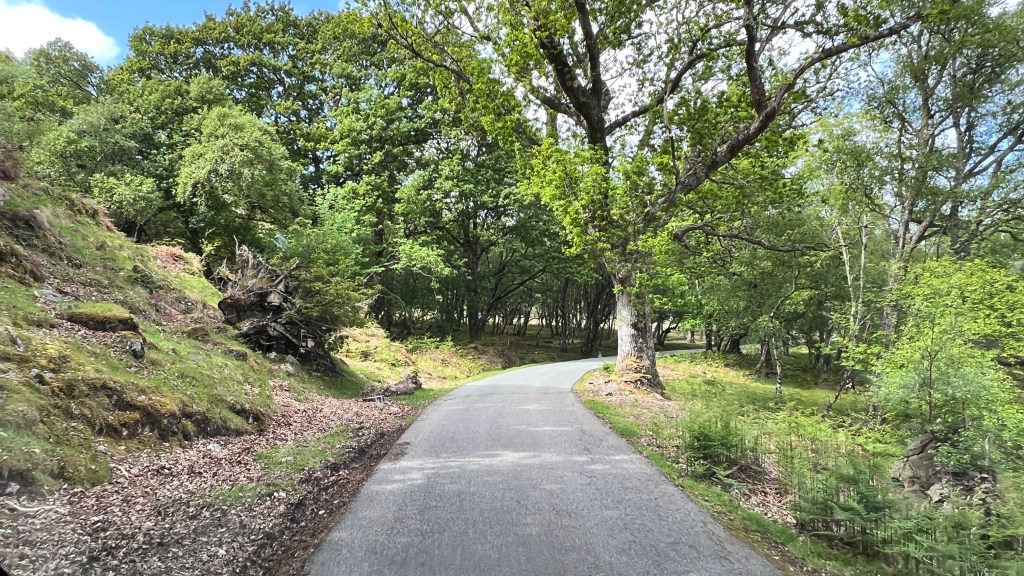
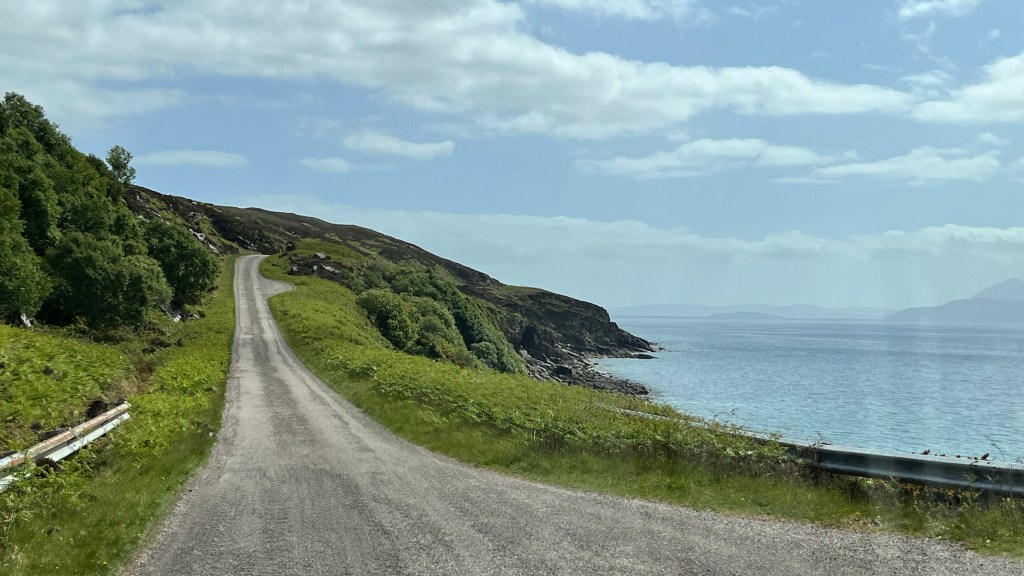
The first few days, we ran into a few cars coming anti-clockwise around the road. Having been in Ireland, where the roads are much narrower, Chris was up to the challenge. The views from all directions are, simply put, breath-taking. The further north we go, the more small towns and single homes we pass. Mostly fishing villages. The history dates back hundreds of years.


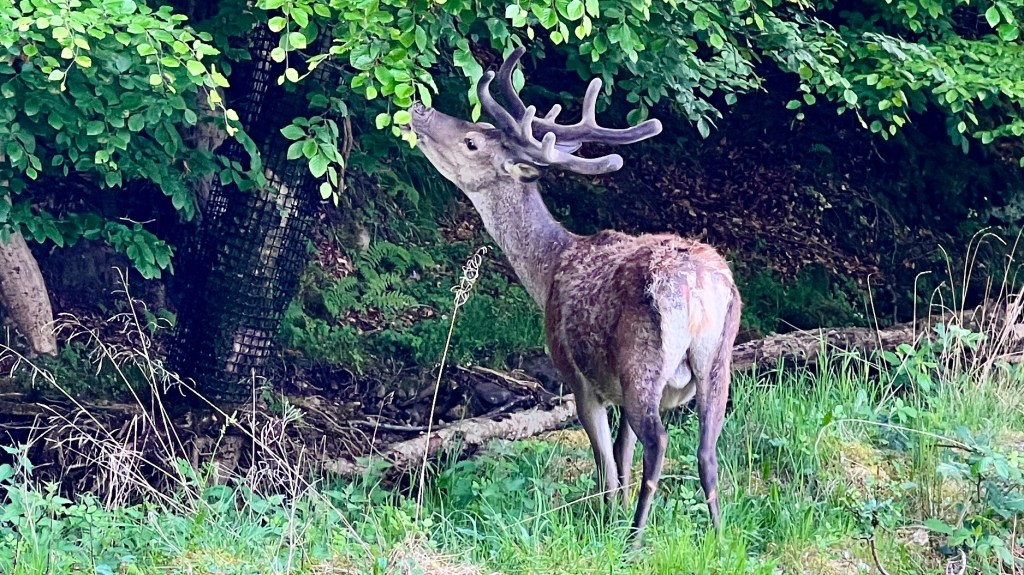
Our first stop was in Applecross. A small town at the end of the road. There are two ways in; the first is a winding switchback road that shoots straight up into the highlands with accents and descents at 20% grades and hairpin, single track roads. This is not recommended for anything bigger that a Type T2 VW camper. The second takes off out of Shieldaig, also a single track with passing points, but is a more gradual meandering road along the coast. It is a 23 mile trek in and 23 back out. From your final destination, Applecross, you are awarded with the beautiful Isle of Skye vistas and a proper sunset, providing the clouds part. Sunset is currently at 10pm and sunrise at 4:40am and we are still a month away from the longest day.
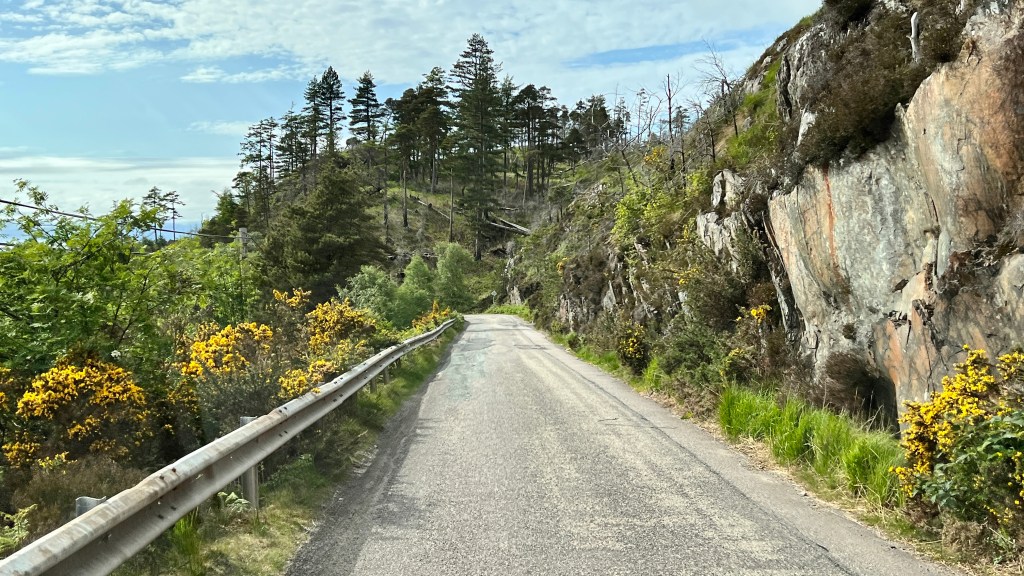

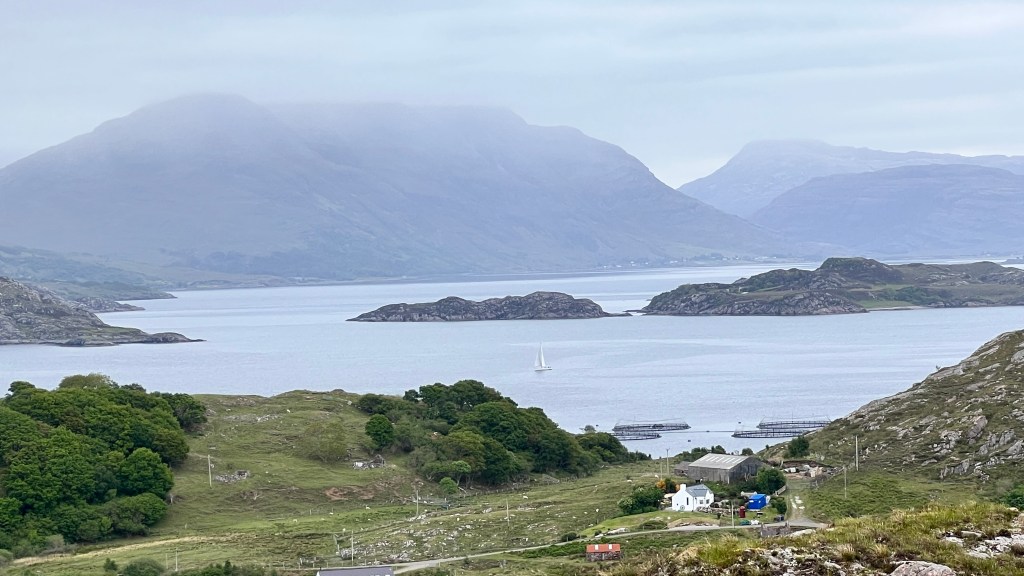
We set our next destination as Gairloch and ventured about 4 miles outside of town to Big Sands, a camp area situated in the first and secondary dunes. The camp is spread amongst the dunes on grassy pitches, some with electric and others without. It is in this small sea that hundreds of bottle nose dolphins and basking sharks can be seen on a calm clear day…of which we had neither during our stay. We were graced with a few hours of clear skies and sun, but with a constant 10mph wind, the sea was awash with white caps, making it difficult to do any spotting.

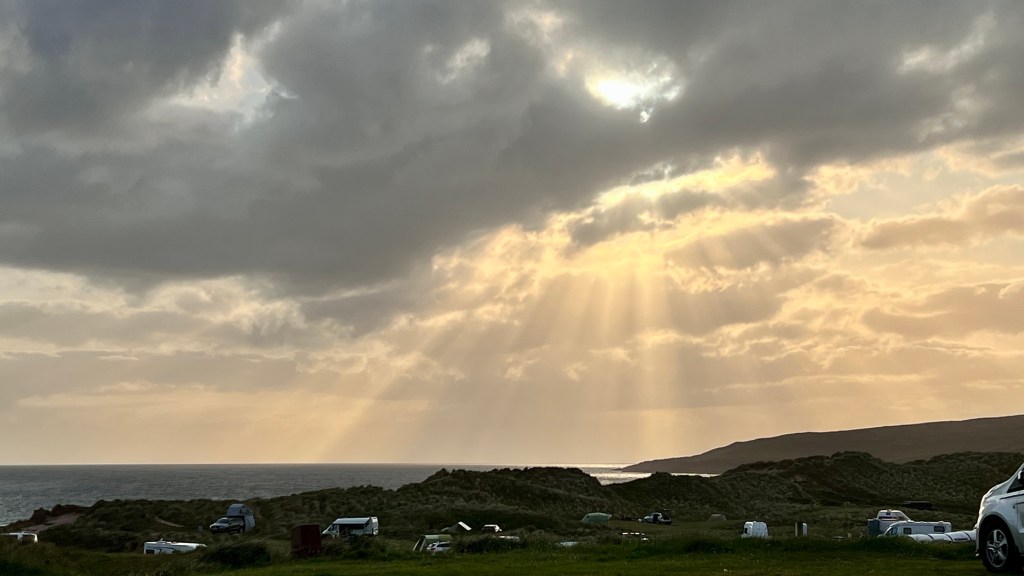

Today we headed further north to Ullapool. This is a big port city, okay not very big city, but the port services 2 car ferries out to the Isle of Lewis. From there you can caravan around and take a ferry to Isle of Skye and back to the mainland.


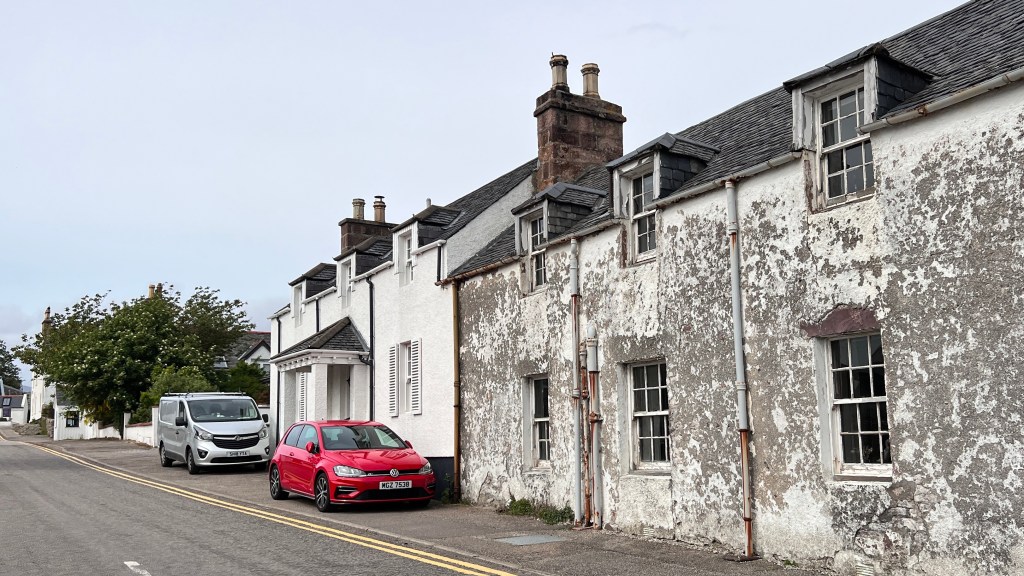
In Ullapool, there isn’t much going on past 6pm. We snuck in just before closing time, to the Seafood Shack, a food truck serving only fresh and sustainable food at very reasonable prices, at least for fish and crab offerings. The ferry had just landed so the place was jammed. We placed our order, Chris got the Halibut wrap and I opted for the dungeness crab, both served with a healthy serving of green salad.


We are starting to settle into a life of van travel again, this time without Gandaulf. I do get my share of puppy lovin’ for sure. Every dog I give scratches to, seems to know I am missing my boy. He would’ve enjoyed playing here, so much room to run, and water to swim in.
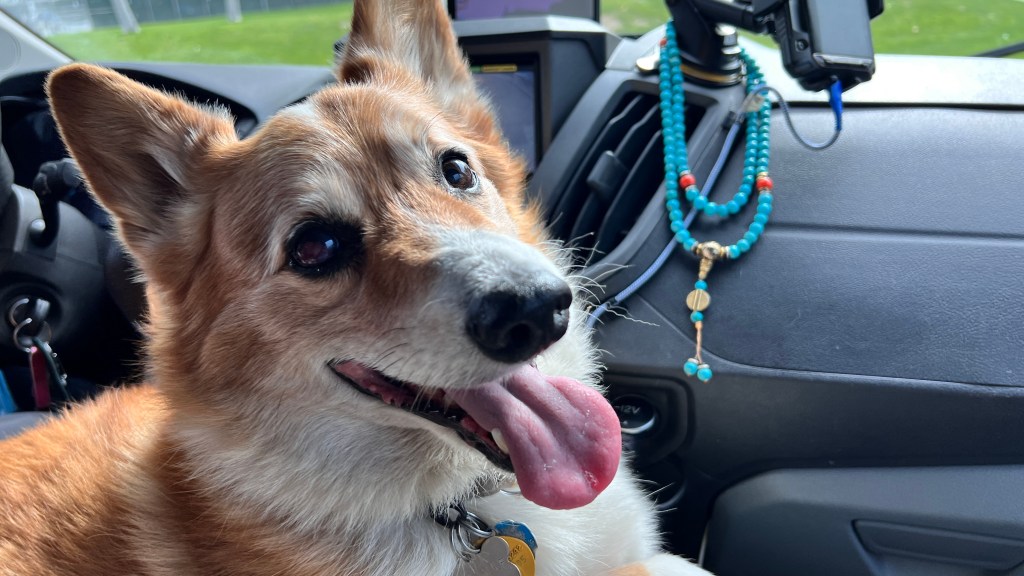
Around every turn is another gasp at the beauty, another picture postcard moment. We still have nine days left in our Scotland itinerary. Can hardly wait to see what the far north and north east has to offer. Cheers!
Bony Bony Scotland

The fun part of traveling is culture and how it effects everything from the architecture to the music.
We landed in Edinburgh on Sunday and were picked up by some friends we met in Nepal and have stayed in touch with for the last 4 years. The internet makes the world so small and staying in touch so easy. Ivy and Leo made us feel right at home and put us up for the night. The next day we were escorted into Edinburgh by our new found tour guide and treated to a lovely history lesson.


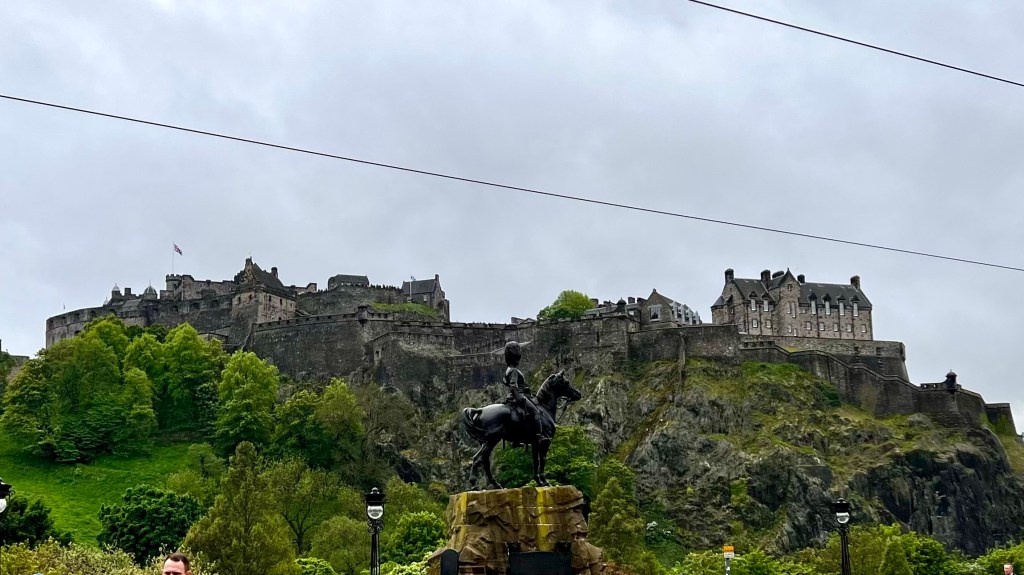
We next picked up our camper van and headed out on new roads in a new country. Off to Perth for a quick walk-about and to admire the beautiful city which seemed abandoned vs Edinburgh. I felt a bit of sadness for the shops and owners, but I am a foreigner so what do I know.

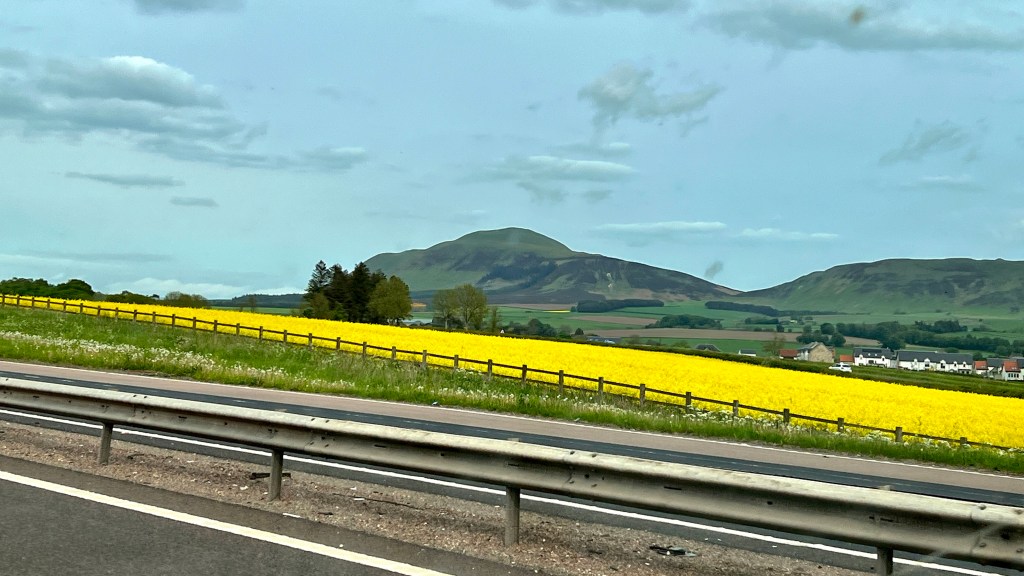

We have traveled today to Inverness for another overnight on our way to the NC 500, a ring road around Scotlands most northern coastline. Ancient coastal cities of Highland Scots and Viking cities of old. We are hoping for fair weather travel and not so narrow and windy roads.


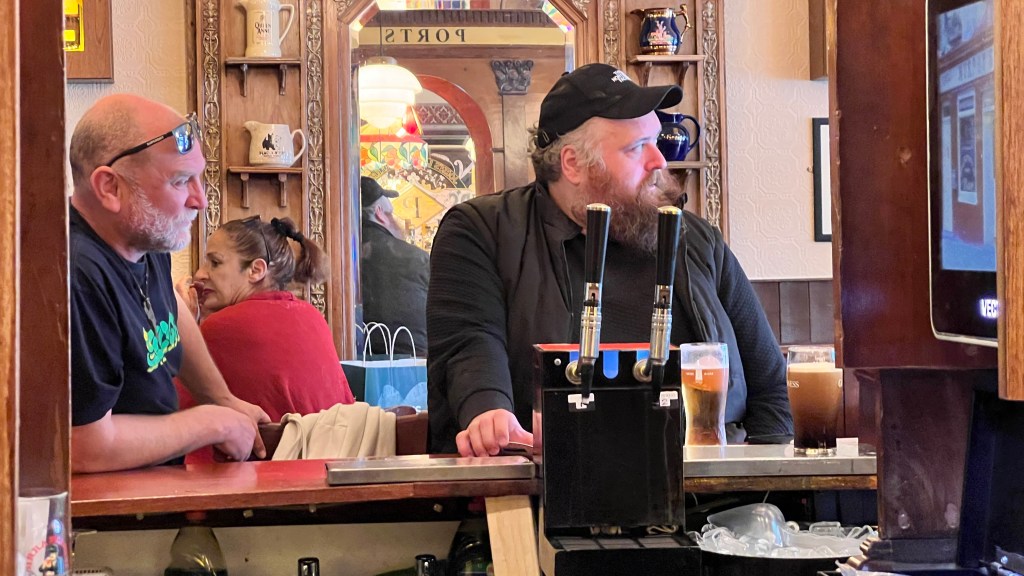
One of the best things to do when in these wonderful lands is to enjoy the local pubs and a bit of the local folk music. Dance and sing if you choose to do so. So much history and heart in each song. A fun way to end a long days travel.
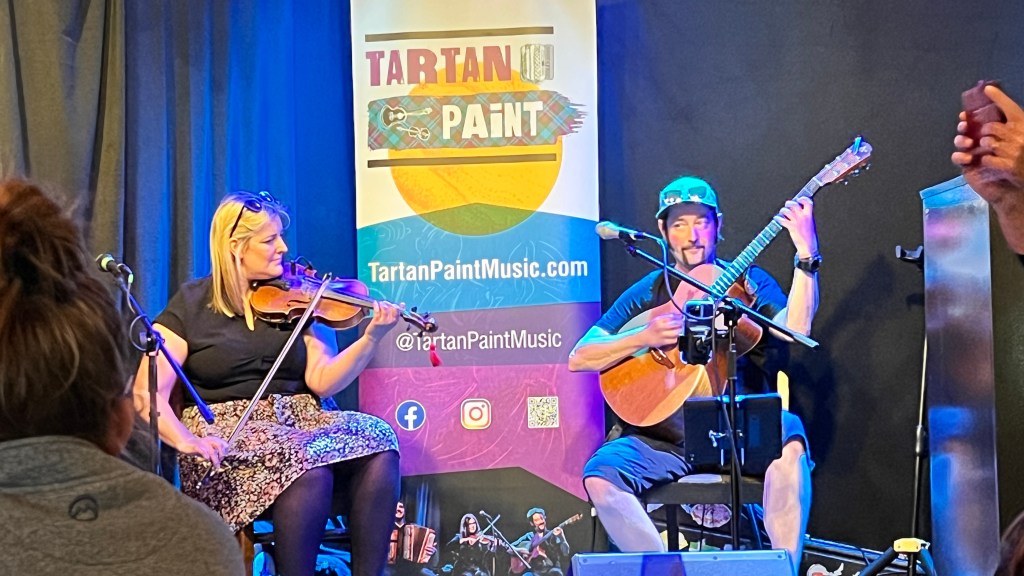

All Good Things Must End

Today, we close the circle. Our travels through Ireland will conclude in 24 hours from now. Still, to this day, I’m not over the beauty. The thousands of shades of green. The incredible rich, vibrant colors of all the many flowers blooming as far as the eye can see. The hundreds of castles, churches and abbeys, holding the past inside their rocky, vine covered walls, like ancient time capsules. The bright smiles and chipper hellos from locals and travelers alike. The numerous small towns with their brightly painted buildings and historic pubs. I doubt that the memories will fade anytime soon.


I think the most interesting was hearing stories of the struggles of the proud, hard working Irish. The stories of sorrow and triumph. The strong, proud individuals that tried to make a difference for their countrymen in the time of need. The big men and women with large hands and kind hearts. The thick accents that change slightly as we traveled from county to county.


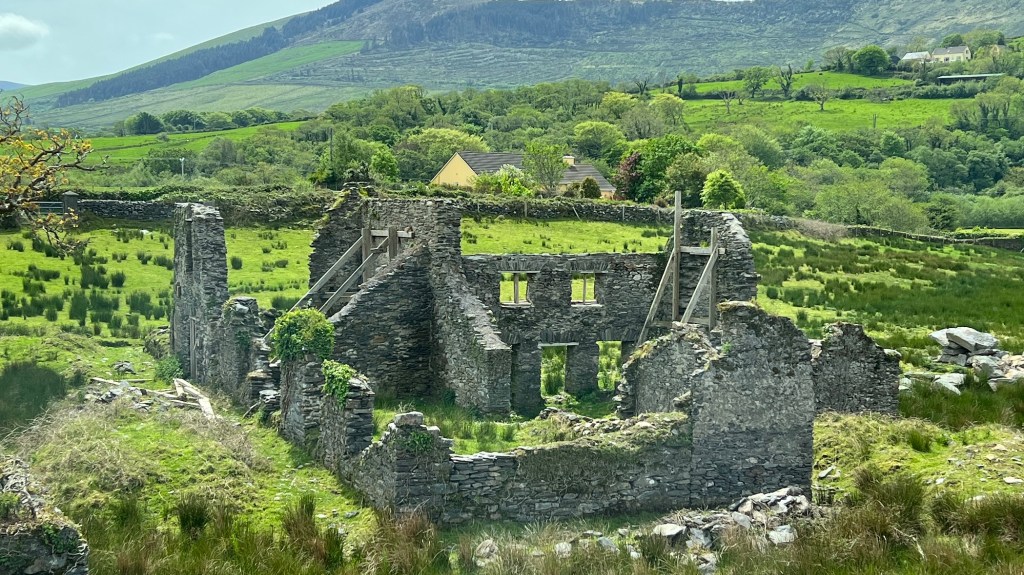
There were many times that I would be listening to our driver and I could envision the people he was talking about laughing and a dozen small children running around underfoot. The homes and land passed down through generations upon generations. The miles and miles of rock walls, the sheep dotting the green hillsides in white and pastel colors, splashed upon their backs showing ownership. The border collies running after them. Life, so simple and so hard.
The Ring of Kerry
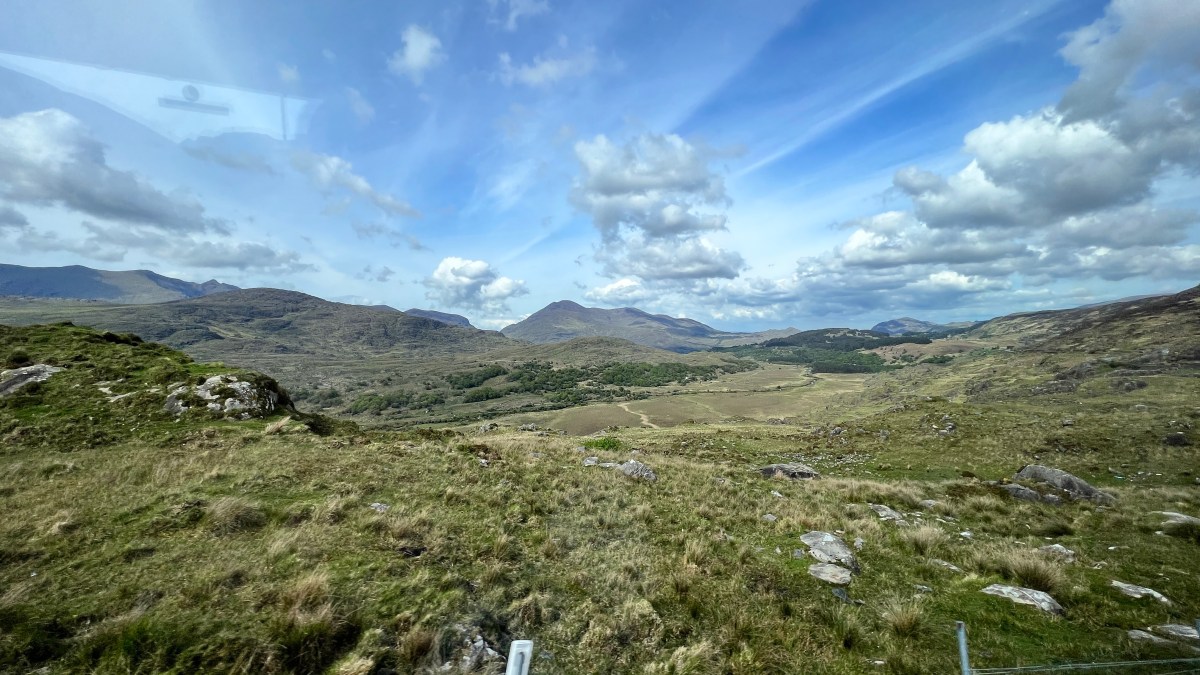
What a glorious day indeed! The Irish coastline of Kerry, a fiord on the southeast side of the island surrounded by the Atlantic, is a magnificent combination of history and lore, blight and famine, conquest and survival. The peninsula is very isolated 179km of narrow, windy roads that takes off out of the small town of Killarney, Ireland. The drive takes approximately 3.5 hours without making any stops.

After our driving experience, we opted into taking a tour so Chris could admire the scenery, and not be so stressed. Turns out this was a fabulous idea and our driver gave us driving tips. He was a 68 year old from the O’Sullivan clan who had personal history living out on the peninsula as a boy. He drove milk trucks from village to village and had quite a reputation. As with all your drivers, he was a wealth of knowledge, singing, reciting poems and passing on the history.

I guess what struck us the most was the incredible shades of green. The incredible contrasts of the yellow Gorse bush or Furze. It is said that Furze bushes, like all other thorny bushes in Ireland such as hawthorn and white thorn, belong to the Sidhe, and often guard their portals to magical realms. It is a magical bush looked over by the fairies of the land. Folklore has it, that if a bride cuts a sprig and puts it in her bride bouquet, she will have all the luck of the Irish.

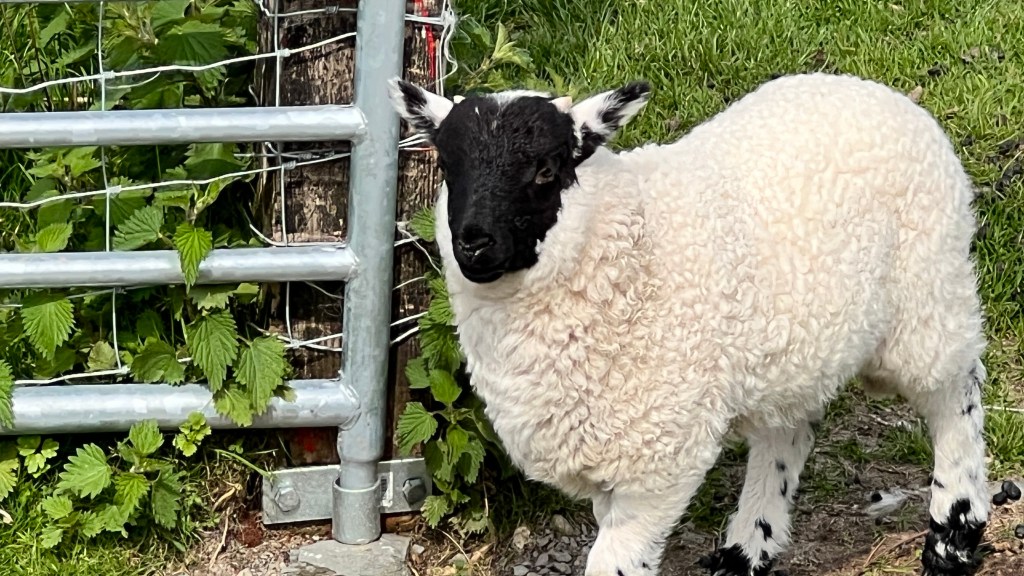
The Irish Black-faced sheep are also scattered around the towering hill sides. The only way to bring in the sheep from these craggy hillsides is with a sheepdog. I spent about 45 minutes watching one of these small, sure footed dogs in action with his shepherd. Amazing agility and speed, controlled mostly by different whistle tweets from as far as a quarter of a mile. I thought about Gandaulf for a moment and how he loved the chase.

We had a local lunch at “the most beautiful lookout in all of Ireland in fair weather”, or so the sign said. I had my first lamb stew and Chris had the shepherd pie. The view was indeed spectacular of the bay and the mountainous islands as the fog held light to the peeks. A statue of Mary standing on a serpent stood in the middle of a stone ring looking down on us with outstretched hands and a soft welcoming gaze. I felt blessed once more to be having this adventure.


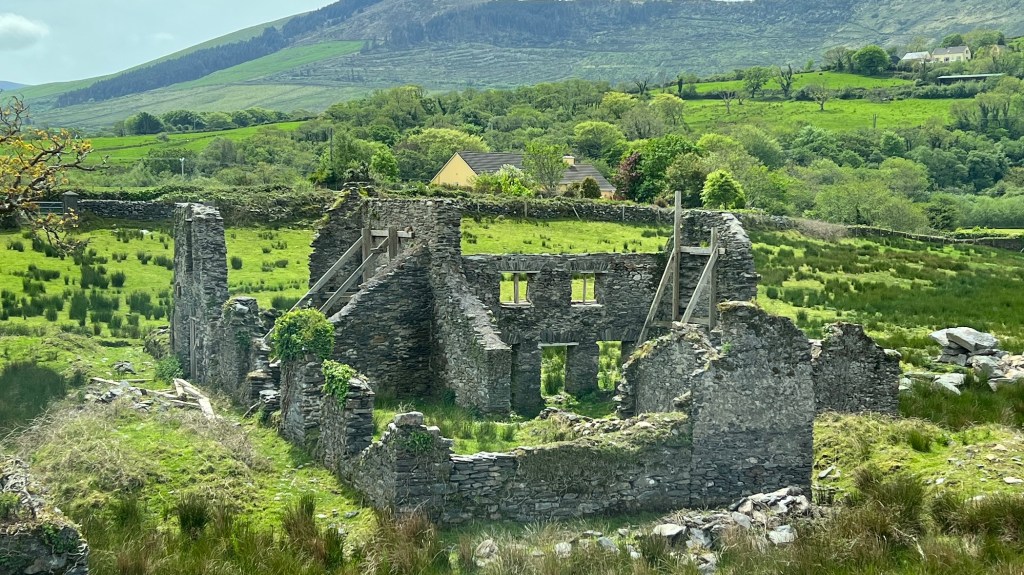
And I step back in time

Today began our Ireland trip. Our jet lag is finally waining and we are getting down to a new circadian rhythm. Overall we are getting into the groove of travel again after quite a long 6 month hiatus.
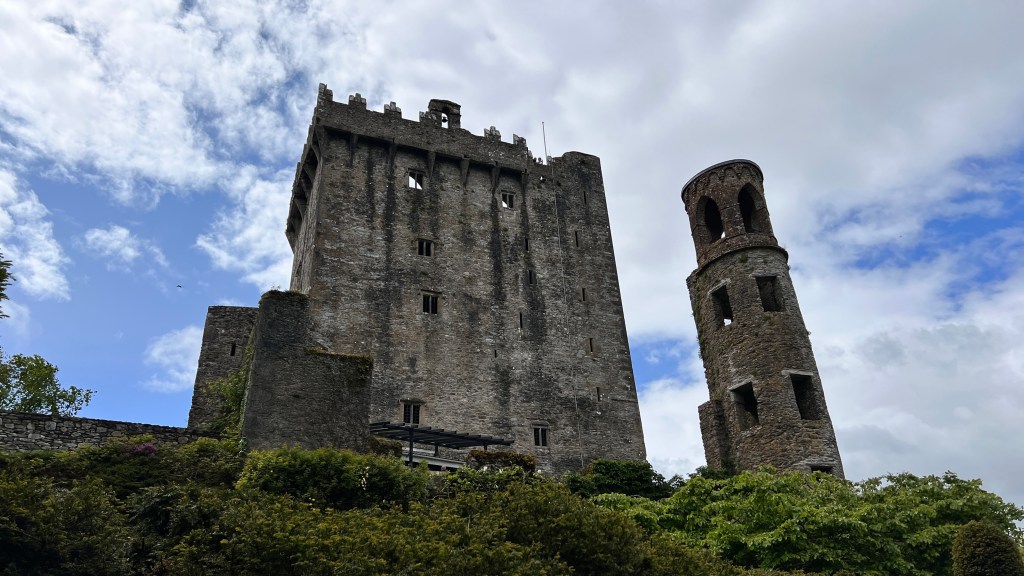


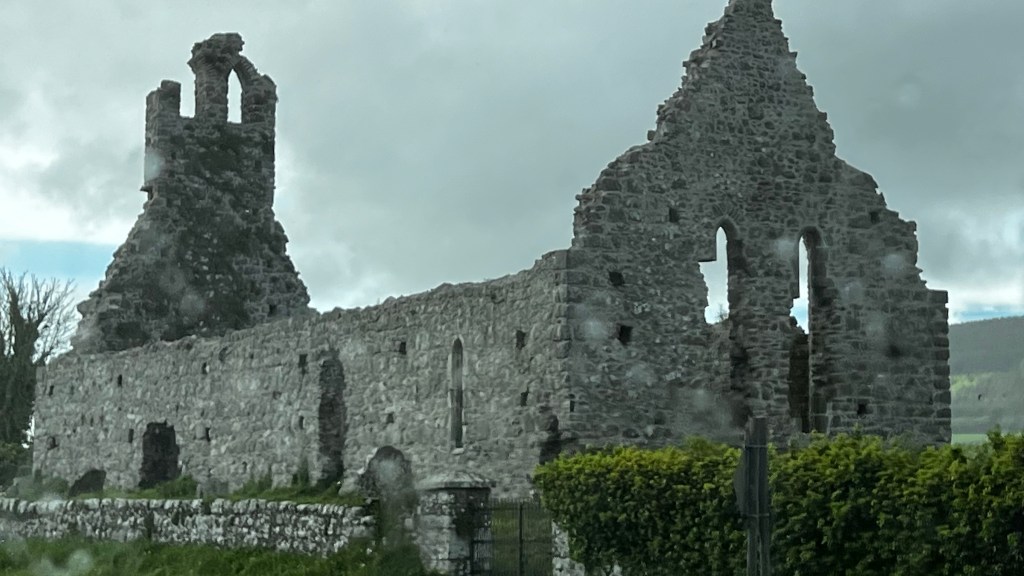
We grabbed a taxi into the little town of Blarney, on the southern coast just a few miles north of Cork. The history of Ireland is steeped in powerful lords and many wars. The landscape is dotted with castles and villages surrounding these monolithic towers of rock, most all older than the first settlements in the US. Even the woolen mill was older than my first “historic registry” home in Utah.

I will be the first to admit that I am an ignorant American. Hells sake, I don’t even know how to physically dial a non-US phone number. At least I am not ashamed to ask and our campground host, Rebecca, was a pleasant young woman who was more than eager to educate me. Better to ask than pretend you know something you don’t.
Our visit to the lovely little town of Blarney, was like stepping back in time. The town is based around a castle built in the 1400’s. It remained in the family for centuries. In the 1800’s the Blarney Home was built. The castle is the home of the “blarney stone” given by the witch of the lake to one of the sons who rescued her from the lake. He was afflicted with a stutter and following the witches directions implicitly, he found the stone and kissed it as instructed. His life then changed as he became a fluent speaker and was given “the gift of gab” as it is said to do. Even until this day, the lines to ascend the castle stairs to the top floor where the Blarney Stone is at rest, just to give it a kiss, is at least an hour long.
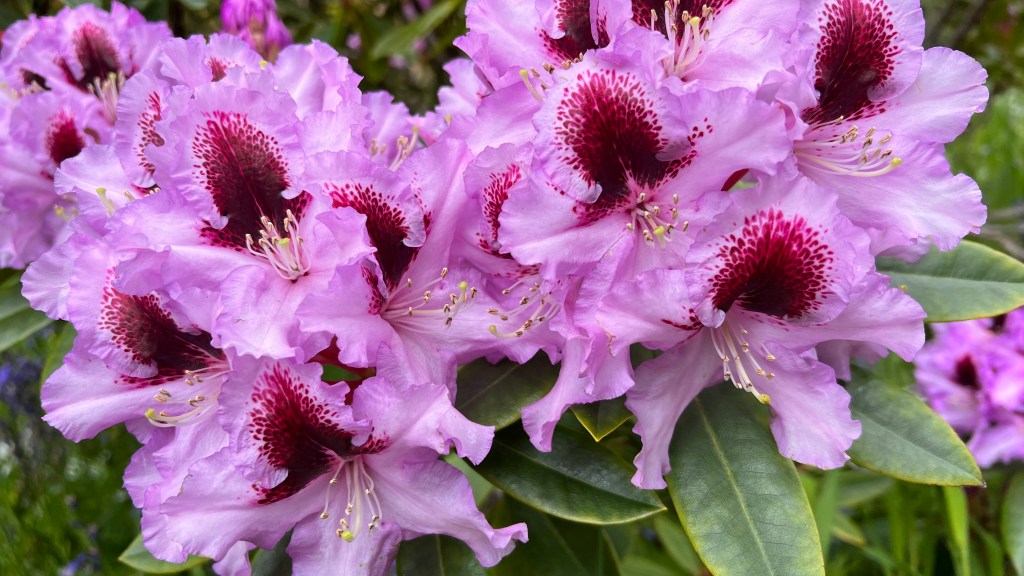
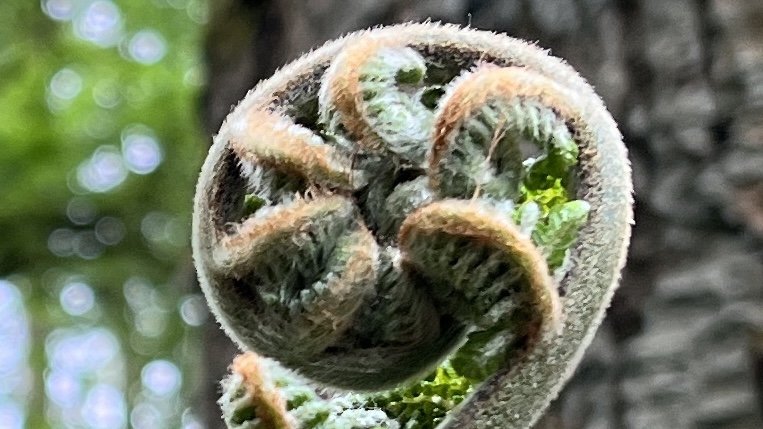
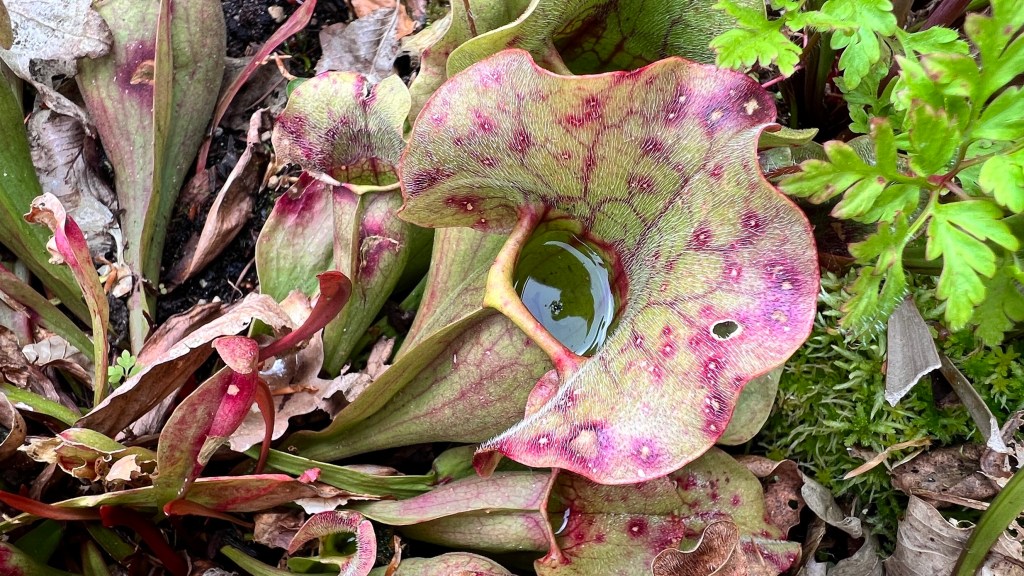

The gardens surrounding the Blarney Mansion and castle, were in full display. The variety of flora and fauna planted was in full bloom. The magnificent colors were amazing. I didn’t know so many colors existed in nature. Anything from brilliant reds to flesh peach and salmon orange. Purple flowers, buttercup, and wild garlic filled the air with fragrance.
The most harrowing part of the day was the 2.5km walk back to the Caravan Park (campground). The road started out with a sidewalk, but quickly became a narrow road full of blind turns and no way to get off the road if two cars should pass by at once. The sides of the road was 3-4’ high thick growth which included its fair share of stinging nettle, which is normally found in riverbanks at home. By the time I realized what it was, Chris and I had both inadvertently come in contact with its viscous little hairs.
We finally made it back in one piece and toasted our 7 miles of walking in one day. The day ended with showers, laundry and a recap of our day.


Day Two Ireland: Blarney
It’s been a good day except for the 2 hours of driving. The countryside is gorgeous. The famous rock walls are now covered in a thick coat of green.

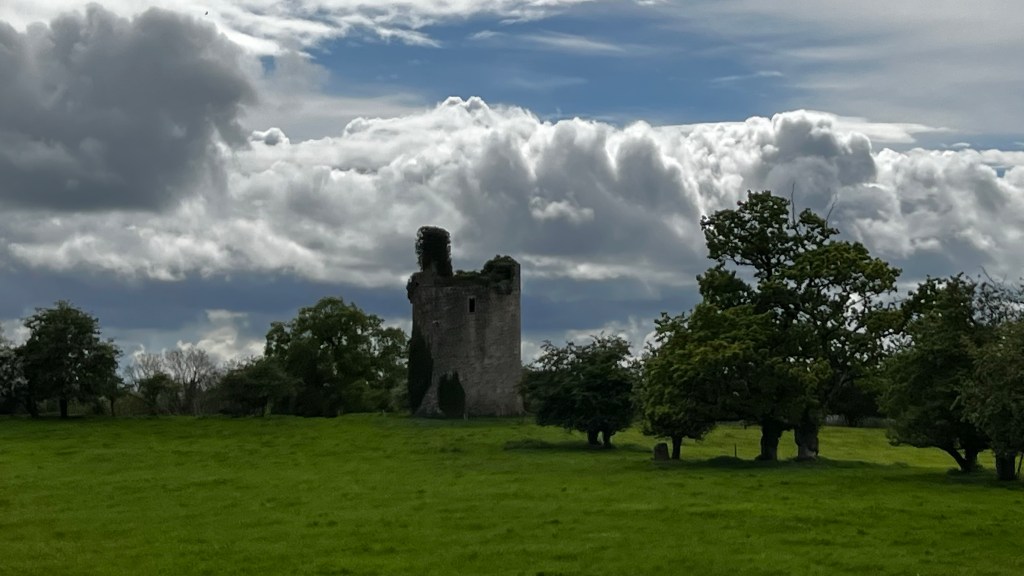
The roads are narrow and the means to an end if you want to see the small towns and castle/church ruins dotting the landscape.
Our choice of a van, the same size as our old van, was a good one at the time. Our driving skills are good but to combine the small rural roads, driving on the side of the road unfamiliar to us, a right hand drive and a stick shift, and we are like fish out of water.
 Two Travelin' Chicas...